

The Alta Via 1 is one of the best long-distance treks in all of Europe. This 8-12 day hike through the Italian Dolomites is truly stunning and, while difficult, is still manageable for most experienced hikers. Featuring extraordinarily jagged mountain, colourful alpine lakes and impressive greenery, it is one of the best things to do in this part of the world.
For a detailed overview of the trek, check out our complete guide:
Our site includes affiliate links to products we recommend. If you use one to make a purchase, we earn a small commission at no extra cost to you. Thanks for your support!
Alta Via 1: The Best Trek in the Italian Dolomites
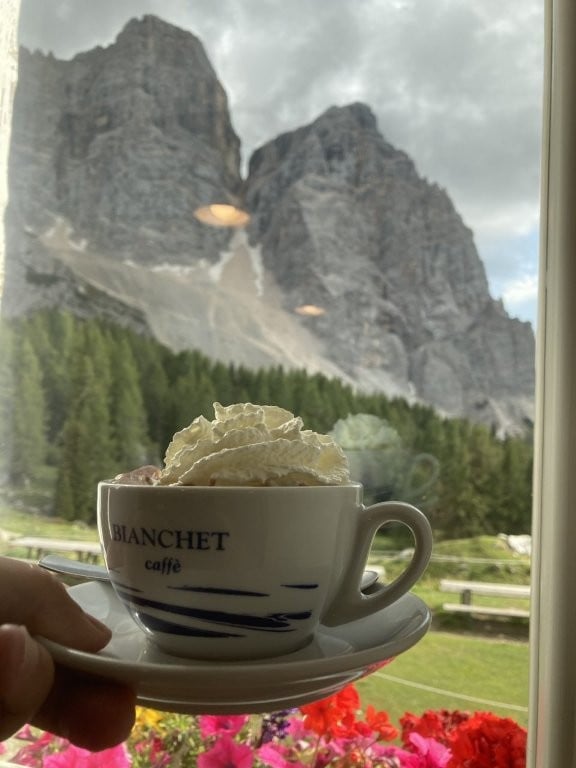
We’ve done quite a few long-distance treks in many different countries and were blown away by the incredible scenery, comfortable accommodation and variety of trail options on the Alta Via 1. Not to mention, the great food.
While eating well is relatively common when trekking in the Alps, many of the other long-distance treks around the world have featured, let’s say, less than ideal food options. Not so on the Alta Via 1. The food is usually very good (and often excellent), with every rifugio offering a full complement of meals. This means you don’t have to carry much food of your own, which is good, because there are virtually no shops along the way to stock up on your own supplies.
When staying in the rifugios you need to decide if you want just a bed, bed & breakfast or half-board (room, breakfast and dinner). In most cases the total price is going to end up pretty similar, although Laynni sometimes found the full meal to be too much so was just fine ordering a starter instead.
We spent a fair amount of time trying to find details in advance about food on the Alta Via 1 without much success. Since the Alta Via 1, unlike the Tour du Mont Blanc, doesn’t go through any villages, you are at the mercy of what the rifugios offer for food unless you want to pack a lot of extra food for the entire hike.
We were especially interested in the water situation at each rifugio, if breakfasts had protein and if the packed lunches would be big enough.
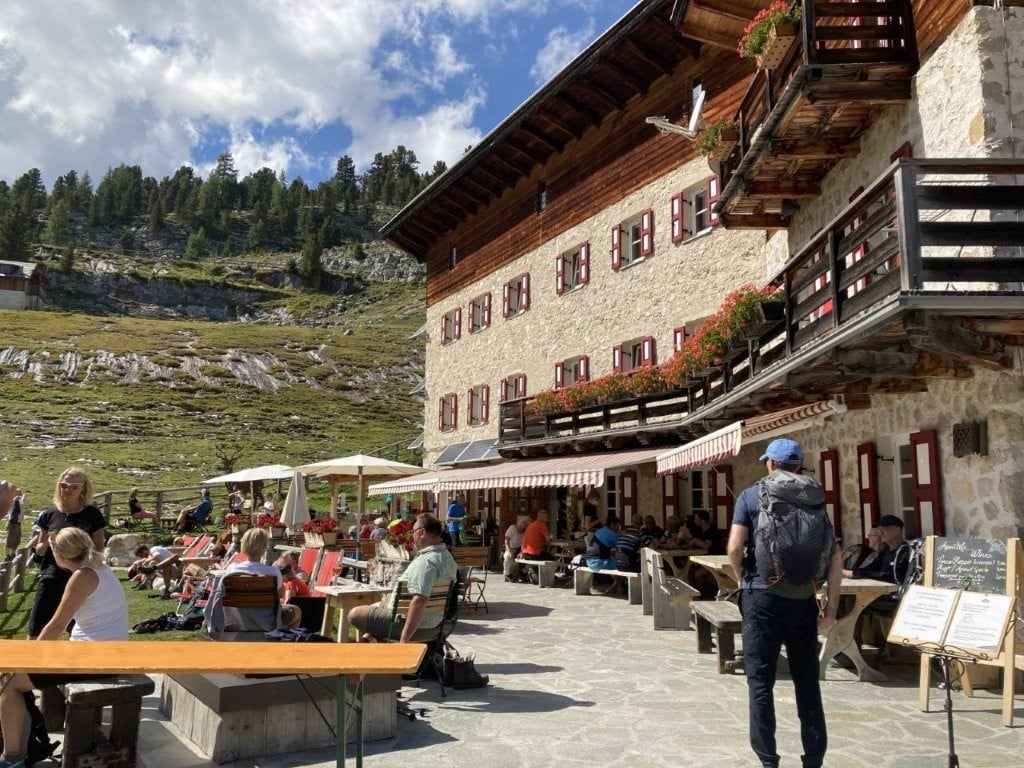
While we can only talk about the rifugios we stayed at, the general rule of thumb was that so long as you like sandwiches and pasta you will have plenty of food. Most of the rifugios served hearty breakfasts, with a few exceptions.
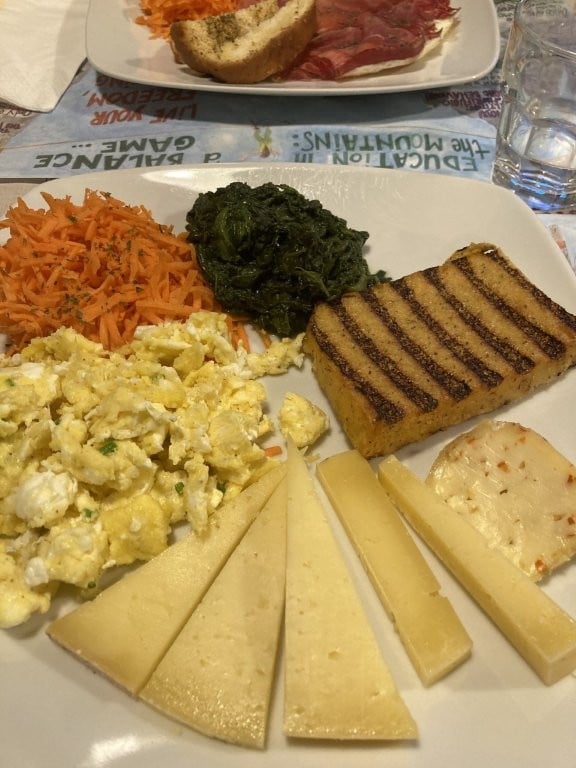
There were vegetarian options for each meal but it would be difficult to be vegan as eggs and cheese featured heavily as the protein substitutes. And the choices would be very sparse for anyone who needs to be gluten-free at lunch time although there was usually a soup option if you made it to a rifugio.
Water on the Alta Via 1, unfortunately, is a constant problem. In comparison with some other treks in the Alps such as the Tour du Mont Blanc where water is plentiful, the porous limestone of the Alta Via 1 Dolomites means fresh water can be hard to come by. You’ll pass the occasional stream with water that could be filtered and/or treated but not many that you can count on, and there are often cattle around so we never trusted the water enough to try it.
A couple of huts have drinkable tap water but most don’t and only offer expensive bottled water – at €2-4 per litre, not ideal for the environment or the wallet. We once again found it very disappointing that places aren’t willing to sell bottle refills instead of running through hundreds of plastic bottles every day. Most of the time we bought a bottle or two and then just treated tap water with AquaTabs. We use them all over the world with much sketchier water than what you find in the Alps and they’ve always worked well for us.
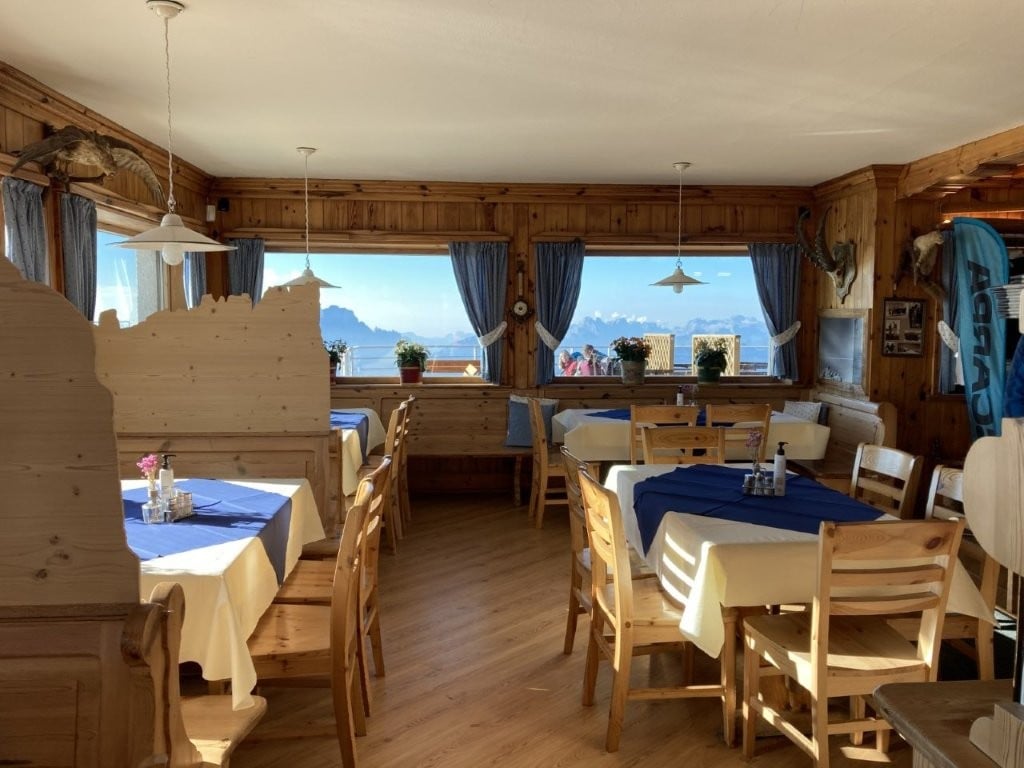
Here are the specific details of the food and drink offered at each of the rifugios we stayed at and some of the costs. Keep in mind that this was a couple years ago now and most of the prices have probably gone up just like everything else in the world. Assuming a 20-30% increase is probably a reasonable number for budgeting purposes.
Rifugio Biella
Dinner was at 6 and you ordered your meal when you sat down. The starters were €7-9 (we had the pasta ragu/bolognese) and the mains were €10-14. They don’t have a packed lunch option but you can order sandwiches for €4 for the next day.
Breakfast was €10 and included scrambled eggs, yogurt with cereal as a topping, pastry, cheese, ham, bread, butter and jam as well as coffee or tea.
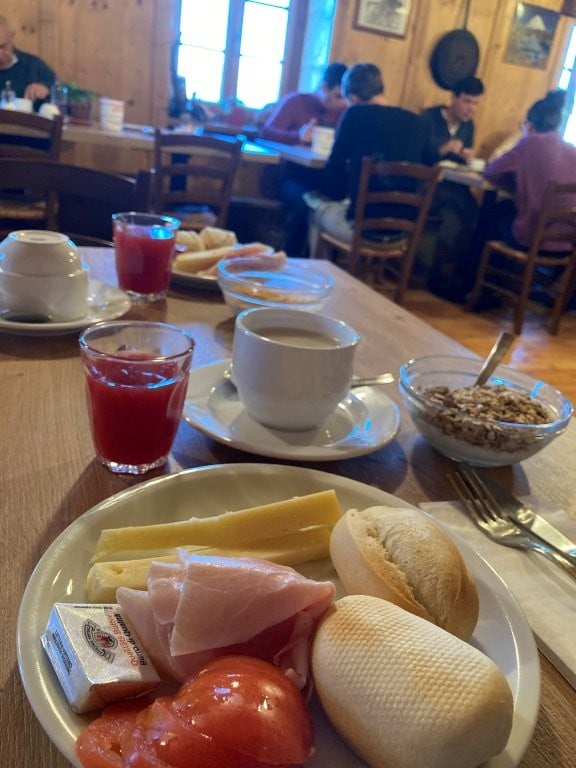
Beer was €4.5 and an espresso was €1.4. They had a couple kinds of cakes available for an after hike snack.
Rifugio Lavarella
There was no half-board option so you order off the a la carte menu where the starters (soup and pasta) were €9.5-12.5 and the mains were €13-16. We had their version of a schnitzel and the warmed up camembert cheese with sides.

The breakfast had eggs, yogurt, cereal, white and brown bread, cheese and ham, cake, coffee and tea. The difference from most rifugios is that you could have hot chocolate instead of coffee or tea. The packed lunch was €11 and you ordered it the night before.

This rifugio had very good service and food. And the terrace was very popular for drinks. We tried a beer from their brewery for €5 and a Aperol Spritz for €4.

Rifugio Lagazuoi
This rifugio is half-board so dinner and breakfast is part of the package. Dinner had 5 choices for the first course including a daily special and 4 choices for the main course. We had the mushroom tagliatelle for a starter and picked the steak and lamb options for the main course. Dessert was ice cream. Lagazuoi is known for its good food and this dinner did not disappoint.

We could smell bacon while we were watching the sunrise which is always a good start to the day. It was a very full breakfast with eggs and bacon plus all the usuals.
The half pension food costs €28 per person, while the private room was €130 for 2, and the packed lunch is €10 and you order it the night before. The packed lunch included a sandwich, fruit (some of the only fresh fruit we had on this hike), a dried apple ‘energy bar’ and half a litre of water.
The main terrace is very popular during the day for drinks and snacks and rightly so. The views were amazing. Definitely take the time to enjoy a beverage. The beer was €6 for a large and €3.5 for the small and I really enjoyed my hot chocolate with whipped cream (€4).
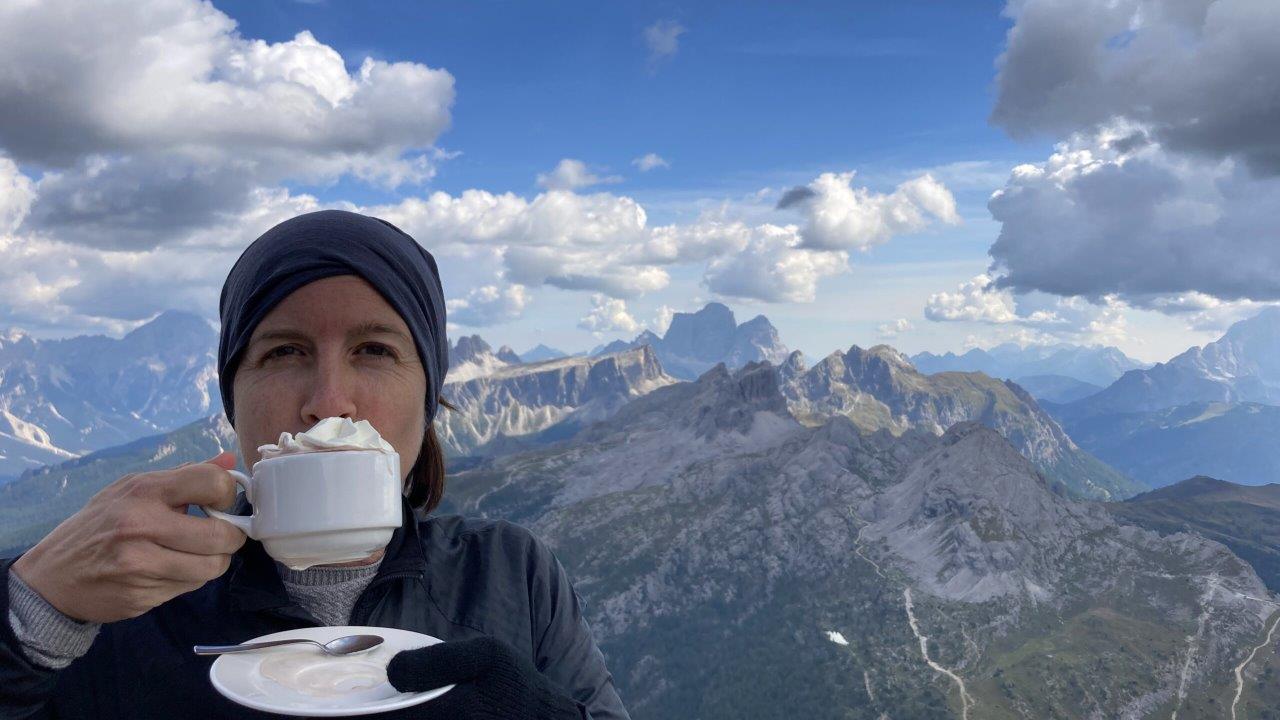
You can’t drink the tap water, though we did use tablets to purify some. A litre of water costs €3.
This was our favourite rifugio on the Alta Via 1 and you can check out our complete guide here:
Rifugio Lagazuoi: The Best Hut in the Dolomites
Rifugio Averau
Rifugio Averau is actually famous for its food and it had the best pasta of the hike. It is half-board so both dinner and breakfast are included.
As usual, there were options for the starter and main but the pasta options included homemade ravioli. The beet root ravioli was excellent, there was a salad in between the starter and main and we both enjoyed our grilled chicken mains. The service and food meant it felt more like a nice restaurant than a rifugio. Room and half-board were €78 per person in a 10-person dorm.

The breakfast had everything you could want to eat before a big hike but something we’ve never encountered was an individual egg boiler. We just took an egg assuming it was boiled and got quite a surprise when we cut into it. But once you figure that out it was really nice to be able to have an egg boiled to your preference. Five minutes in the boiler equalled a soft-boiled egg.

There were options for the packed lunch – you could choose a bigger or smaller one. We got the classico for €13 with two sandwiches, an apple and chocolate bar.
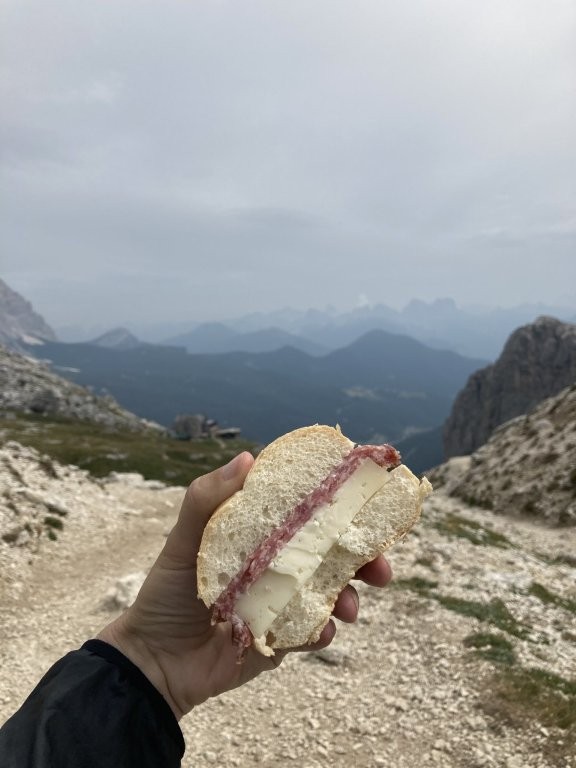
As usual we recommend enjoying the view with a drink or snack. We had a light lunch while hiking so got a warmed salami sandwich for €6 and beer for €5 and a hot chocolate for €4. A litre of water was €3.
Rifugio Citta di Fume
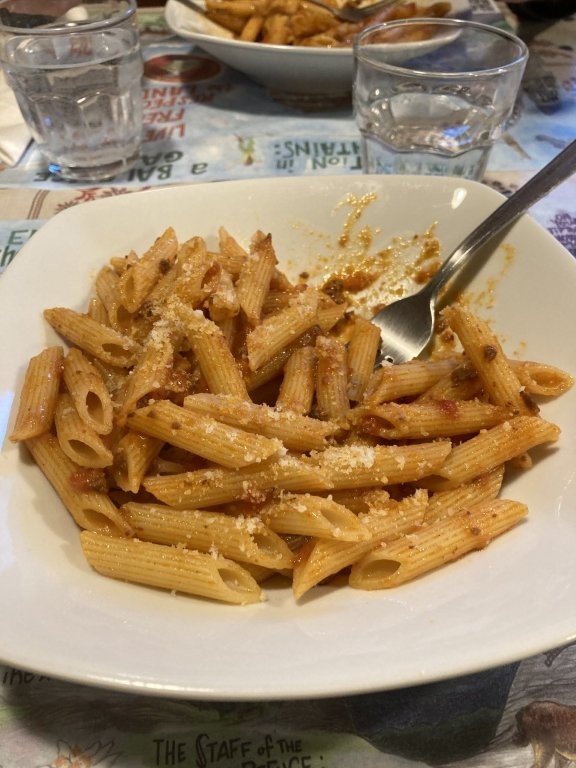
While the food lacked the finesse and presentation of the previous few rifugios it was plentiful and hearty. The half-board gave options for the starter and main. The pasta ragu was tasty and Dean finally tried the local specialty of eggs and speck (a kind of cured ham) while I had scrambled eggs and cheese.

The breakfast was lighter than usual with cereal, yogurt and white bread. There were no eggs, cheese or ham. This is one of the breakfasts where the small portions of peanut butter that we brought from home were handy. I always need protein with my breakfast or my legs get shaky later.
There was no packed lunch option but we were able to order a couple sandwiches to go for €4.5 each.
The water was non-potable and a 1-5-litre bottle of water was €2.5. The cheapest we found on the trail.
Rifugio Venezia
There were closing a few days after we arrived so they were running out of certain things like hot chocolate and only had tiny bottles of water.
The food at Venezia was ok but that’s about all we can say about it. The portions for dinner – we had the pasta ragu starter and goulash and polenta for main – were very large but sloppily served and plain. And this was the only time dessert was not offered.
The breakfast was just yogurt, pre-packaged dry bread and croissants and packets of jam and Nutella. Plus the usual juice, tea and coffee to drink.

We were able to order a couple sandwiches to go for lunch for €3.5 each.
This was one of the cheaper rifugios we stayed at – €57 each for half-board.
Rifugio Tissi
Tissi was also at the end of its season and was closing in a few days. They had the usual 4 choices for starter (soup and pasta choices) and 4 for main (we got the caprese salad and eggs, speck and potatoes). Dessert was canned peaches and whipped cream.

Breakfast was ample with buffet eggs, cheese, some weird kind of salami that no one took, cereal, yogurt, bread and jams, coffee and tea.

We ordered 2 sandwiches to go for lunch for €5 each.
We enjoyed the view with a beer for €5.5 and the water was €2.8 for a litre.

The half-board cost €60 per person.
Rifugio Carestiato
This place surprised us because we weren’t expecting to find some of the best food of the hike. We got the lasagna for the starter and pork with lemon sauce, potatoes and veg for the main and panna cotta with berry sauce for dessert. Someone asked the cook to come out to compliment him and he ended up getting a round of applause from everyone.

Breakfast had all the usuals, except eggs.
The half-board was €60 per person, beer was €5 and a litre of water was €2.5.
Summary
Mountain trekking is generally difficult, always beautiful and sometimes uncomfortable. But if you choose the right hike, eating well doesn’t have to be a problem. The Alta Via 1 food and drink options are outstanding and will offer you a wide range of ways to treat yourself at the end of every exhausting day of trekking. Enjoy!
Trip Planning Resources
Here is a list of the most important resources we use when planning our travels, all in one convenient spot. Full disclosure, when you use any of these links to reserve or sign up for something, we receive a small commission which is greatly appreciated. However, your price does not change and we have only included products and websites that we can honestly recommend.
- We book the majority of our hotels on Booking.com. With frequent stay discounts, thousands of reviews and free cancellation, it is very rare for us to have a bad hotel experience these days.
- Wise is by far the best international multicurrency bank account we’ve found. We can now send and receive money in half a dozen different currencies, convert to dozens more with no exchange premium and pay or withdraw local currencies. Highly recommended.
- When travelling we always get SIM cards with data for our phones. Local SIM cards are sometimes a bit cheaper but if you have a relatively new smartphone (iPhone XR or newer, Samsung S20 or newer) you can just buy an eSIM online, get a QR code by email and you’re good to go. After extensive research we have found that Nomad eSIMs usually have the best coverage and prices.
- Google is currently transitioning to an AI-only model and are now actively suppressing private websites. In most cases, they don’t even share attribution links to show where they got their information. Legal theft, apparently, which is terrible for travel blogs, as well as people who actually use travel blogs for trip research (i.e. us) rather than just hoping the latest AI mashup is somewhat accurate. Anyway, the point is, if you still want to read firsthand travel information, we recommend using DuckDuckGo as your search engine. You might even find some delightful Routinely Nomadic posts ranking high in those results.
- If you’re interested in local guided tours, including everything from city tours to cooking lessons to adventure activities, check out the huge range of options at Get Your Guide.