

And, just like that, there we were, in “The Stans”. Specifically, Karakol and Jyrgalan. And, no, I understand that The Stans is not a real name, and also that some Kyrgyz, Kazakh, Uzbek, Tajik and Turkmen individuals may prefer not not be lumped in together. To them, I say, nah, don’t sweat it, we’re not generalizing you as people, per se, we’re just opting to use a simplified geographical description of the region as a whole. As Laynni put it, if they didn’t want us to call them The Stans, then they probably should have been a bit more original when choosing their names. Here, here.
Fun fact #1: “stan” basically means “land”.
Our site includes affiliate links to products we recommend. If you use one to make a purchase, we earn a small commission at no extra cost to you. Thanks for your support!
Fun fact #2: Pakistan and Afghanistan also end in “stan”. But they both have their own stuff going on and just really seem like Stans for a different discussion.
Moving on. The first Stan in our inaugural visit to Central Asia was Kyrgyzstan. Famous for its beautiful mountains, nomadic horse culture and a lot of tough-ass eagles that you certainly don’t want to mess with. Our first stop within Kyrgyzstan was the same as most people, the capital of Bishkek. A pleasant, interesting place with a few monuments, a few parks, some good restaurants and, most importantly, good transportation connections to all the really cool stuff elsewhere in the country. See our Instagram for a basic photographic overview which, along with the previous sentence, is about all the detail we’re currently qualified to provide on Bishkek.
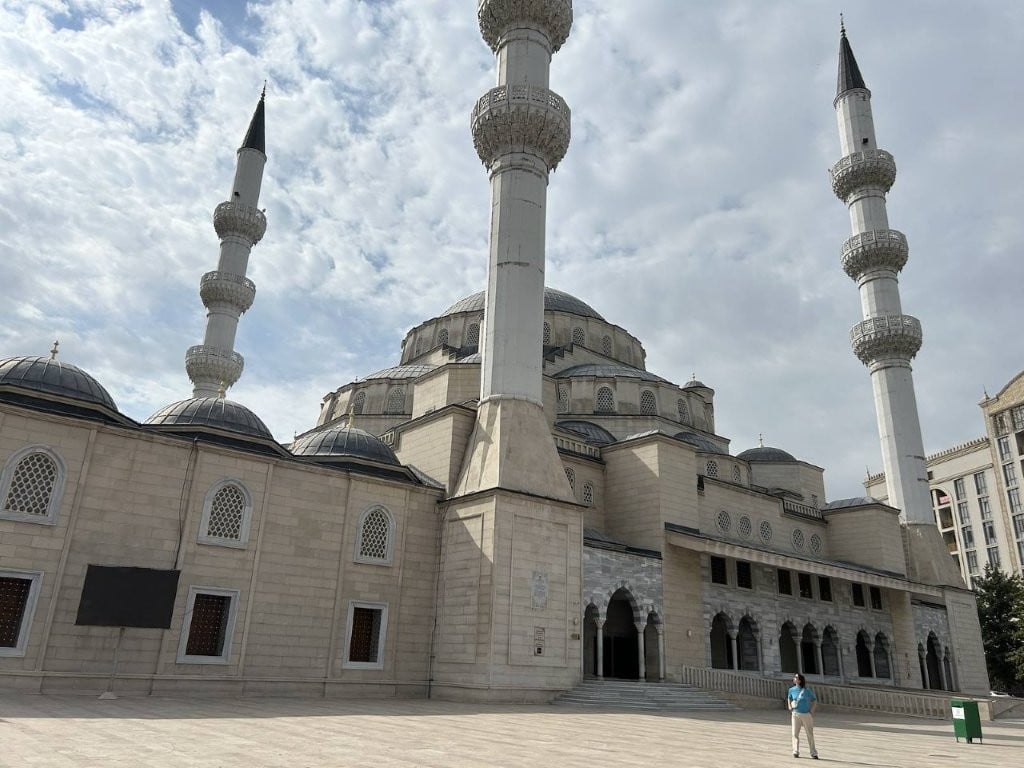
No, what we’d rather do is compare and contrast two of the most well-known mountain hiking bases in northern Kyrgyzstan – Karakol and Jyrgalan. Located just 2 hours apart just east of the gigantic and popular Issyk-Kul (Warm Lake, or something similar) and, crucially, in the foothills of the gorgeous Tian Shan mountains (which, rather appropriately, means “heavenly”).
Nearly every foreign visitor to Kyrgyzstan ends up in this area at some point, either to tackle one of the many epic multi-day treks in the area or just to enjoy some day hikes and a selection of the several scenic canyons, rock formations and waterfalls nearby.
Fun fact #3: Jyrgalan is sometimes spelled “Dzhergalan”, “Jergalan” or “Jyrgalang”, among several other ways. Central Asia uses the Cyrillic alphabet so spellings don’t necessarily translate exactly. Which, on one hand, makes it harder for us to recognize and understand place names. On the other hand, getting them wrong is virtually expected, so here’s to low expectations.
Anyway, in researching and planning this trip, I was given the impression by various sources – travel blogs, tourism board sites, Lonely Planet – that Jyrgalan and Karakol were similar places, with similar pros and cons, leading to a difficult dilemma when choosing a hiking base.
In reality, they aren’t similar at all. Which may be on me, to be honest. Over the years we’ve developed a decent (and necessary) ability to read between the lines a bit when reading travel descriptions since so many people/publications/tour companies are reluctant to say anything remotely negative. I mean, why would anyone want to read about someplace you just told them sucks? Fair enough, yet, much like discussing a suspicious rash with your ex, most eventually find the truth more useful.
In this case, though, it’s possible I may have only been seeing what I was hoping to see. Laynni was, it turns out, much less surprised than me, which can probably be considered another small victory for TikTok. Good to see that plucky upstart finally gaining some international traction.
Now, don’t get me wrong, both Jyrgalan and Karakol have plenty of positive qualities to recommend them. They are just very different qualities. Which brings me to the core question:
Karakol or Jyrgalan?
Ok, we’ll start with the basics:
Karakol
With a population of around 85,000, Karakol has pretty much everything you’d expect of a city. At 1,750m above sea level, it’s a bit cool and the stairs will catch up to you faster than usual. And it is only about 150km from the Chinese border, which doesn’t affect much, really, but I thought it was interesting. It is a popular base for both independent travellers and tour groups.
Jyrgalan
It only has a population of about 1,000 people, so I guess that’s really the first big difference you’ll notice. I guess that one’s on me, because being just 1.1% the size is a pretty big difference, and one that was shockingly easy to discover via the world wide web.
Anyway, Jyrgalan is located at nearly 2,500m above sea level, which means it’s even cooler and even harder to climb stairs, not to mention mountains. It is about 60km east of Karakol and very close to the Kazakhstan border. And probably about the same distance as Karakol from the Chinese border to the southeast, although I can’t imagine a scenario where that matters (there are no border crossings as the crow flies). It is a popular base for independent hikers, mainly.
So, now an even more basic recap:
Karakol – a conveniently located city surrounded by great hiking.
Jyrgalan – a less conveniently located village surrounded by great hiking.
Ok, now that you’ve got a general feel for the options, let’s dig into the specific differences between Karakol and Jyrgalan, just in case you have to choose. Because, yeah, in a perfect world you’ve got plenty of time to visit both and come to your own conclusions. However, many people may only have time to see one of them, so sometimes difficult decisions must be made.
Attractiveness
Karakol is, well, fine, I guess.
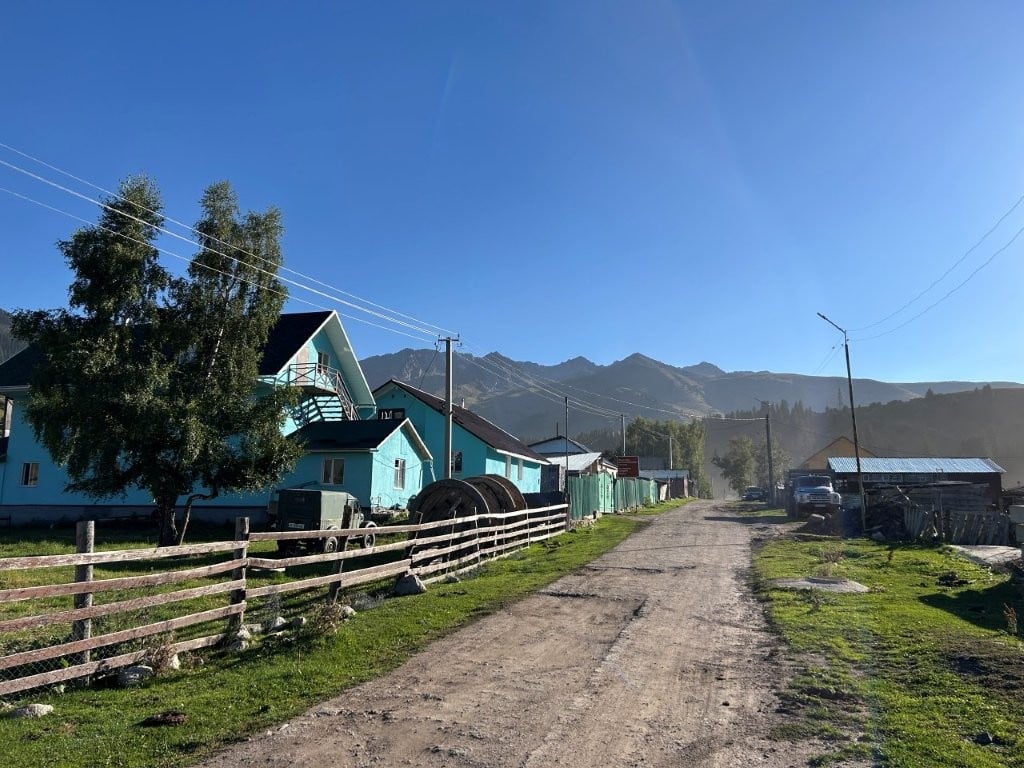
Jyrgalan, on the other hand, is truly UGLY. In fact, it is currently one of the ugliest towns I’ve ever seen. Hold on, hold on, don’t give up on her just yet, though. Note, I said, currently. Because at this particular moment in time, Jyrgalan is in the midst of a full-on glowup. Or “makeover”, for those of you over 40.
It’s fair to say I can’t think of a single place we’ve travelled with a higher percentage of the town under construction. Info was mixed and incomplete to say the least, but it seems as though a lot of folks with a lot of money are betting hard on Jyrgalan being the next big… I don’t know. Ski resort? Hiking destination? Cattle breeding conference centre? Hard to imagine any of those. But I’m sure it’ll seem more plausible when the entire town isn’t torn asunder and filled with backhoes and dust.
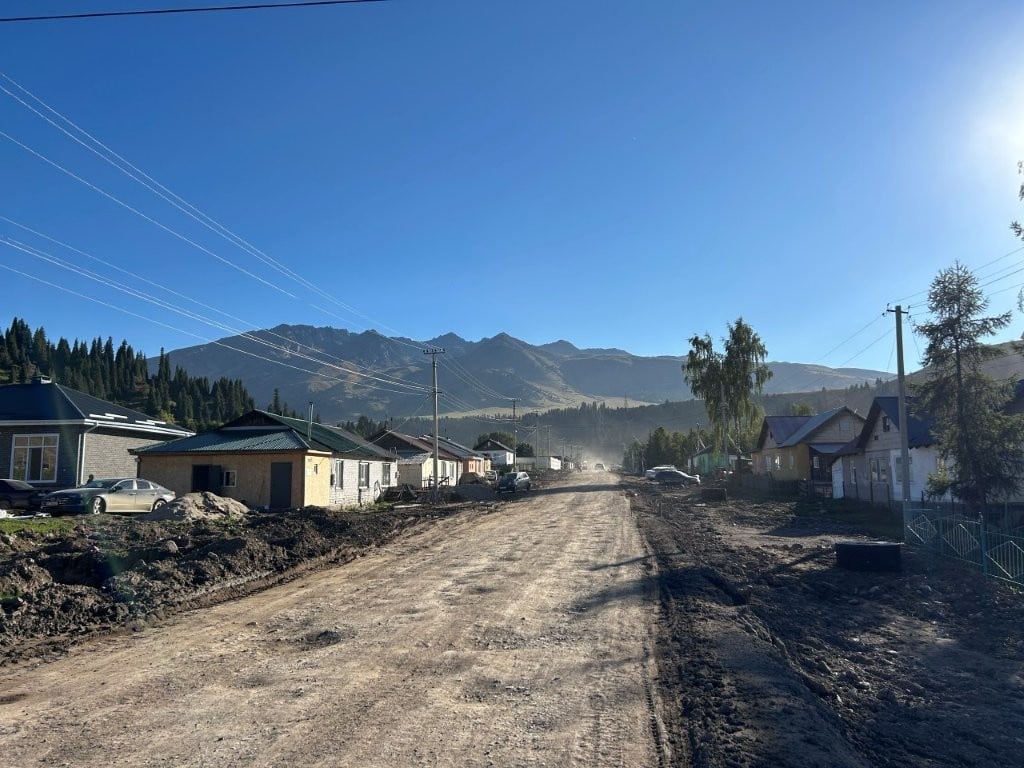
Of course, every road is being upgraded as well, something that seems to apply to most of Kyrgyzstan. Apparently the current Kyrgyz president also has big dreams. Suffice to say, Jyrgalan is going to look much different in a few years. Not to mention Kyrgyzstan as a whole. Will all that investment pay off? Who knows, I guess you’ll just have to tune in to our sequel 5 years down the road. But, for now, Jyrgalan is, like I said, UGLY.
And, on top of all that, we arrived in light rain and left a few days later in bright sunshine and it was rather shocking just how quickly Jyrgalan went from “muddy” to “dusty” with almost nothing in between. Impressive.
Big edge Karakol, simply because it is only under a normal amount of construction.
Location
Karakol is closer to Bishkek, closer to massive Issyk-Kul and closer to all the scenic attractions and yurt camps along the south side of the lake. There are frequent “marshrutkas” (minibuses) heading in most directions and there is also a daily direct bus to Almaty, Kazakhstan.
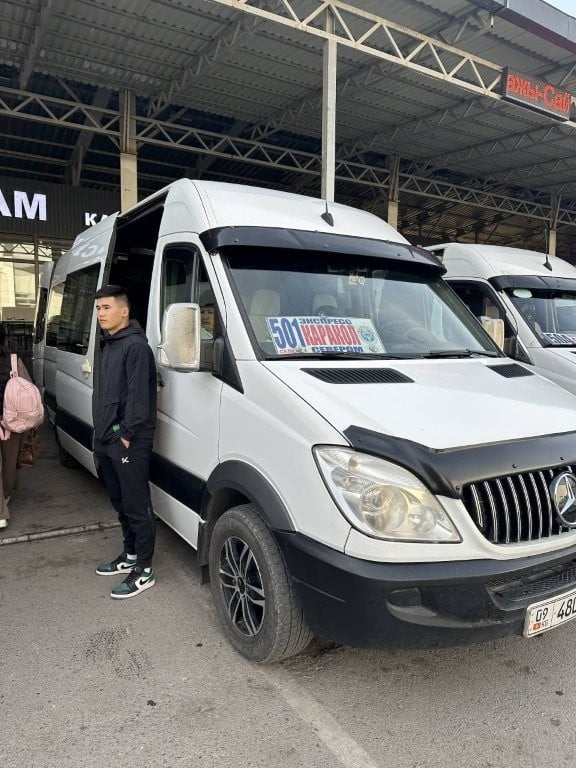
Jyrgalan is closer to the Kazakhstan border, for what that’s worth. It is also quite remote, so you sort of get a feeling of seclusion. When the workers pack up for the day, anyway. And it is the most common starting point for the 8-9-day Ak-Suu Traverse, one of the top long-distance treks in Kyrgyzstan. Theoretically, there are 3 marshrutkas per day at set times both to and from Karakol but, in practice, they kind of just leave when they are full, or when they feel like it, or maybe not at all, depending on the day.
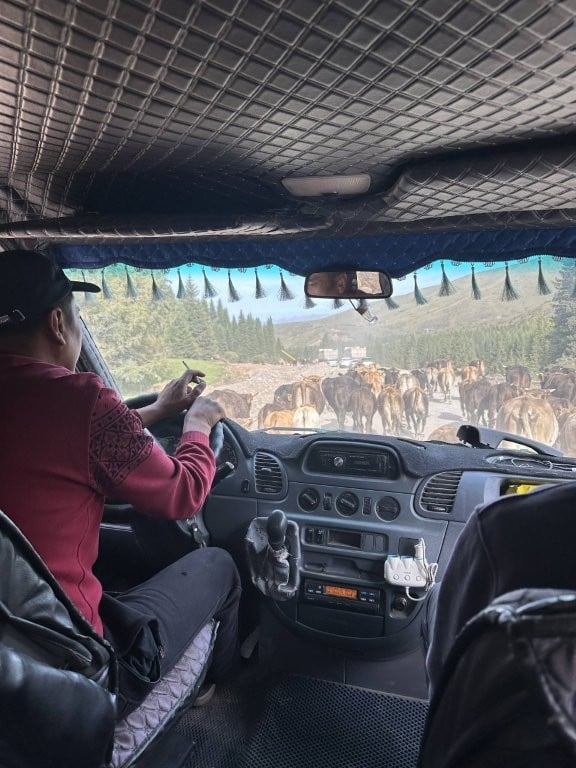
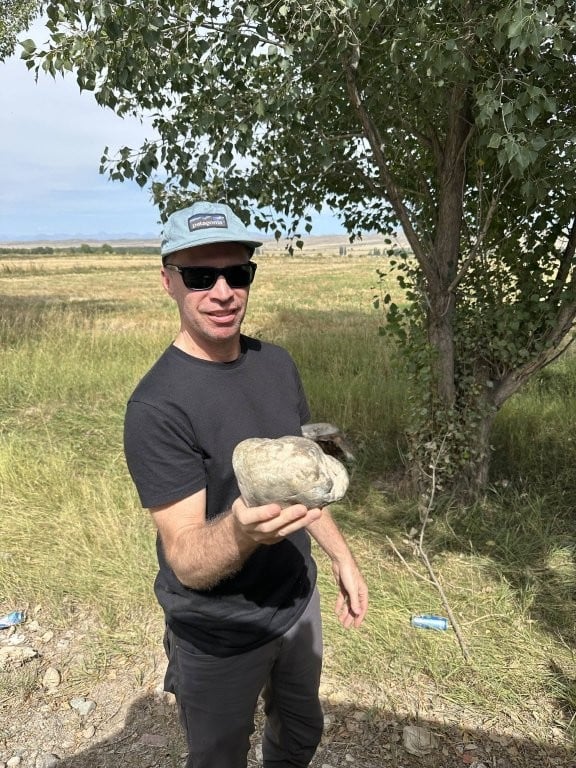
Which is why we arrived an hour early for the 10:30am to Karakol, just to be safe, and only waited and fretted for about 5 minutes before a truck driver pulled over, unprompted, and offered us a ride to Karakol. A super-nice guy named Ruslan who admirably kept his patience while slowly navigating through several of the ubiquitous herds of cattle and horses that routinely block the roads around Jyrgalan. Then, closer to Karakol, he absolutely McGyver-ed his way out of a “huge rock stuck between the duellies” problem, took us right to Dastarkon restaurant, then steadfastly refused to accept any money for his trouble. Definitely my favourite Ruslan so far.
Edge Karakol.
Karakol and Jyrgalan Map
Click the star to save this map to your Google Maps – then find it under Saved/Maps (mobile) or Your Places/Maps (desktop)
Scenery
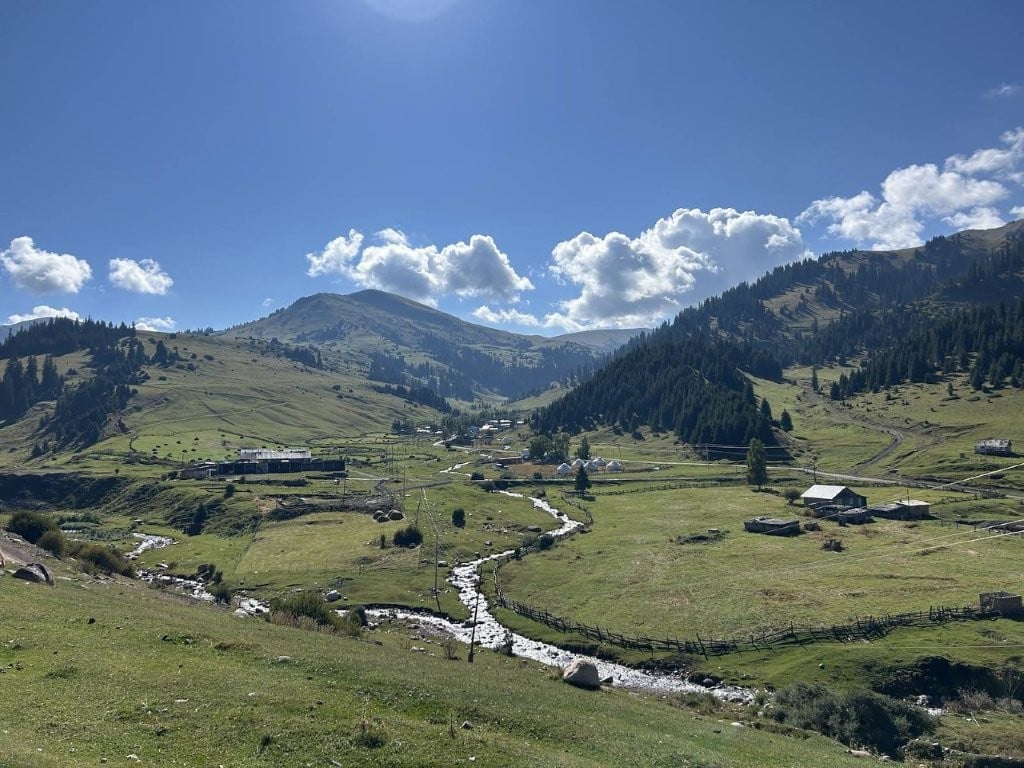
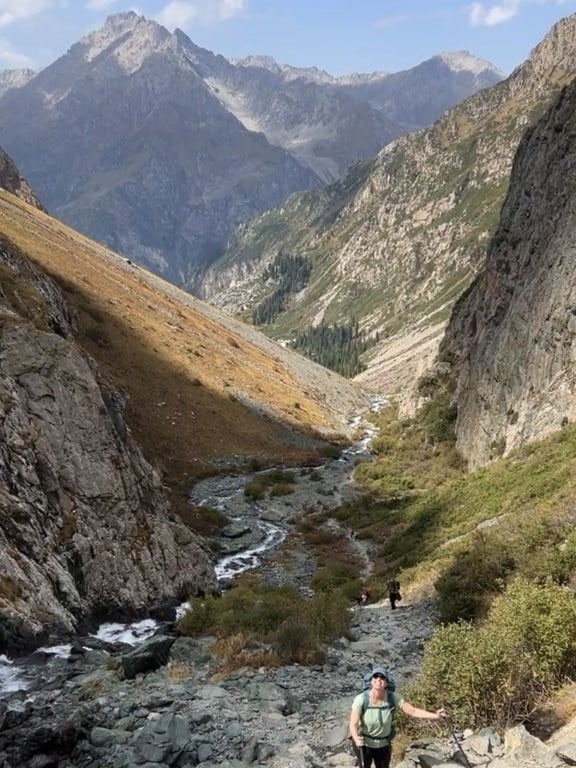
Walk 15 minutes out of Jyrgalan (beyond earshot of the nearest bulldozer) in three directions and you will find yourself in fairly pristine green hills and pine forests. And all the high points have good mountain views, although the big peaks are quite far away.
From almost everywhere in Karakol there are nice views of snow-covered mountains but as far as getting out of town, you won’t be doing it on foot. It is a full-sized city and while there isn’t anything technically wrong with it, nobody’s going to be confusing it with Paris or Cape Town any time soon when it comes to walking options.
Edge Jyrgalan.
Sites and Attractions
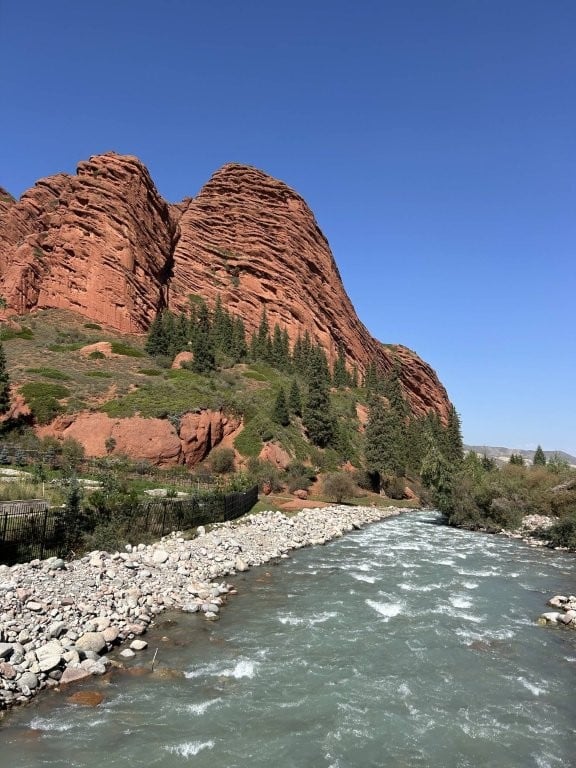
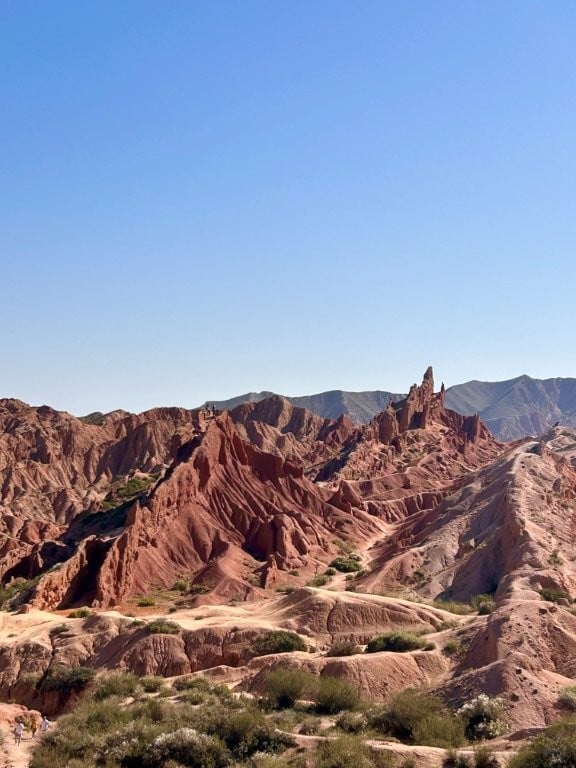
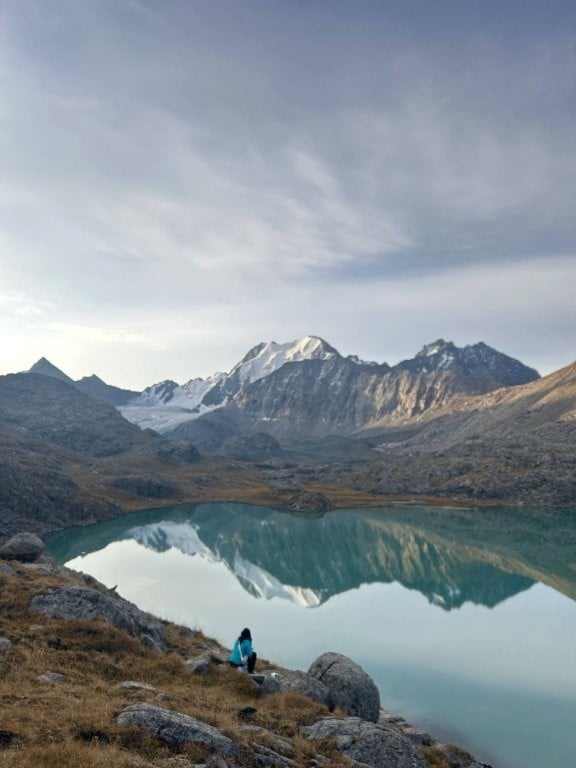
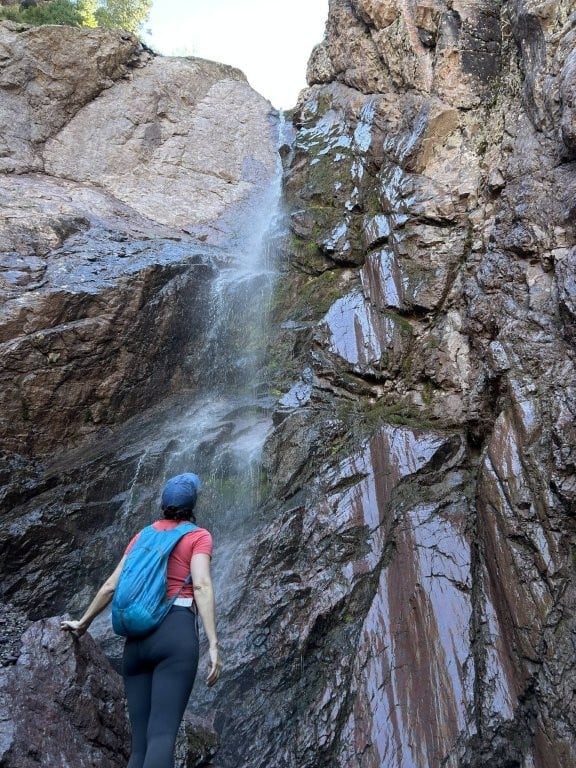
Karakol is the best base to visit the hot springs at Altyn-Arashyn, the beautiful campsites of Karakol Gorge, the gorgeous red rocks of Jeti-Oguz, Barskoon Waterfall and the badlands terrain of Skazka Canyon (Fairytale). It is also easy to reach the beaches and yurt camps of Issyk-Kul. And the most popular activity in the area is a 3 or 4-day trek from Karakol Gorge to Altyn-Arashyn via the stunning blue Ala-Kul (Colourful Lake).
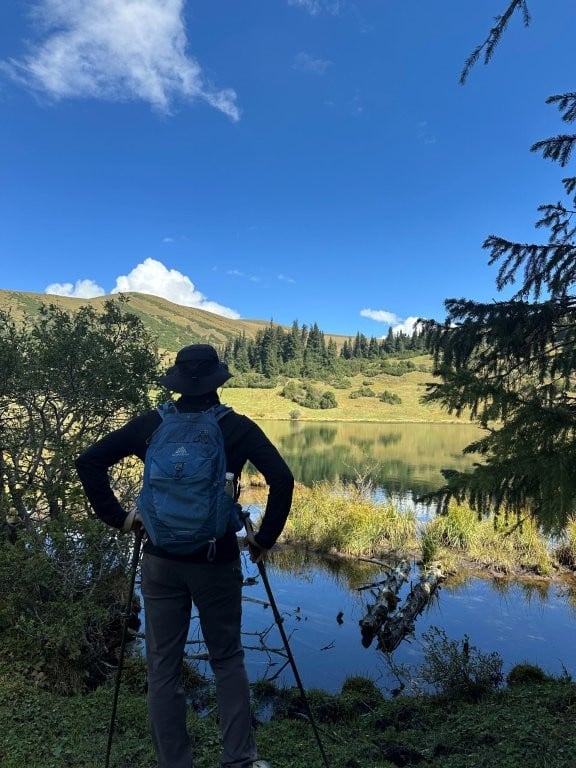
Jyrgalan, on the other hand, supposedly has a cool rock on a hill with views over the town, although we couldn’t find it. It does, though, have some excellent day hikes, including the impressive ridge hike to Turnaluu-Kul, where we only saw a handful of other hikers until we all converged at the lake, where a couple nosy horses seemed very certain we were eventually going to dig some food out of our backpacks, and were not being particularly patient about it. There is also the easy but dusty road walk up to Kok-Bel Waterfall and the valley walk to Tulpar Tash.
Big edge Karakol.
Tourists
In Karakol, there are lots of tourists. Everyone who makes it to this corner of Kyrgyzstan ends up in Karakol at some point, even including the occasional tour bus.
In Jyrgalan, there are hardly any tourists. There are about 5 or 6 small places to stay, so you’ll see those people around. Then there are some hikers who opted not to spend the night and just arrived in the morning to head straight out on the Ak-Suu Traverse. You might see them very briefly. And then there are usually a few groups that show up from Karakol just to do a day hike. Which all sounds like it would add up. But it doesn’t really.
Edge Jyrgalan.
Pronunciation
Karakol – kar-ah-kol. Yep, that makes sense.
Jyrgalan – jer-gah-lahn. Not terrible.
Edge, even.
Prices
You’d think Jyrgalan, as a quiet mountain village, might be the more economical option. But you’d be wrong. There are very few accommodation options so it is kind of a seller’s market. And there is, like, one coffee shop and one restaurant (Peak), so you’re kind of stuck paying whatever your accommodation asks for food. And, in our case, Mine Hostel asked for quite a pretty penny.
Karakol, on the other hand, has a lot of hotels and restaurants, all of which charge competitive prices that match up well with those around the country.
Big edge Karakol.
ATM
Karakol – yes, many.
Jyrgalan – no, none.
Edge Karakol.
Accommodation
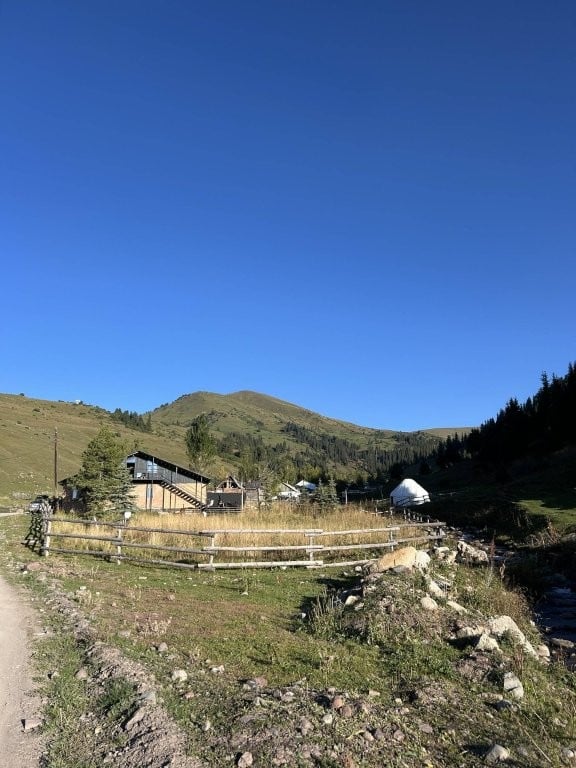
There are really only two actual hotels at the moment, so they kind of charge what they want. The homestay/guesthouses are cheaper but lack privacy and facilities. We stayed at Mine Hostel, probably the nicest place in Jyrgalan. Which meant it was also the most expensive but, alas, still not necessarily all that nice.
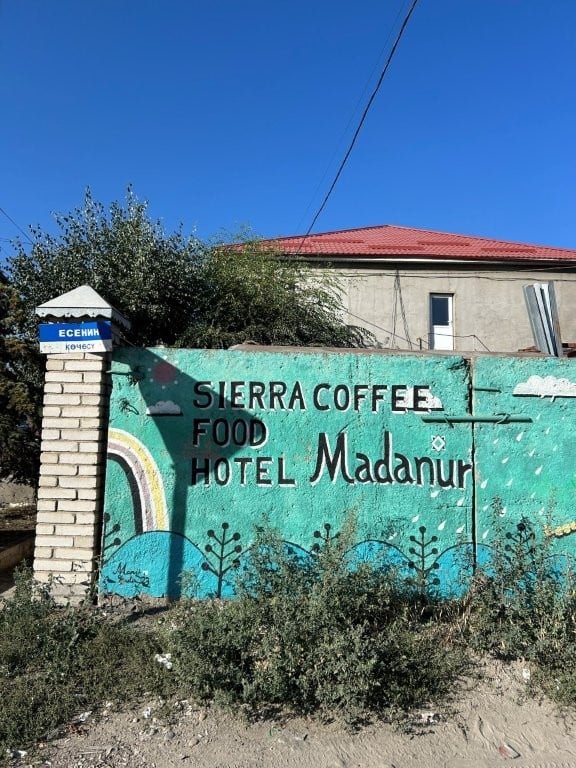
Karakol doesn’t have as many recognizably tourist-friendly options as you might expect from a city of its size, but there are at least a few good hotels and several good restaurants. Over three different stops, we stayed at one excellent hotel (Madanur) and one okay guesthouse (Guest House on Derbisheva).
Edge Karakol.
Where to Stay in Karakol
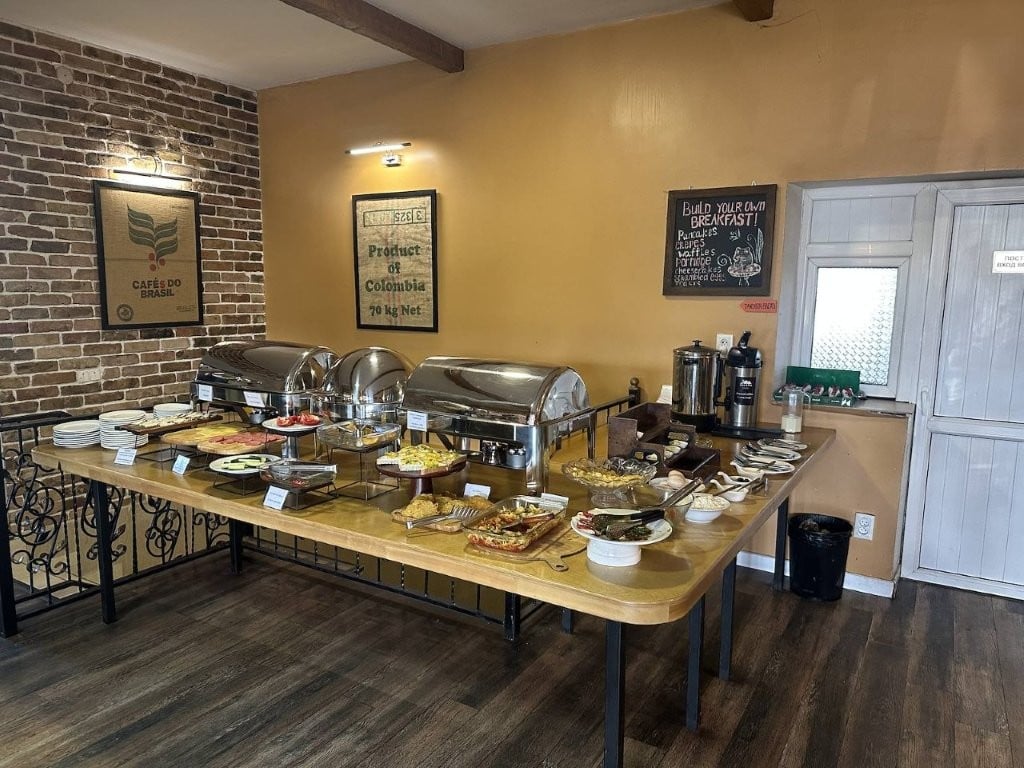
We strongly recommend staying at Madanur Hotel. We stayed there two separate times and were impressed both times. It is a modern, organized hotel on a very convenient street that can answer questions and organize trips if needed (they got us a good deal on a driver to Jeti-Oguz and back). The breakfast buffet is excellent and the hotel doubles as a coworking space so the wifi is excellent (although not necessarily in all the rooms).
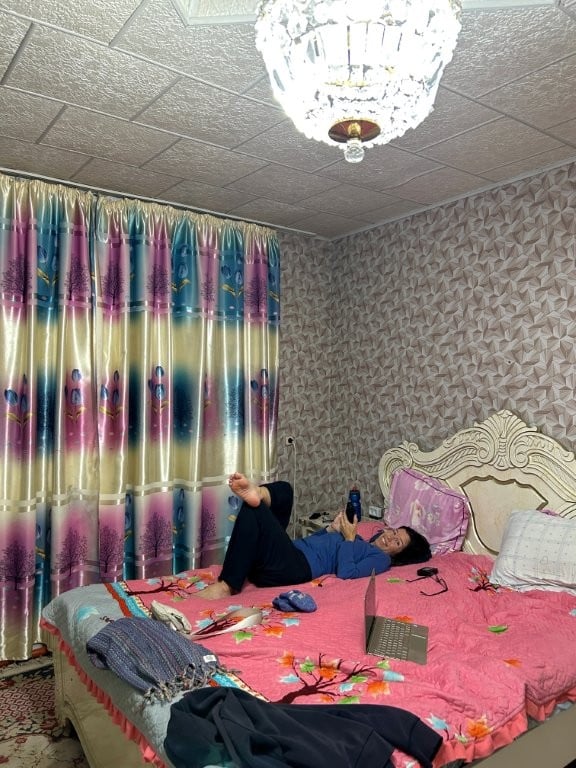
However, if you are looking to spend a bit less and/or are interested in the traditional Kyrgyz guesthouse experience (i.e. dated rooms in someone’s house), we also spent a comfortable night at the Guest House on Derbisheva. Colourful.
Where to Stay in Jyrgalan
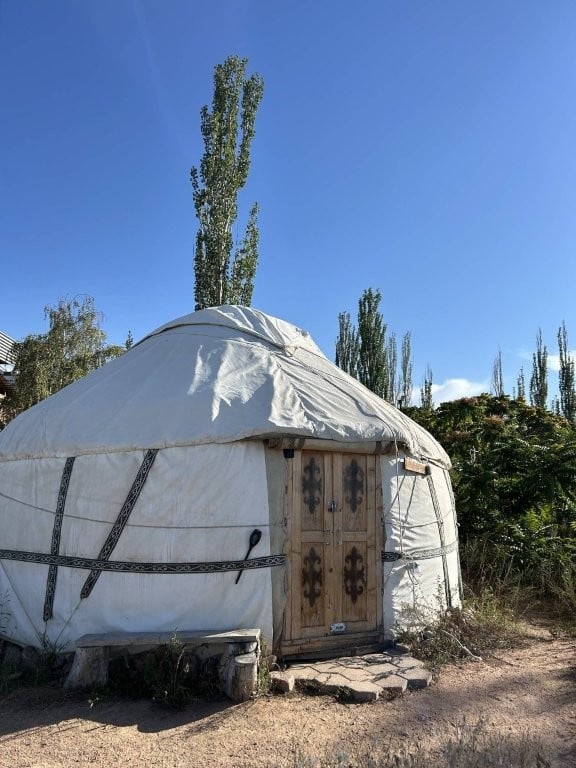
All the construction in Jyrgalan suggests there will more options soon but, for now, choices are limited. There are several small guesthouses and then Mine Hostel, which is quite modern and full of handy facilities, although well out of “town” and not much to look at on the outside (the entrance is very uninviting) but is actually quite nice inside.
It definitely had its pros and cons. Good wifi, comfortable room, good place to meet other travellers. On the other hand, both the room and meals felt overpriced for Kyrgyzstan – even though it was the most expensive place we stayed in Kyrgyzstan, we still had to share a bathroom. Drinking water wasn’t very accessible, either – there was bottled water for sale or your can use the kettle to boil water like we did.
However, breakfast is good, as were the packed lunches, and you are welcome to use the kitchen if you want to bring your own food instead of paying for meals.
Food
Meals at Mine Hostel in Jyrgalan were ok and the breakfasts and packed lunches were pretty good. All were expensive. We did not eat at Peak Lodge but some friends did and were not impressed. In detail. And that’s pretty much the end of the list, other than whatever meals you’ll get staying in one of the smaller guesthouses.
Karakol has a lot of places to eat, some of which are specifically targeted at tourist palates. Madanur’s Sierra Café was quite popular, provided fantastic included breakfasts and decent other meals.
Aori was the site of one of my most pleasant surprises in Kyrgyzstan (chicken alfredo pasta) and one of my biggest disappointments (when they had removed it from the menu the following week). The servers were sweet but ineffective and one night they were out of basically 90% of the drinks on their menu. Big selection of food, though, and pretty nice décor.
Dastarkon is another touristy choice (a lot of groups stop here) with really tasty food, good prices and lots of traditional choices (all with nice big photos so you have some idea what you’re getting yourself into).
Big edge Karakol.
Getting Around
There are lots of taxis in Karakol. Make sure to download and activate the Yandex Go app before arriving in Kyrgyzstan (apparently it won’t always work with foreign sim cards if you wait until arrival). We used it all the time and it worked perfectly. It would only let us choose “cash” as a payment method but at least the price was set and we never paid more than $US2 for a ride anywhere in the city (including a sizeable tip).
In Jyrgalan? You can walk, I guess. Or run, if that suits your schedule better.
Edge Karakol.
Summary
Jyrgalan has its own very specific niche – basically, as the setting off point for various long-distance hikes or horse treks. Beyond that and the secluded feel, however, Karakol is superior in every other way. Better hotels, better restaurants, better transportation connections and far more activities nearby.
Essentially, if you are travelling slowly and want to see something a little different and maybe get away from the main tourist crowd for a couple days, by all means, check out Jyrgalan. But if your time is at all limited you should stick with Karakol. It has lots of good choices for both food and accommodation, plus a long list of day trips to enjoy. Karakol!
Pin it for later!
Other Posts You Might Like:
Ala Kul Trek: A Classic Kyrgyzstan Mountain Hike
My Night on the Trans-Mongolian
Just Another Pic on the Great Wall of China
Nepal: Things to Know Before Visiting
Bhutan: Your Druk Path for a Bowl of Cheese
Karakoy Istanbul: Reasons to Stay
About the Author
Dean Johnston

Dean Johnston quit his job as a financial planner in 2008 to travel the world, and has now visited all 7 continents and more than 90 different countries. He wrote his first blog entry in a sweltering internet cafe in Bali in 2000 and has been writing about their travels ever since, including publishing 3 travel books.
As Routinely Nomadic, Dean remains focused on providing informative travel guides, entertaining stories and useful social media content to readers from all over the world.