
Another day, another long-distance trek in some strange country. No offense, Kyrgyzstan, I don’t mean that you are particularly strange, just strange to us. And to anyone who isn’t used to seeing so many y’s and z’s their names, of course. Nonetheless, the amazing 3-day, 2-night Ala Kul trek, in the beautiful Tian Shan mountains of central Kyrgyzstan, was a great experience.
Very difficult, but not impassable. Not always comfortable, but we were always generally warm and well-fed. The less said about the toilet situations, the better, but, hey, that’s camping, right? At least that’s what we tell ourselves 2 to 3 times each year while rushing and grimacing through what we hope will be our only meaningful “outhouse” visit of the day.
Our site includes affiliate links to products we recommend. If you use one to make a purchase, we earn a small commission at no extra cost to you. Thanks for your support!
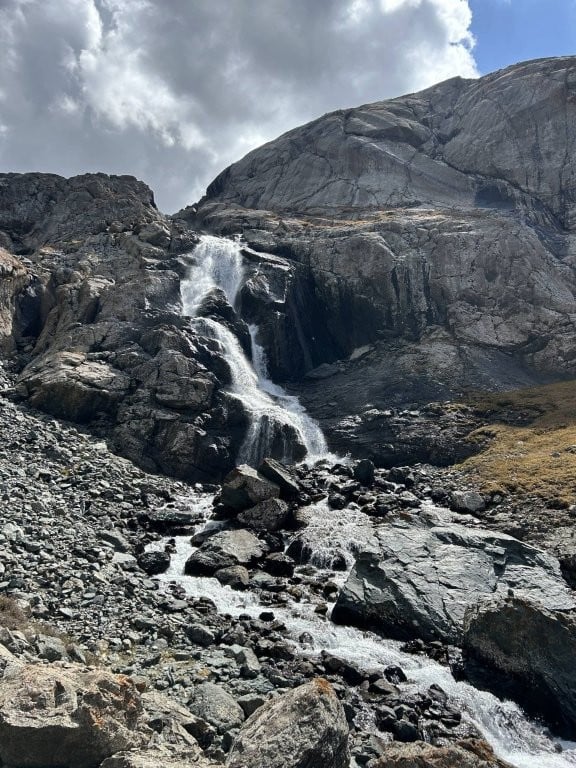
But, as advertised, incredible scenery. Karakol Gorge, Karakol Viewpoint, Ala Kul Waterfall, Ala Kul (“kul” just means “lake”), Ala Kul Pass, Altyn-Arashyn Valley. All spectacular. Plus, despite several worrisome weather forecasts (we prefer max diversification of weather apps so we can always find a sliver of hope) we only experienced the tiniest hint of drizzle late on day 2, just enough rain to briefly get some use out of our ponchos on day 3, but were treated to perfect calm, sunny conditions during all the most important lake view moments.
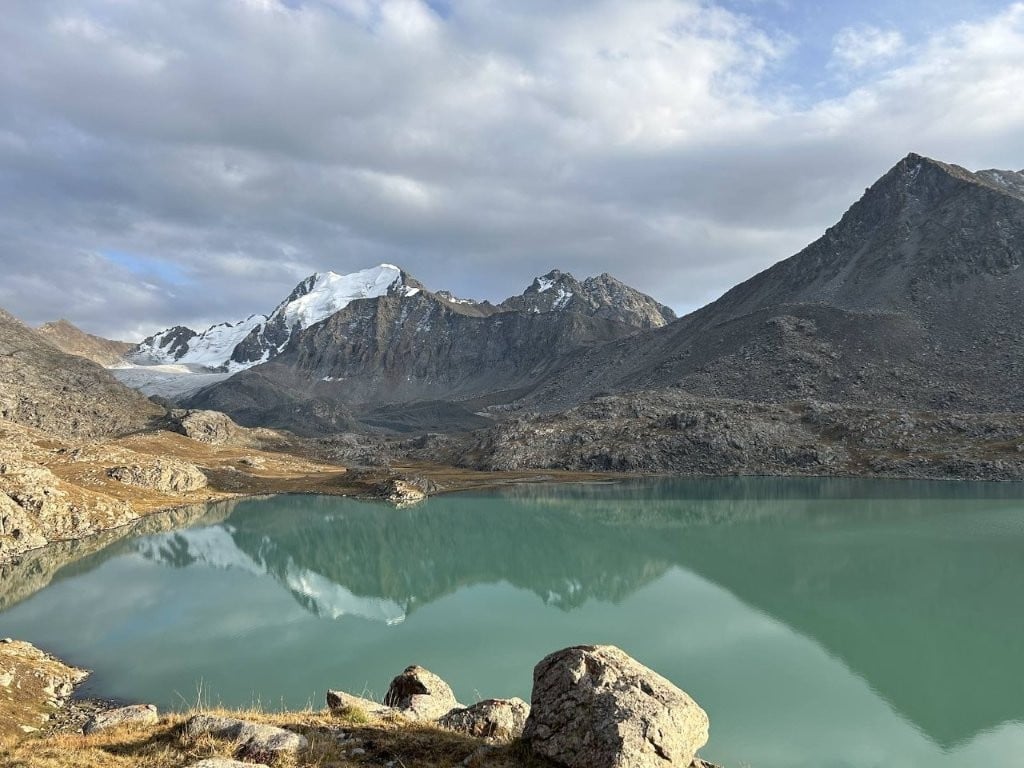
Starting and ending in Karakol, the fourth-largest city in Kyrgyzstan (82,000) and the de facto trekking capital of the country, the Ala Kul trek is easily the most popular long-distance hike in the region. The Ak Suu Traverse is also considered an epic adventure but, while it includes the Ala Kul area as well, it is much longer (8-10 days) and more difficult (5-7 days of hiking more difficult, to be exact).
Considering our rather ambitious plans to visit 3-4 different ‘Stans over the course of 5 weeks, we decided to go with the shorter option. Plus, the Ak Suu sounded HARD. It’s one thing hiking for two weeks through the Alps, staying in nice lodges and eating hearty Italian pasta or Swiss rotis every night, but another thing entirely to commit to a week and a half of vegetable soup, fried rice and shitting in temporary holes in the ground. So, the Ala Kul trek it was.
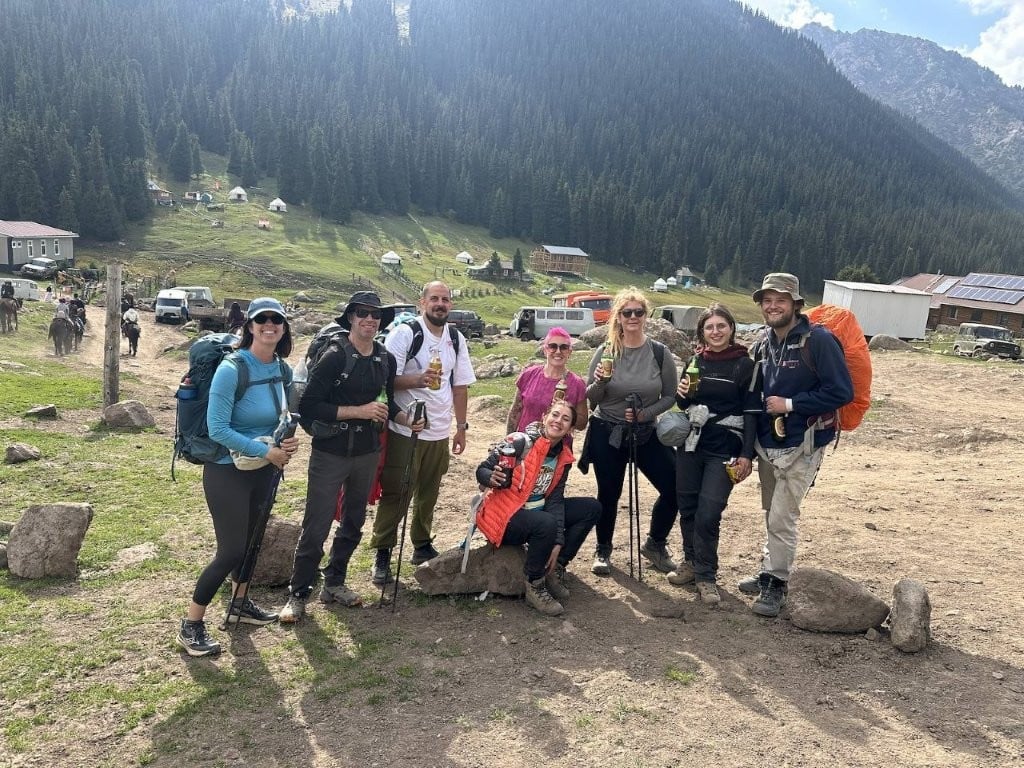
To make the planning as simple as possible, we joined a 3-day, 2-night Ala Kul trek through Kyrgyz Life, a popular trekking company based out of Karakol. Our diverse group of 10 hailed from no fewer than 7 different countries and we were led by a pair of local Kyrgyz guides, Kuzman and Adi.
Ala Kul Trek
32 km / 16-20 hrs / 2,300m elevation gain/loss
These are the figures for our version of the Ala Kul trek, which I will explain in more detail below. There are variations that can significantly extend or shorten the trek, although no matter what version you choose you will face a very strenuous climb to the lake, then another to the pass.
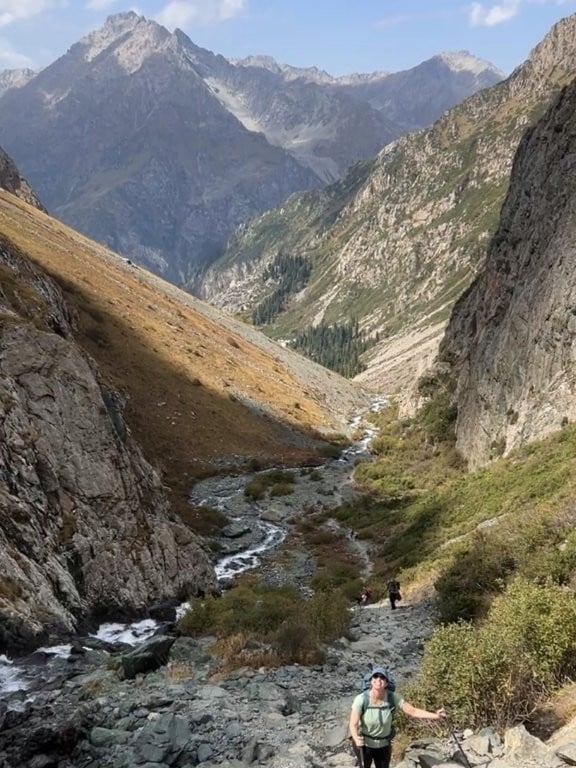
Immediately over the pass, the trail is very steep and very slippery. Awful and treacherous for some, merely inconvenient for others, but that stretch only lasts about 20 minutes or so and isn’t bad enough to warrant avoiding the trek altogether. Once you make it down that steep part, it is a long, monotonous but gradual downhill to Altyn-Arashyn.
There is no perfect AllTrails GPS that covers the entire trek but these two overlap enough to be useful:
Ala Kul Waterfall to Altyn Arashan
There are three ways to do this trek:
1. Independent Camping
You will need arrange all your transportation and carry all your own camping gear and food (although some of the camps will occasionally sell meals without prior notice). This allows maximum flexibility but means your bag will be huge and your nights not as comfortable as some.
2. Independent in Yurt Camps
You will still need to organize transportation to and from the trek, as well as reserve beds and meals in the yurt camps. However, you will be able to set your own pace and schedule. This is usually cheaper than joining an organized tour but takes a fair bit more planning.
3. Hire a Trekking Company
You can join a group trip and they will take care of all the logistics and details. The downside is it will cost more and you may have to alter your hiking speed based on your group. Having a guide is a benefit for some and imposition for others (and may differ by guide). The Ala Kul trail is easy enough to follow – you definitely won’t get lost but there were a few times when the trail split and our guide showed us the better alternative.
While planning your Ala Kul trek, we would recommend joining the Travel in Kyrgyzstan Facebook group. Lots of people on there discuss the trek logistics and quite a few are looking for hiking companions in case that is of interest to you.
Ala Kul Trail Map
Click the star to save this map to your Google Maps – then find it under Saved/Maps (mobile) or Your Places/Maps (desktop)
Ala Kul Itineraries
We did the Ala Kul trek in 3 days with Kyrgyz Life, driving all the way to the Second Bridge and spending the first night in Karakol Camp. After dropping our stuff off, we did the 12 km (return) hike to Karakol Viewpoint. On Day 2 we hiked all the way up to Ala Kul and then to the very end of the lake where their camp is set up. Day 3 involved a shorter, but steeper, route up to the pass (because of where their camp is located), then down into Altyn-Arashyn valley. From the village we took a jeep back to Karakol. You could make it 4 days and 3 nights by doing the same thing but staying the night in Altyn-Arashyn and hiking out the rough 15km road to Ak Suu the next day.
Most people doing the trek independently get transportation to the First Bridge, then hike up to Sirota Lake to spend their first night there (4 different yurt camps to choose from). This changes two things: most of your first day’s hike (a total of 13 km) takes place on the dirt road up Karakol Gorge. Decent enough scenery but you will get dusty from the passing jeeps. And, overall, this part of the hike is not nearly as nice as the trail to Karakol Viewpoint that we did instead.
On the other hand, getting to Sirota on day 1 makes your day 2 significantly easier as you will be starting 1.5-2 hrs (3 km) farther along and 450m higher than from Karakol Camp. All of which has to be done at some point but is maybe easier as part of day 1 than as your first stretch on an already long and difficult day 2.
There are also a few yurt camps along the road in Karakol Gorge, so you could arrive later in the day, do a relatively short first day walk, then head up to Sirota first thing in the morning on day 2.
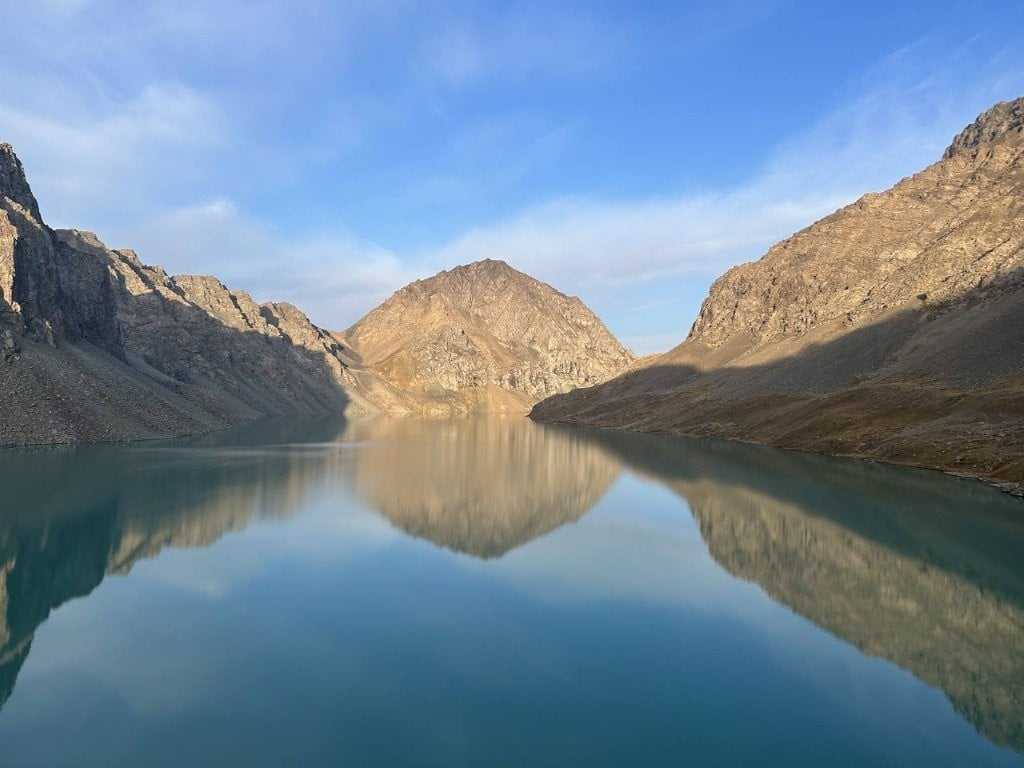
Finally, there are some itineraries that involved going all the way from Sirota to the lake and over the pass in the same day, then staying at one of the camps just below the pass. This is not much more difficult than going all the way from Karakol Camp to Ala Kul but, for us, the best part of the trek was the night spent on the lakeshore – beautiful and peaceful both in the evening and the next morning, offering truly incredible scenery.
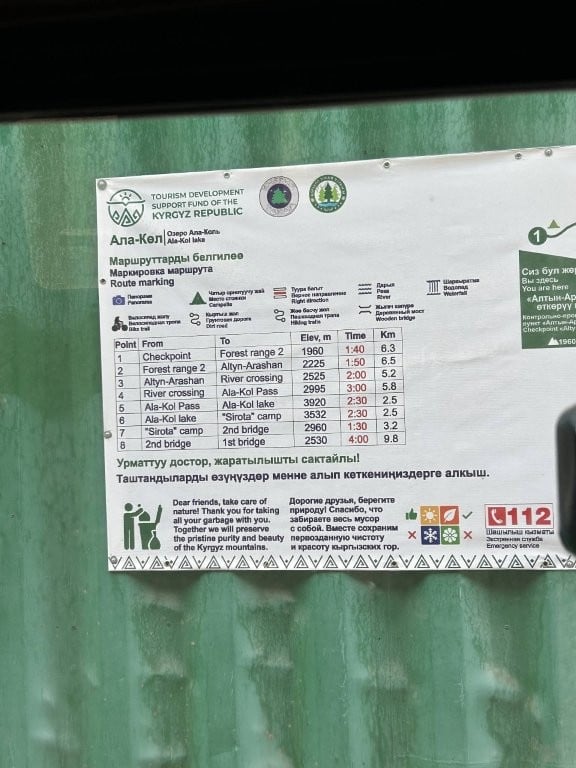
Ala Kul Campgrounds and Stages
Karakol Camp
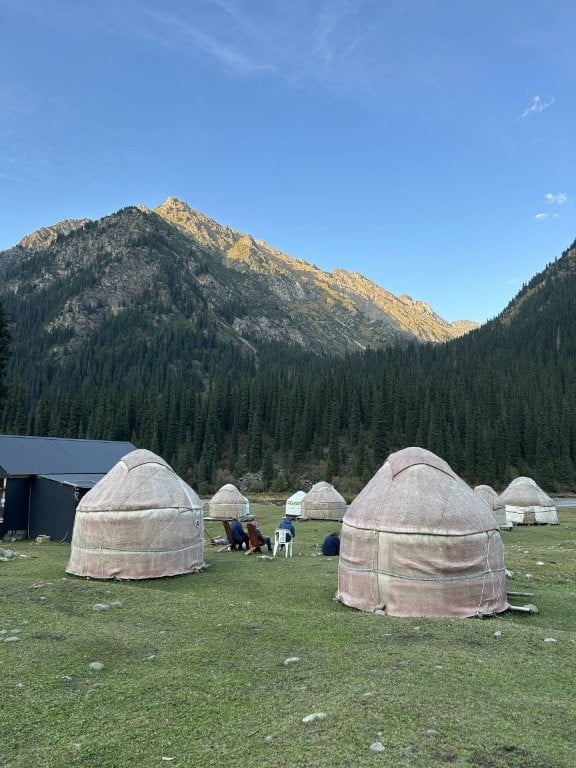
Camps: 4
10 km / 400m / 3-4 hrs
Those figures are from First Bridge to Second Bridge/Karakol Camp. There are several camps in the same area, plus a shop to stock up on supplies (and you can even pay for wifi if you want).
Sirota Camp
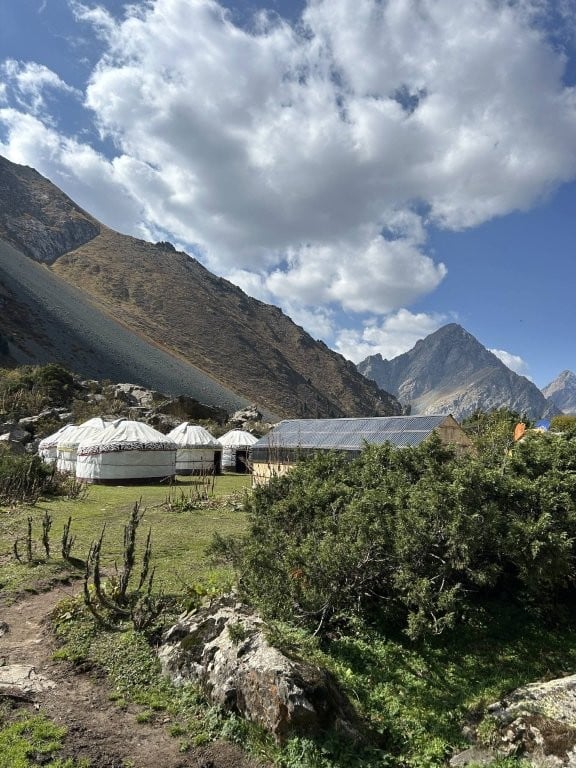
Camps: 4
3 km / 450m / 1.5-2 hrs
There is a cluster of camps here next to Sirota “Lake”, which is really just a small pond late in early September when we were there.
Ala Kul
Camps: 4
6-9 km / 800-950m / 5-6 hrs
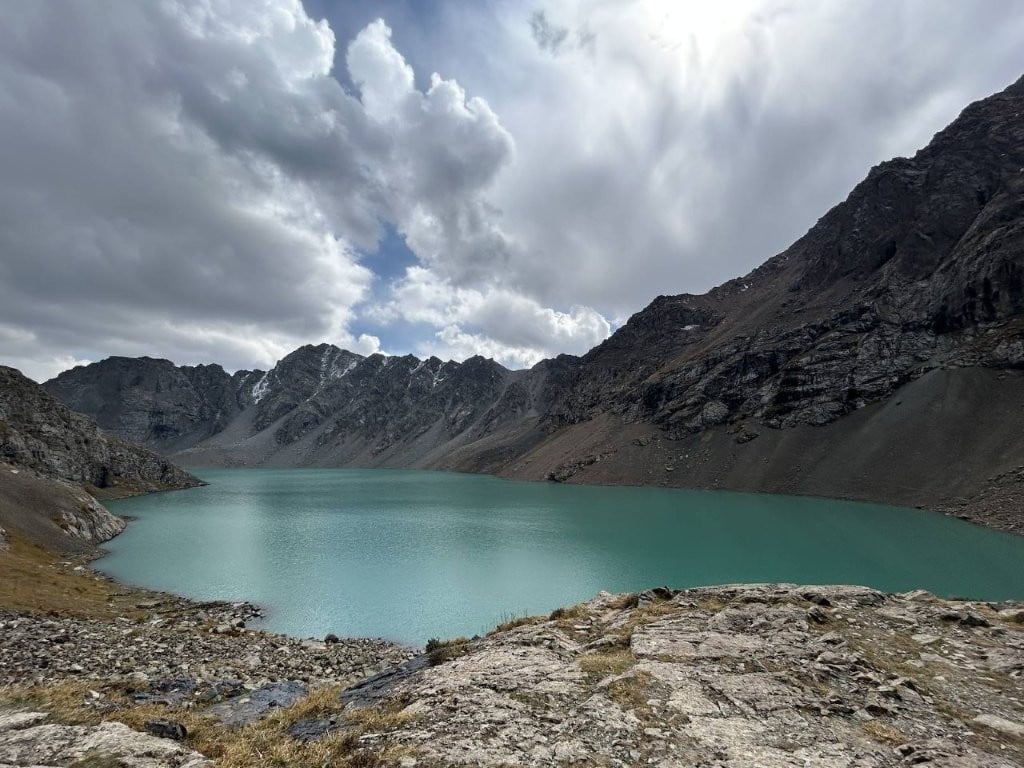
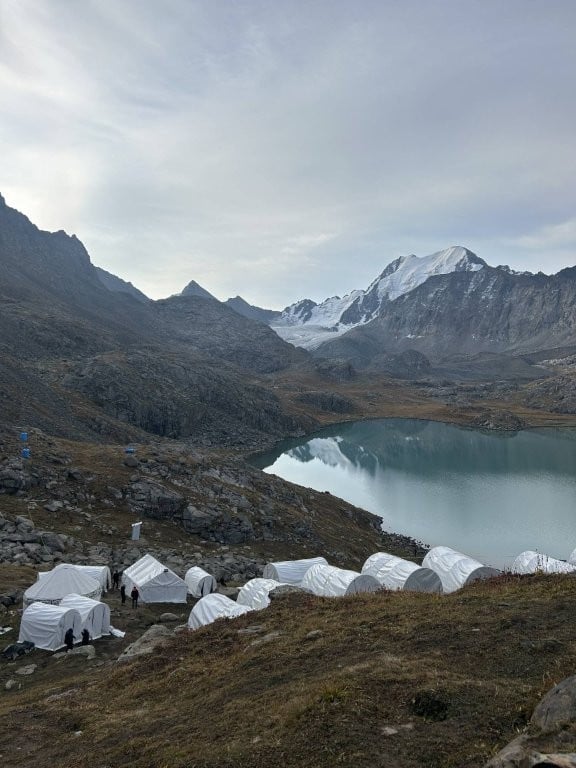
There can be a big difference in distance here depending on which camp you choose. A lot of independent trekkers set up their tents right at the very start of the lake. Then there are several permanent camps set up along the side of the lake, another 1-2 km farther. And Kyrgyz Life’s Ala Kul camp, where we stayed, is located at the very far end of the lake, an extra 3 km at the end of a difficult day 2. However, this placid corner of the lake is gorgeous and it has the best views of the glacier.
Ala Kul Pass
Camps: 5
3-5 km / 400m / 2-3 hrs
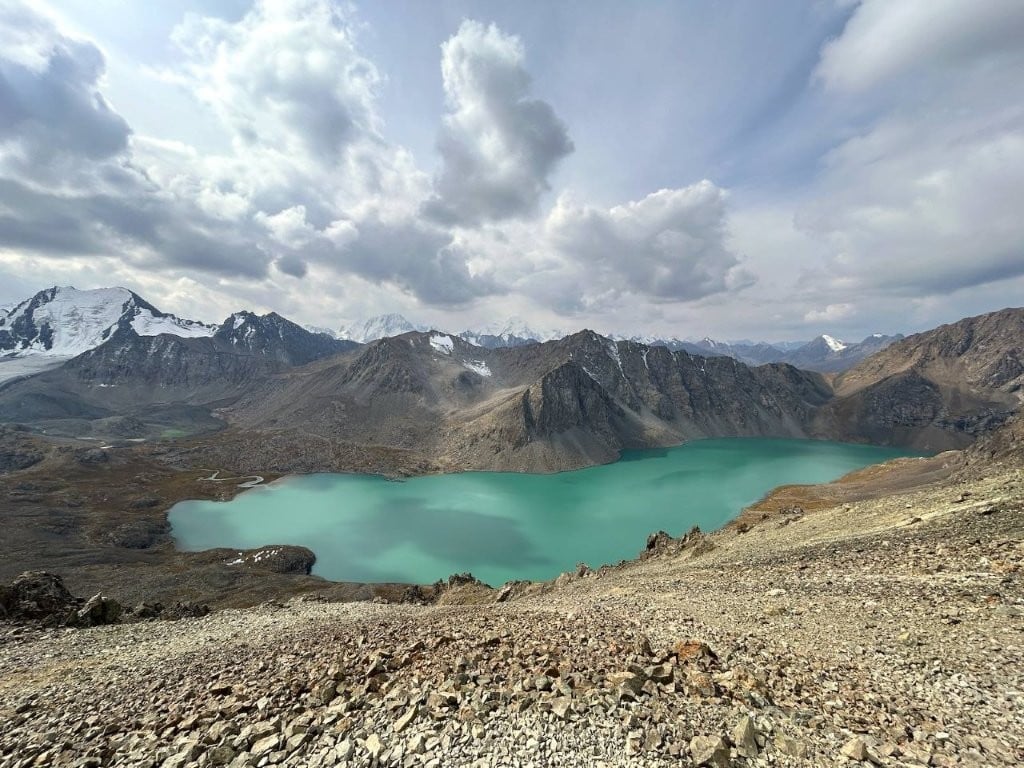
Depending on where you stay along the lake, the exposed path up to the pass will either be steep, VERY steep or EXTREMELY steep. We were staying at the far end of the lake so, unless we wanted to backtrack to the start, it made sense to take the shortcut straight up the hill. So, extremely steep.
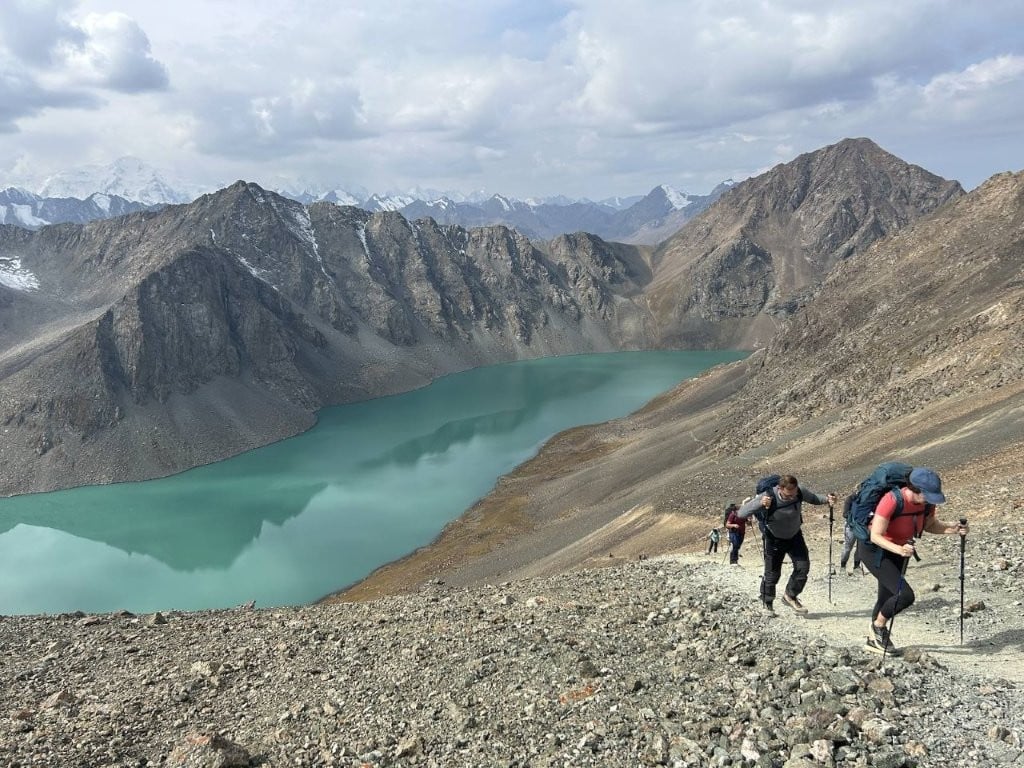
The other side, well, pretty much sucked. Even factoring in the many switchbacks, the first bit is steep, slippery and treacherous. I found my trekking poles helped a lot, especially when sidestepping down the deep scree. Laynni truly HATES scree, so would describe this section in far more colourful language, but she took it slow and unsteady and angry but did eventually make it down unscathed. Unlike one member of our group who slipped and was unlucky enough to cut his wrist on what must have been the sharpest rock of the bunch. Or the German guy who thought he’d hacked the system by sliding all the way down on his ass, only to discover that his phone pulled the chute on that reckless plan and chose to hang back near the top.
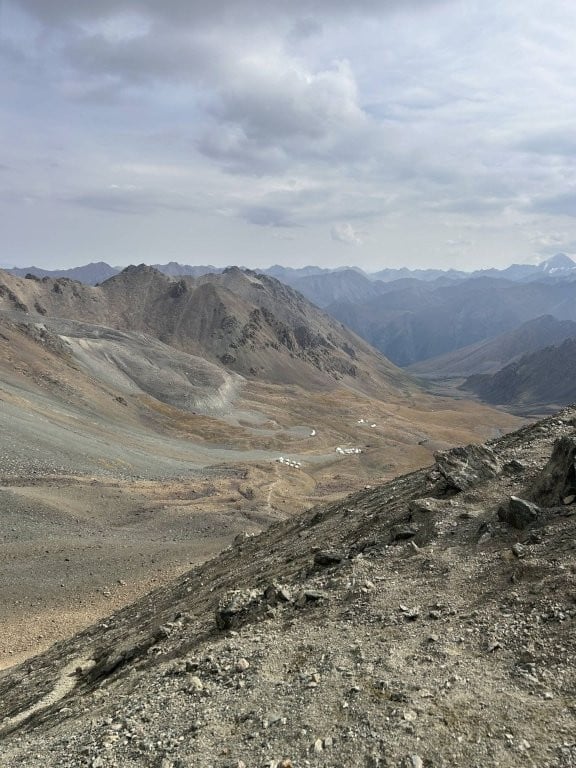
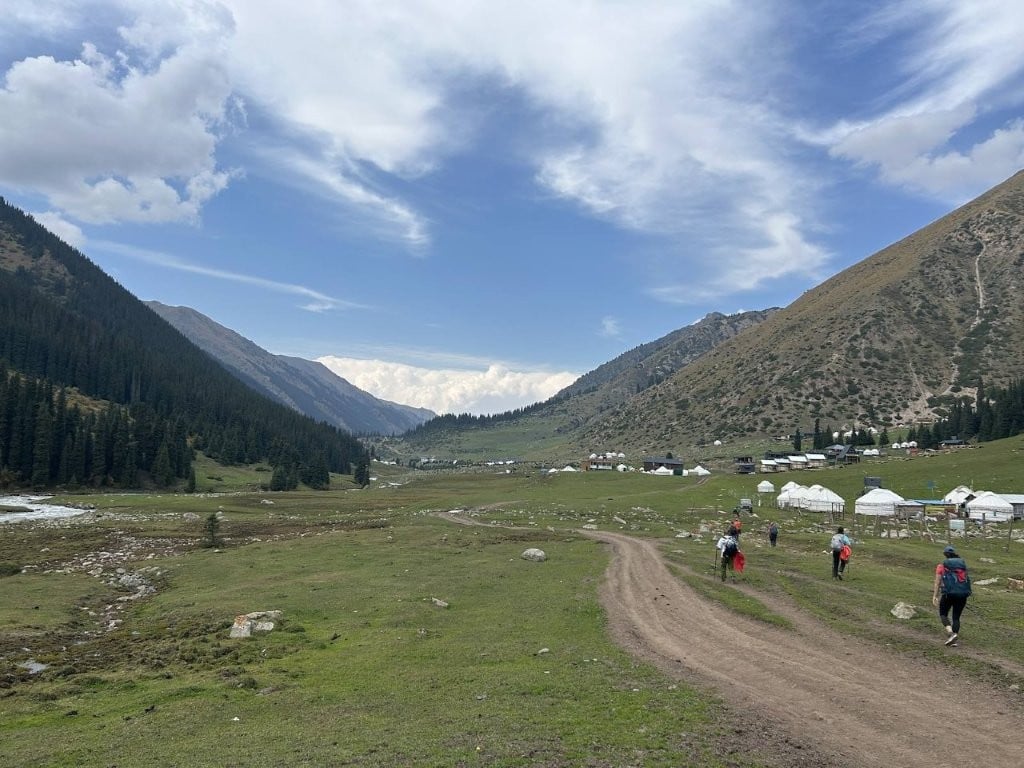
Once you reach the (relatively) flat area, you’ll find a line of yurt camps where you can stay and/or eat.
Altyn-Arashyn
Camps/Hotels: lots
10 km / 0m / 3-4 hrs
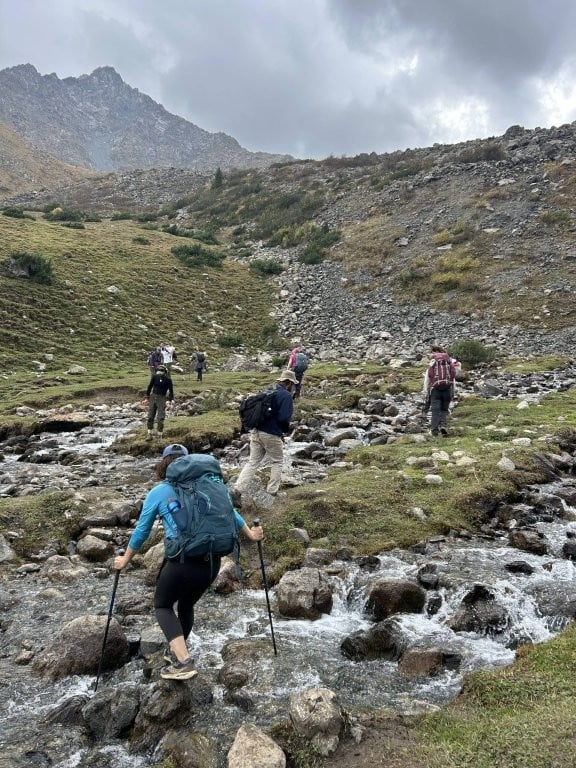
After that initial descent, things get much easier and, eventually, a little boring. It is a long, gradual downhill walk to Altyn-Arashyn. The scenery’s still nice, though, and at the end you’ve got real hotels, restaurants and several of the region’s famous hot springs.
Ala Kul Day Hikes
Karakol Viewpoint 12 km / 500m / 4-5 hrs
These figures are measured from Karakol Camp. If you start your hike further down the gorge, plan accordingly.
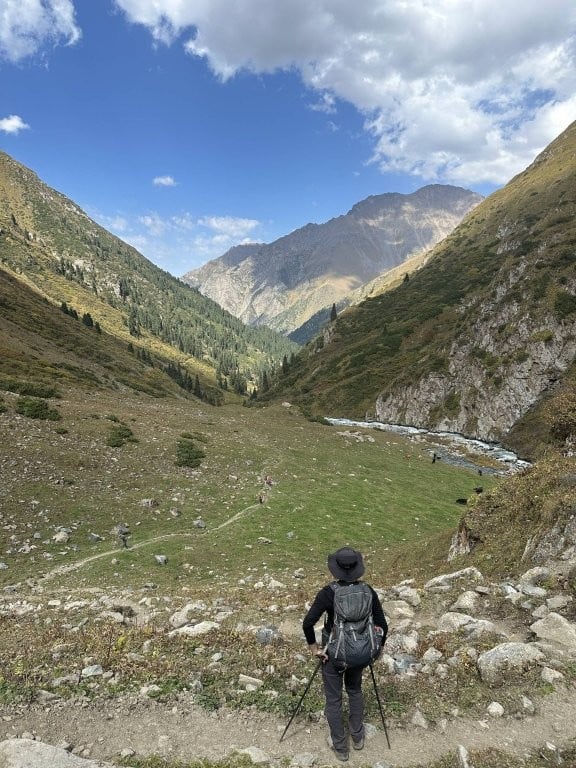
Ala Kul Glacier 6-8 km / 400m / 2-3 hrs
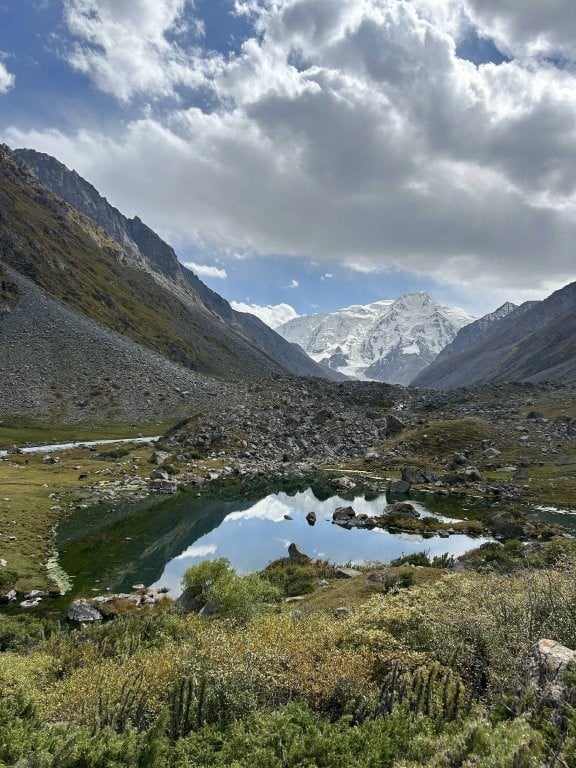
These figures are from Ala Kul Camp at the end of the lake to another small lake at the foot of the glacier. We were far too exhausted to even consider any side quests but the photos looked quite nice. Big props to Nicola and Kuzman for finding the energy.
From Altyn-Arashyn to Ak-Suu
15 km / 0m / 4-5 hrs
This is a VERY rough road down the valley. It is mostly downhill (with a few small hills along the way) but the road is rugged and muddy/dusty and depending on the time of day, you’ll probably be passed by a lot of jeeps, covering you in dust (or mud, depending on the weather).
On the other hand, the jeep ride is not a lot of fun, either, and will certainly cost more money. It does only take 2 hours, though, instead of all day, like the hike will. Having taken the jeep and seeing the hikers along the way, we would never want to walk it personally. But it is definitely a valid option (although you still need to organize transport or find a marshrutka from Ak-Suu).
How to Get to Ala Kul Trailhead
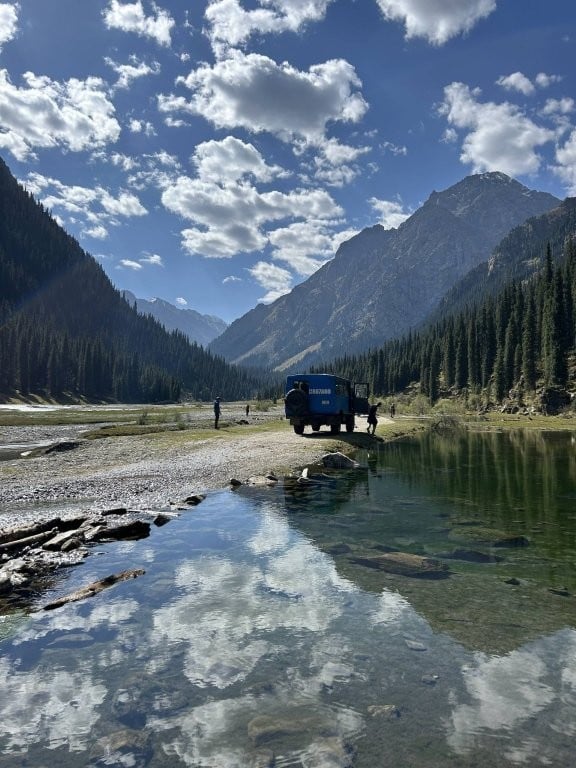
Before our much worse jeep ride out from Altyn-Arashyn, we had considered the trip up Karakol Gorge to the main trailhead to be a very rough road. How naïve we were. Still, that side’s no picnic either and you certainly need a solid vehicle, preferably a 4×4. Although it isn’t too bad if you start walking from the First Bridge, since it is after that when things get really bumpy.
Supposedly you can find some marshrutkas that go as far as the First Bridge but they are hard to predict and most people instead hire a share taxi or private driver to drop them off.
Where to Stay in Karakol
We strongly recommend staying at Madanur Hotel. We stayed there two separate times and were impressed both times. It is a modern, organized hotel on a very convenient street that can answer questions and organize trips if needed (they got us a good deal on a driver to Jeti-Oguz and back). The breakfast buffet is excellent and the hotel doubles as a coworking space so the wifi is excellent (although not necessarily in all the rooms).
However, if you are looking to spend a bit less and/or are interested in the traditional Kyrgyz guesthouse experience (i.e. dated rooms in someone’s house), we also spent one comfortable night at the Guest House on Derbisheva. Colourful.
When to Go to Ala Kul
Being a mountain trek, the season is relatively short. If you’re hoping for a snow-free hike, you pretty much need to go between June and early September. Just outside this range it will still be possible, just be prepared for cold weather and the likelihood of snow. We hiked the second week of September and were lucky enough to get perfect weather (although it did get down near freezing overnight).
Yurt/Tent Camps
Karakol Camp had a variety of yurts, from private 2-person options (we were lucky enough to get one of these) to larger 6-person versions. All had mattresses, sleeping bags and electric lights.
Ala Kul Camp has solid, insulated tents with great lake views. They once again provided mattresses and sleeping bags (two each, just in case).
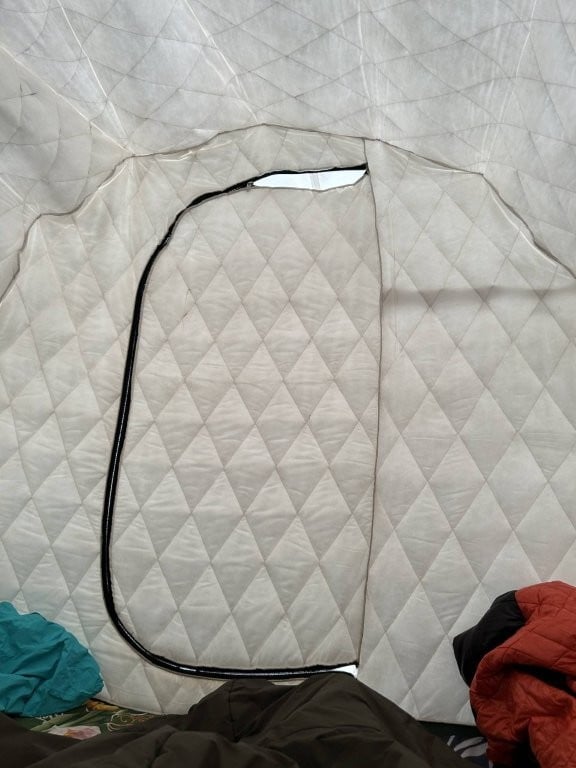
You’ll want to bring something to use as a pillow (we always carry pillowcases that can be stuffed with jackets, clothes or maybe straw or particularly fuzzy roadkill).
Food and Drink on the Ala Kul Trek
This will differ greatly depending on how you choose to do the trek. If you’re camping and feeding yourself then, obviously, you will have full control of your meals. And be faced with the eternal camping dilemma – more food or less weight?
Our food was provided and prepared by the yurt and tent camps. The packed lunches were huge, with a sandwich, granola bar, Snickers, apple, banana, orange and juice box. When we finished hiking for the day we were treated to late afternoon “soup”, which actually consisted of soup PLUS a wide array of nuts, bread, cookies, fruit and a few things I didn’t actually recognize (pasta crumbs, maybe?) Both dinners involved filling chicken/veg/tomato pastas (and vegetarian options upon request). Breakfast was the only weak spot, mainly soup lacking in protein. However, there were still the snack nuts, plus we brought our own trail mixes (as always) and even pre-boiled a few eggs ahead of time at our hotel, just in case (and were happy we did).
The water situation was a bit confusing. The company provided a litre of water per person the first day (nice, but obviously not enough) but ran out of bottled water after the second morning. We always carry AquaTab chlorine pills to treat water along the way, so we were fine. And some of the others had water filters or tablets, as well.
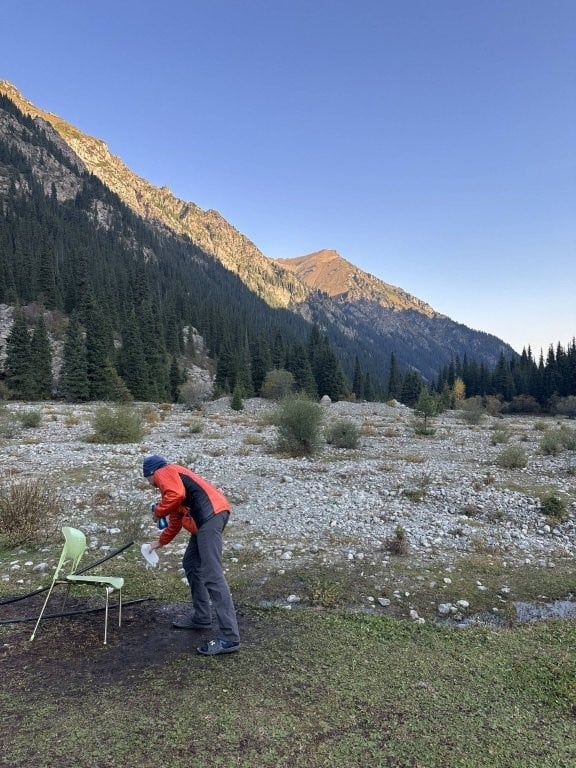
Some didn’t, though, and although we shared some of our Aquatabs, a few people were worried about how their stomachs might react to those and stuck with boiled water instead. On the second night, eventually, some of the guides hooked up a filter system to treat the water coming down off the mountain so I guess all was well that ended well. Confusing, though, and stressful for those who hadn’t expected the water to need treating.
Most importantly, though I WAS able to buy a beer in Karakol camp at the end of our first day’s hike (500ml Apna for $US5). And, apparently, the nearby shop also sold some other options for slightly cheaper. At Ala Kul Camp, however, there was no beer. Sad face emoji.
Then there are actual shops in Altyn-Arashyn that sell beer. Lots of other things, also, but, crucially, beer.
Wifi and Cell Service
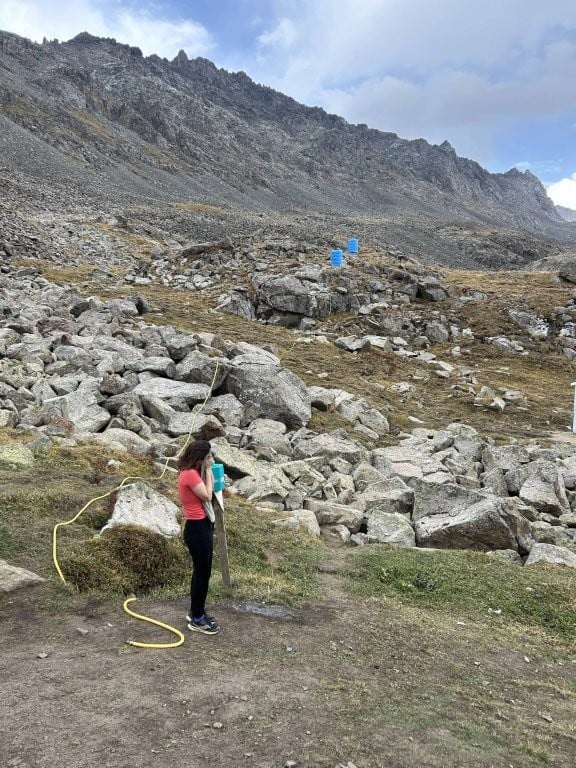
There is basically no cell service along the trek, although you might eventually pick up a signal at Altyn-Arashyn. However, at the shop next to Karakol Camp we were told it is possible to pay for wifi ($US3/hr). Then, I can’t speak for the other camps along the lake, but Kyrgyz Life camp at the end of Ala Kul actually had free Starlink wifi. Why we had to enter a password when the nearest other humans were over a kilometre away, however, remains a mystery.
Wildlife
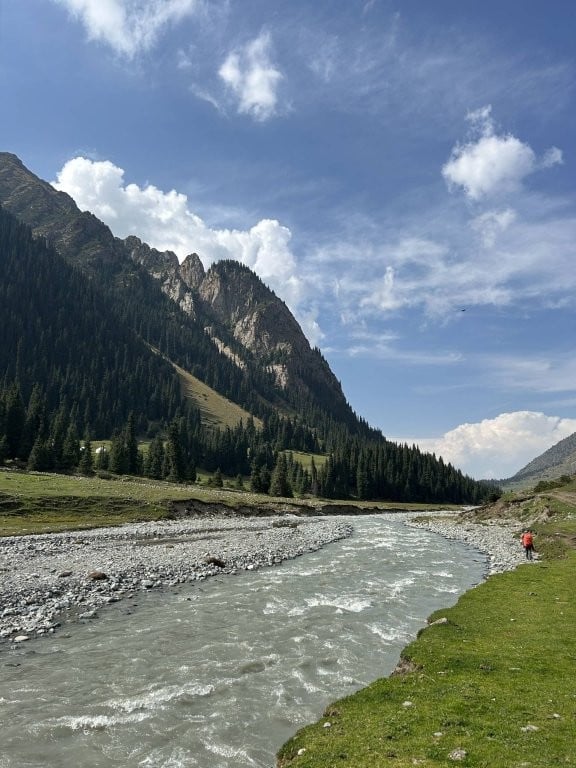
We had already moved on, but a few in our group saw a playful mink and watched him frolic for quite some time, apparently. On the other hand, we saw not one, but TWO, owls. In the middle of the day. When I watched the first one fly past and land on a nearby branch, I assumed it just LOOKED like an owl, maybe a burly hawk with an unusually big head. Then it’s buddy/friend with benefits showed up, landing one tree over. And still I wasn’t sure. Then, as though to prove a point, the little bastard turned his head all the way around to look at me. Fine, dude, I get it. You’re an owl and you’ve got a stupidly loose neck. Congrats.
Toilets
Grim, quite grim. Heavily abused squat outhouses. You should probably bring some of your own toilet paper, as well.
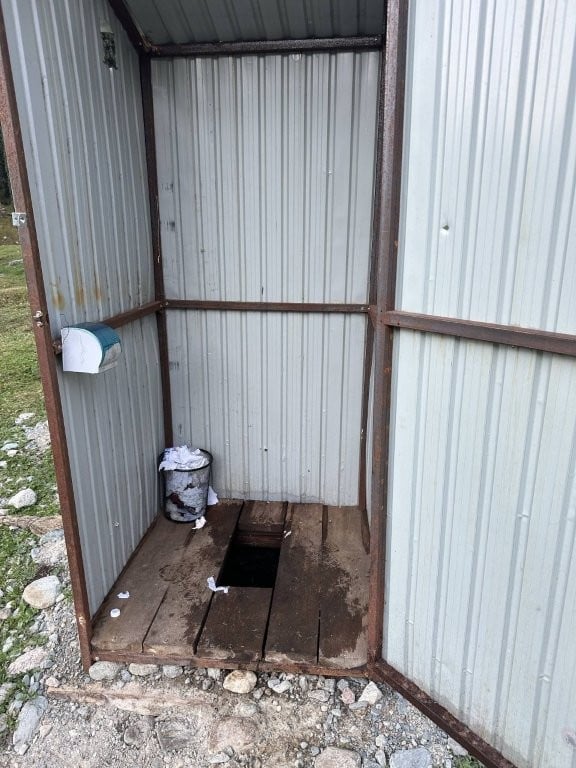
And this feels obvious but, you know, no showers.
Once you reach Altyn-Arashyn, however, there are several different hot springs to enjoy. We only got a quick 30 min before boarding our Soviet van for the horrendous ride back to Karakol but 2 girls in our group decided to stay and walk out the next day so they had all night to enjoy them. There are real bathrooms there, as well.
What to Pack for the Ala Kul Trek
Warm clothes, for starters. The highest point on the trek (Ala Kul Pass) is over 3,900m and even the lake itself is 3,500m above sea level. Which means it gets chilly at night. Obviously, hiking and camping at high altitude is nothing new for us, but that still doesn’t mean I enjoy comically tiptoeing out into the trees in the middle of the night for a freezing pee.
Our main problem when planning the Ala Kul trek was that it was only a small part of a 3.5-month trip, most of which would be spent in warmer destinations. Which meant we didn’t want to carry a bunch of winter clothes and specialized camping gear that we would only be using for the first couple weeks of the trip.
Luckily, there are places in Karakol where you can rent (or buy) any gear you might need. We rented a pair of good rain ponchos from Kyrgyz Life (which, thankfully, we only used once, and even then the need was debatable). Laynni figured she had enough layers to suffice but I went to a second-hand store in Karakol and picked up a bright orange puffy jacket for $US10 which came in handy both for sunset/sunrise warmth and doubling as a pillow both nights.
We already had our own toques (beanies) and gloves, plus comfortable sleeping clothes. Because we were on a group tour, yurts/tents were provided, along with very warm sleeping bags.
Also, we always use hiking poles for all serious hikes these days (gotta treat those knees right) but even if you normally don’t use them, they really come in handy on the Ala Kul trek because of all the very steep, slippery sections. we found them especially useful coming down the loose scree after the pass.
Although your phone will usually suffice for light, I still find a headlamp useful so I have both hands free for navigating tent zippers (not to mention pant zippers).
Ala Kul Trek Summary
Our 3-day, 2-night Ala Kul Trek was a huge success. Yes, it was exhausting and uncomfortable and occasionally treacherous but the scenery was stunning, the weather nearly perfect and neither of us got sick (until soon after the trek ended, at least).
Ala Kul, a gorgeous alpine lake surrounded by snow-capped mountains and flanked by a real live glacier, is a fitting payoff for all the sweat and effort involved in getting there. Well worth setting aside a few days of your Kyrgyzstan trip to check it out.
Pin it for later!
Other Posts You Might Like:
Karakol or Jyrgalan: Choosing the Perfect Kyrgyzstan Trekking Base
Bhutan: Your Druk Path for a Bowl of Cheese
The Manaslu Circuit: Everything to Know Before Your Trek
Gokyo Lakes Trek: A Spectacular Alternative to Everest Base Camp
The Best Long-Distance Hikes in Europe
Walker’s Haute Route: The Best Hike in Europe
Tour du Mont Blanc: The Ultimate Planning Guide
Carros de Foc: The Best Hut-to-Hut Hike in Spain
Alta Via 1: The Best Trek in the Italian Dolomites
About the Author
Dean Johnston

Dean Johnston quit his job as a financial planner in 2008 to travel the world, and has now visited all 7 continents and more than 85 different countries. He wrote his first blog entry in a sweltering internet cafe in Bali in 2000 and has been writing about their travels ever since, including publishing 3 travel books.
As Routinely Nomadic, Dean remains focused on providing informative travel guides, entertaining stories and useful social media content to readers from all over the world.
trekking stupendo….. da sogno
mi potete dare una base di costo
grazie
We paid $US340 each for the group trip. We saw other companies offering it for $US500 or more, though. You could do it for less if you organize your own transport and reserve spots in the yurts.