

A sudden surge of current pushes him back from the coral, although the smooth retreat quickly snaps to a halt, interrupted by the carefully chosen length of rope holding him fast to the ocean floor. The small metal reef hook’s precise placement in a deep fissure of rock (rather than reef) serving its purpose with aplomb.
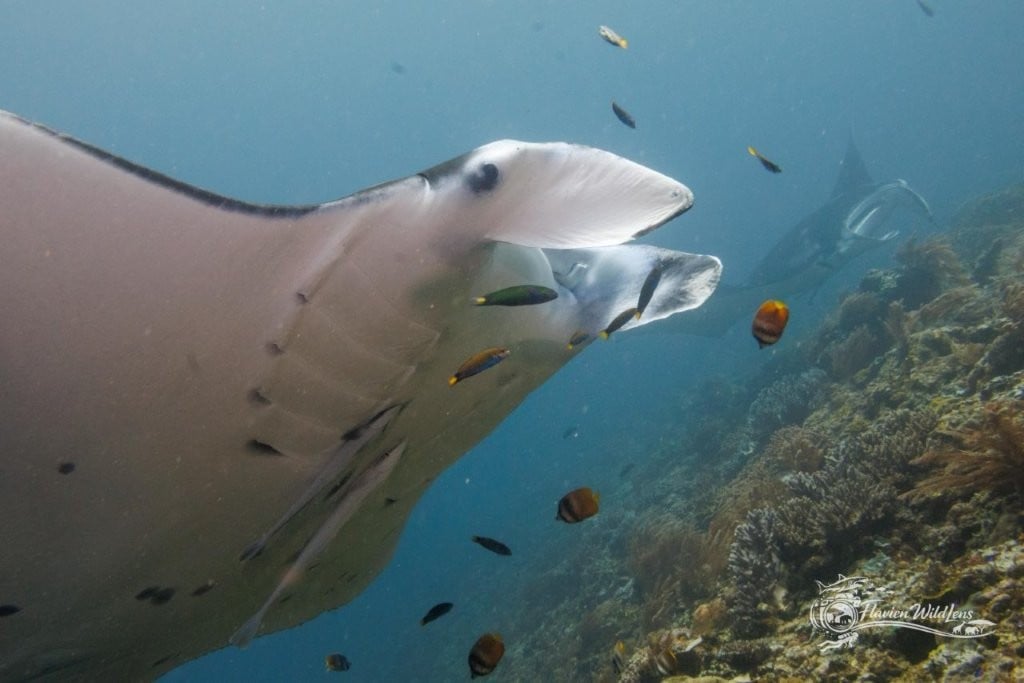
Alternately pulling himself forward and letting out slack, he does his best to avoid his fellow divers, all similarly attached to the rugged ocean floor in an orderly line. 9 divers, 3 guides, 1 common purpose. To sneakily watch some beautiful manta rays take a bath. Or, perhaps more specifically, visit Manta Ridge, the famous “manta cleaning station” where these graceful dancers of the sea come to enjoy the pampering ministrations of hungry, obsequious and very useful scavengers.
Our site includes affiliate links to products we recommend. If you use one to make a purchase, we earn a small commission at no extra cost to you. Thanks for your support!
Just as his mind begins to drift – his eyes drawn yet again to the intensely colourful scene of fish and coral unfolding in closer proximity – he catches the slightest hint of movement out of the corner of his eye. Just Laynni bobbing back in his direction again? Nope, not this time. There it is. A manta. Jet-black, small, 2m across at most, but with every bit of that trademark gracefulness.
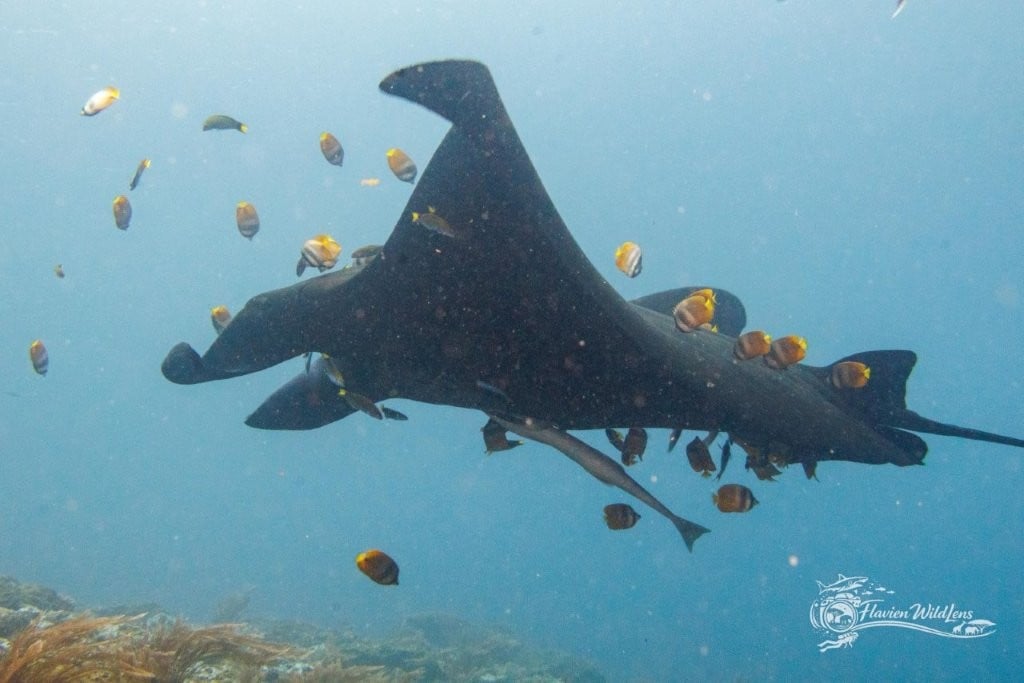
The slightest curving as it arcs its path to avoid full collision, Laynni’s eyes nearly bugging out of her mask before the creature effortlessly adjusts its direction again, flattening out to swoop close over head, not quite touching but still buffeting her in its wake. Now coming straight at HIM – what’s the plan here? – behold, the slightest of movements and it passes by in a flash, the long, elegant needle of a tail following behind smoothly.
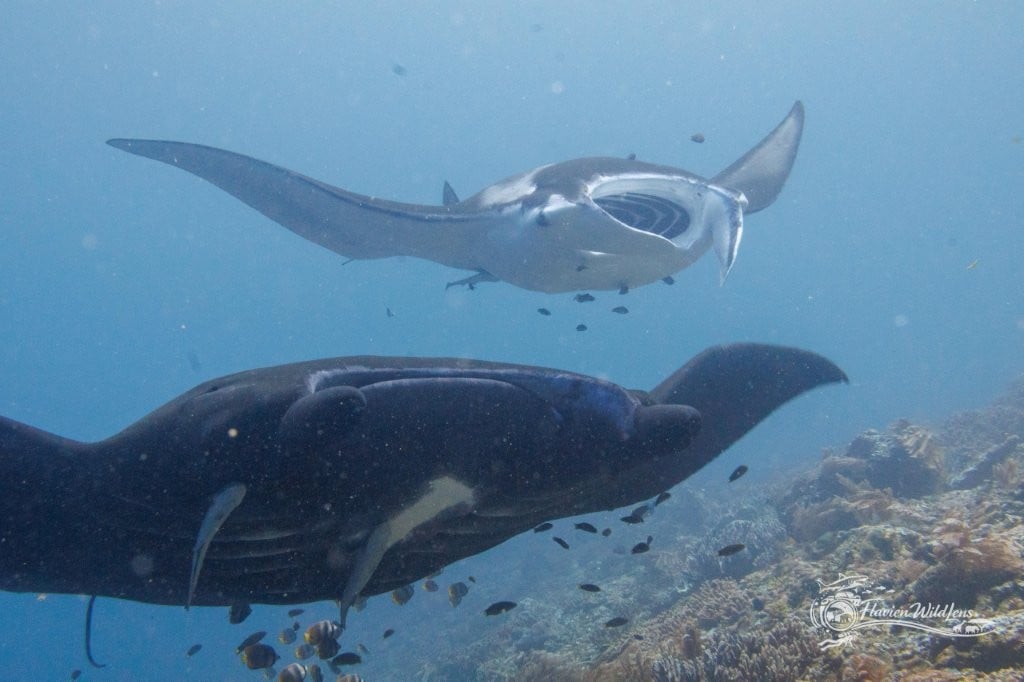
Meanwhile, in the background several more shadows slowly take shape as manta rays 2, 3, 4 and 5 also approach. Ranging from 2m to 4m+, in various shades of black, white and something in between, they begin circling the awestruck group, weaving and curving and fluttering like an intricately choreographed dance routine, all the while accompanied by an entourage of hungry little fish eager for scraps.
And so on. Yes, that was the Manta Ridge dive, or at least the first part of it. And just one of 12 amazing sites we experienced during our week on the Situju7 liveaboard in Raja Ampat, Indonesia, one of the world’s top scuba diving locations. In fact, some even call it “the last paradise on Earth”. Those “some”, mind you, are mostly involved in the Raja Ampat tourism industry, so grain of salt and all that. Still, hyperbolic naming semantics aside, it IS a truly extraordinary place.
For example, as incredible as the first 30 minutes of that manta dive were, the final 20 minutes spent exploring the exceptionally colourful shallow reef teeming with dozens – hundreds? – of fish species, all schooling and intersecting and feeding and circling, were arguably even more beautiful and enjoyable, if not as obviously dramatic. Which was kind of the story of all our dives in Raja Ampat. Yes, you’d always see something rare or huge or unique or tiny or special but it rarely mattered, as the entire scene was consistently fascinating regardless of specific sightings – colourful, picturesque, vibrant and surrounded by marine life at all times.
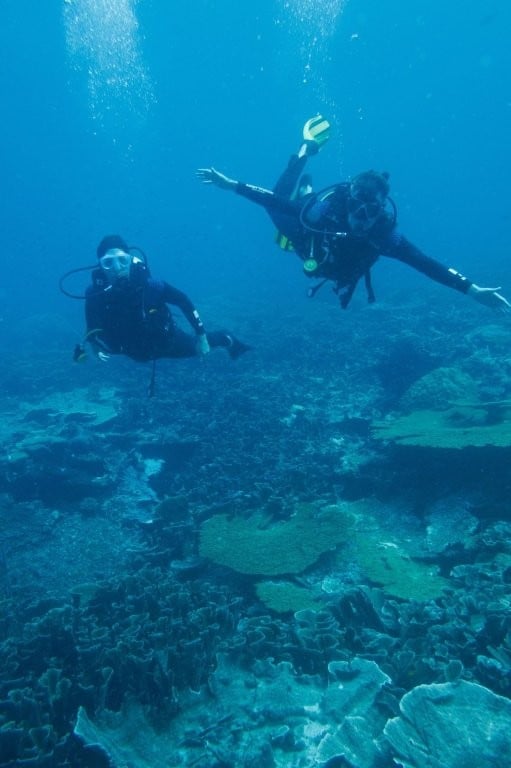
So, clearly, scuba diving was the main focus. But for divers like us who tend to drift in and out of the sport based on our moods, whims and travel plans, Raja Ampat was appealing for many more reasons as well. Remote, stunning and culturally unique, we were just as excited about the destination as the potential underwater treasures. And on those counts, it also delivered, with phenomenal scenery, memorably isolated living conditions and the pleasure of sharing the experience with a terrific group of fellow divers and the friendly and helpful crew of the Situju7.
Did it all go perfectly? No, of course not. Did I learn just how powerfully the sun can reflect off linoleum onto the face – and quite specifically, forehead – of a person slouching back on a beanbag (in the shade!) as they sit enthralled by a fascinating alternate version of Huck Finn from the perspective of Jim? Yup, the hard way. Did Laynni come down with a painful case of “swimmer’s ear” that ruled her out of the final dive of the week (and somewhat complicated our subsequent flights back to Bali)? Unfortunately, yes. Did our fins rub the skin right off both our feet before we were smart enough to take preventative measures? Obviously.
But, overall, it was a quite a trip. Now, for the details, planning tips and various odds and ends that might help you choose or plan your own future Raja Ampat liveaboard.
We also want to throw out a big thank you to our fellow divers that shared their photos with us, including some we have included in this post from Jen, Allyson and Flavien, who is responsible for all these incredible underwater shots.
Raja Ampat Overview
Raja Ampat is an archipelago located way out in the northeastern corner of Indonesia, right on the equator and just beside the northern tip of Papua island/province. Supposedly there are between 610 and 1,500 rugged, tropical limestone islands in Raja Ampat, which seems awfully vague, even if you’re okay using a certain “margin of error”. Unfortunately, I did not get to the bottom of the mystery since, well, I don’t really care. There are a lot of islands, let’s leave it at that.
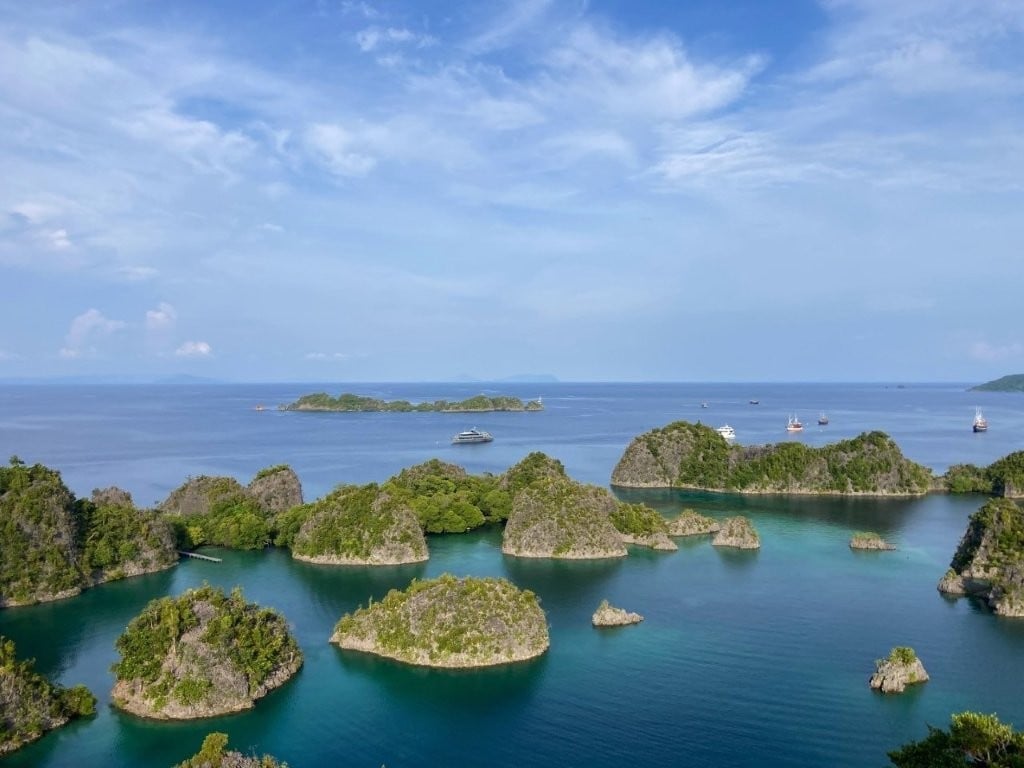
Meanwhile, the name Raja Ampat means “Four Kings”, an objectively more manageable number, although we didn’t see even a single king so I guess will just have to take their word for it. The part that really matters to divers is that Raja Ampat is reportedly home to roughly 70% of all the coral species on Earth and – from what I saw, anyway – a pretty hefty portion of the fish species, too.
It is this marine variety that is Raja Ampat’s main claim to fame from a scuba diving perspective. While it does offer the chance to see some big highlight stuff, it specializes in beautiful coral, diversity of fish, massive schools and unique small stuff that is usually much harder to find. And, while you’ll literally never get a consensus on the best of anything in the scuba diving world – far too subjective in every way – Raja Ampat is definitely part of every discussion you’ll hear regarding the “best scuba diving in the world”.
Which is exactly how we ended up here. And also why the Raja Ampat liveaboard industry is currently growing exponentially. There are also an increasingly large number of homestays and a few nice resorts on the islands themselves that provide a more stable, relaxed visit, but diving liveaboards still offer the best way to maximize your Raja Ampat scuba diving experience.
In hopes of getting ahead of the growth curve, Raja Ampat is now charging significant national park fees ($US350 per person for a week), theoretically using that money to maintain the park, develop environmental protections and better organize and coordinate the dive boats to protect the area from future damage.
Now, are they ACTUALLY using that money for any of that? Not according to the people we talked to. Other than the manta ray dive sites – which have mooring lines and a reservation system – it seems to mostly be a free-for-all out there. Of course, since most boat crews seem to know each other, there does seem to be some unofficial alternating and “after you, my dear, Alphonse” taking place so, at this point, it seems to be working. From a dive perspective, at least.
Environmentally, though, it does not feel as though the dive boats are making much more effort than the government. I’m no expert and, to be honest, didn’t necessarily want to know all the details, but from what we’ve heard and the little we’ve seen personally, the handling of sewage from the boats is not being properly addressed. And we also saw quite a bit of trash in the water a few times, although this was always close to a town or village so blame was easily passed.
The main point is that between the haphazard organization of boats and rapidly growing demand, somebody needs to implement and enforce some regulations soon before things get out of hand. Because if that happens, before you know it, Raja Ampat will be removed from all those “best of” lists just as fast as it was added and, eventually, divers will simply stop coming.
Now, all that being said, the coral, the marine life, the islands – all spectacularly gorgeous. Amazing scenery both above and below the surface. And, combined with a great group of divers, great crew and a tropical paradise location, well, you have to be pretty cynical (Hi! I’m Dean!) to dwell on potential future downsides.
Now, on to logistics.
Sorong
Sorong? Did you mean “sarong”? And if you did, why would you have an entire section on sarongs? Oh, ye of little faith, I did NOT mean “sarong”. In fact, “Sorong” is the name of the largest city in West Papua and the most common jumping off point for Raja Ampat diving liveaboards. You will almost certainly find yourself here once or twice on your way in and out, mainly because it has the airport. But it also has a Hypermarket (like a regular market hopped up on Red Bull) and, if you can believe it, both a KFC and Pizza Hut. Quite unexpected this far from the main tourist areas of Indonesia (yet a welcome sight after a week of good but predictable Indonesian ship food).
If you want to set your sights a bit higher for your non-Indonesian fix, there is also a place called Italian Terraza Pizzeria that people love but we never got up the energy to make it there, so can’t specifically confirm or deny. Regardless, your main Sorong decision will be where to stay. Luckily it has several decent and convenient options to choose from.
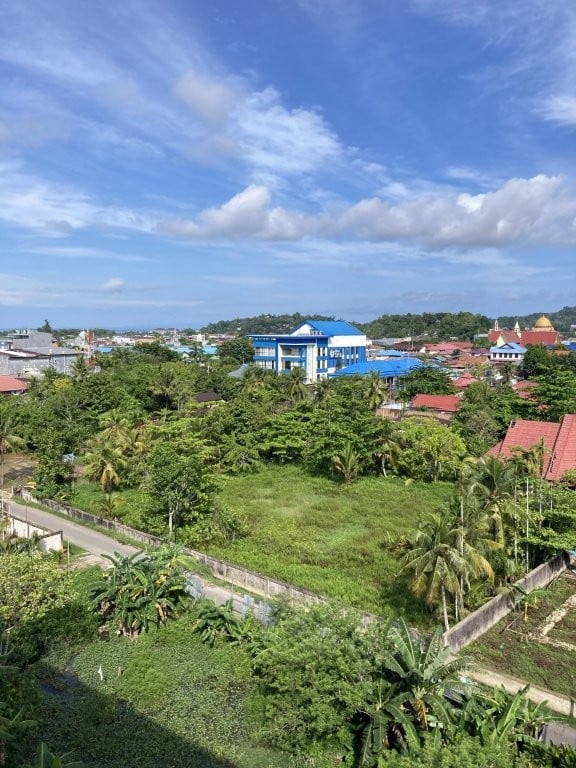
The Vega Prime (3*) sounds more like a menacing new model of Transformer than the convenient airport conference hotel it actually is, but we spent 2 nights there before the trip and 1 night after and can definitely recommend it. A large, modern business hotel, the rooms are comfortable, the wifi good, the breakfast buffet is extensive and, best of all in our opinion, it is just a 5-minute walk from the airport.
All 7 other divers in our group stayed at the Swiss Belhotel and all said it was good. Also modern and comfortable, it seems to be the top choice for scuba divers coming to the area. Nobody raved about the food and it is a bit farther from the airport (although still just a short taxi ride) but overall they enjoyed it.
Favehotel (3*) is very close to the Vega Prime (and the airport) and offers similar amenities for a similar price and is also a good option.
If you’re looking for a bit more luxury, the 4* Aston Sorong is the way to go. And I’m sure there have been more than a few affluent divers looking for just such a fix after 7-10 days at sea…
Waisai
While the Situju7 leaves directly out of Sorong, many Raja Ampat liveaboards actually start and end in Waisai, on the island of Waigeo. Not a big place but it’s all relative, right? Not big compared to Sorong but definitely big compared to what passes for “villages” on the other islands. We didn’t stay here but there are a couple hotels that were recommended while we were still in the planning stages and had yet to choose our boat.
Koba-Koba Guesthouse is very highly rated with basic rooms with A/C, private bath and some rooms with sea views. The garden area is pleasant and people love the views and friendly staff.
Cocos Huts offer basic huts and a decent restaurant in a lovely beachfront location.
Raja Ampat Liveaboard Experience
So, first off, a rather large disclaimer. There are MANY different Raja Ampat liveaboards offering vastly different itineraries, dive schedules and prices. And significantly different amenities and comfort levels. So some of what we describe here will be true for the majority of Raja Ampat boats and some will only be very specific to the Situju7.
Starting with the daily schedule, the Situju7 is one of the more laid-back options from a diving perspective. As in, it only included 12 dives over 6 days, as opposed to the 20-30 dives included on many of the other trips. This accomplished two things, that we could see. One, it reduced the price. Which we liked. And, two, it meant we only did 3 dives per day a couple times and never the marathon 4 we’ve done in the past. Which is just too much for us, personally.
Of course, we also completely understand that avid divers planning to fly across a dozen time zones to dive in one of the top locations in the world may actually prefer to do as many dives as humanly possible. The point is, when choosing your Raja Ampat liveaboard, pay close attention to the number of dives that are included as that will, more than anything else, determine the shape of your experience.
Our trip was called 7 days and 6 nights but is basically 6 and 6 since the last night we slept on the boat in the Sorong port and the last day were dropped off at our hotels by 9:30 am (some people even went straight to the airport). At the start, we were picked up in Sorong at 8 am, cruised for 5 hours to Waisai, then did our first dive. The following days, we usually had a leisurely start, then did dives at 9 and 11, sometimes another at 3.
There was a briefing every night after supper giving us the plan for the following day. After the first couple days they started mixing in some alternate activities such as beaches, viewpoints, villages and snorkelling.
The Ship: Situju7
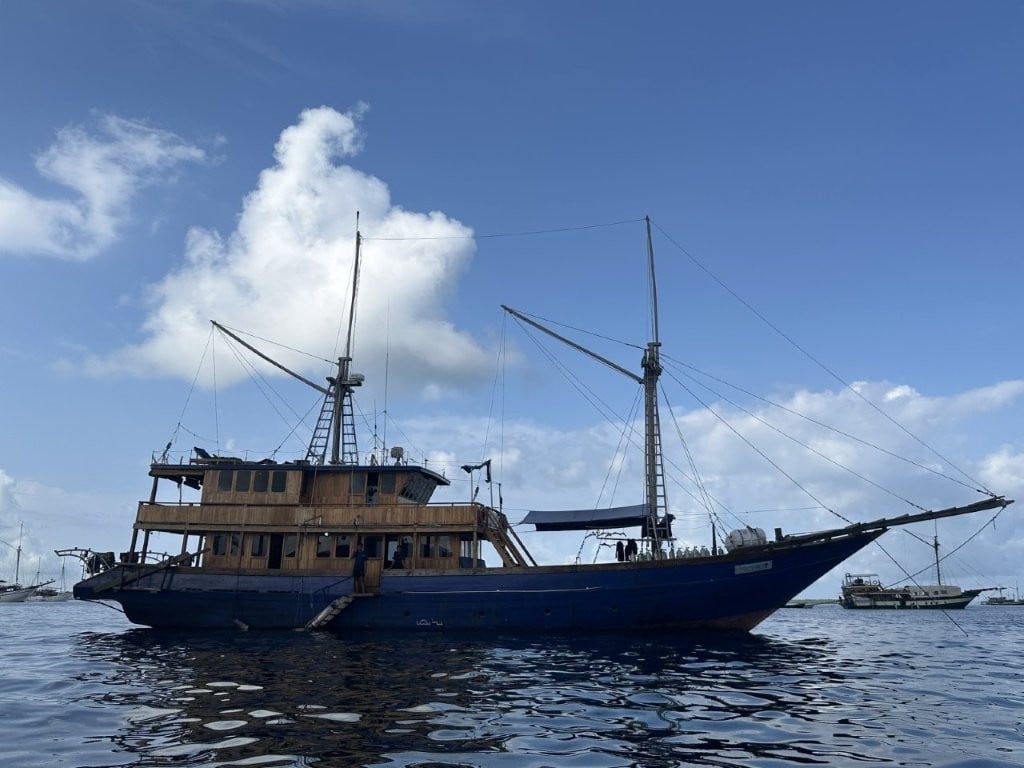
Once again, there is a wide variety of ships to choose from. The most popular style, however, were those similar to our Situju7, a classic wooden “phinisi” hand-built using traditional methods by members of the Kojo tribe of South Sulawesi. The Situju7 plies the waters of Raja Ampat from November to April, then heads to Komodo from late April to October.
Although it isn’t huge, there are lots of separate areas so it felt plenty spacious enough for the max 10 passengers (9 in our case) and 11 staff. There are lots of different lounging areas, some of which are more protected from the sun than others. Inside the dining room – fully protected. Upper deck loungers – fully exposed. Under the tarp on the main deck – 90% protected. On the shaded second deck bean bags – 100% protected from above, seemingly about 20% protected from the rays reflecting up off the lino floor. If my bright red face the first night was anything to go by, anyway.
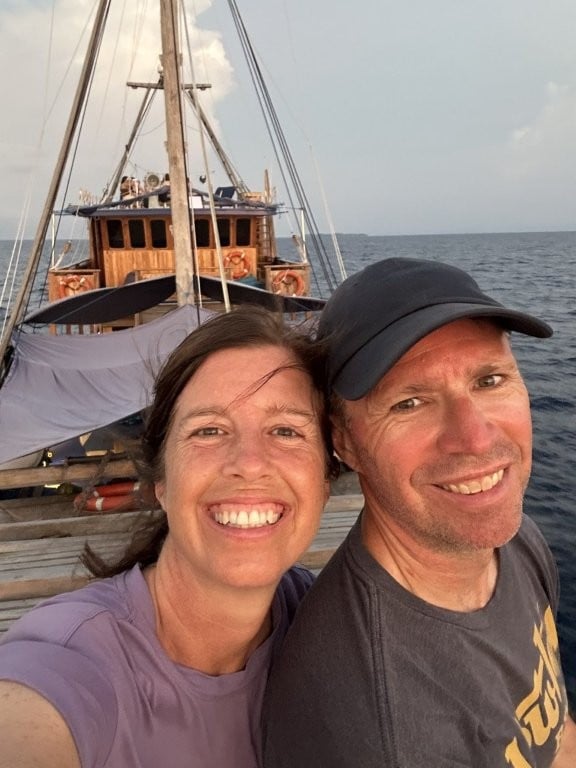
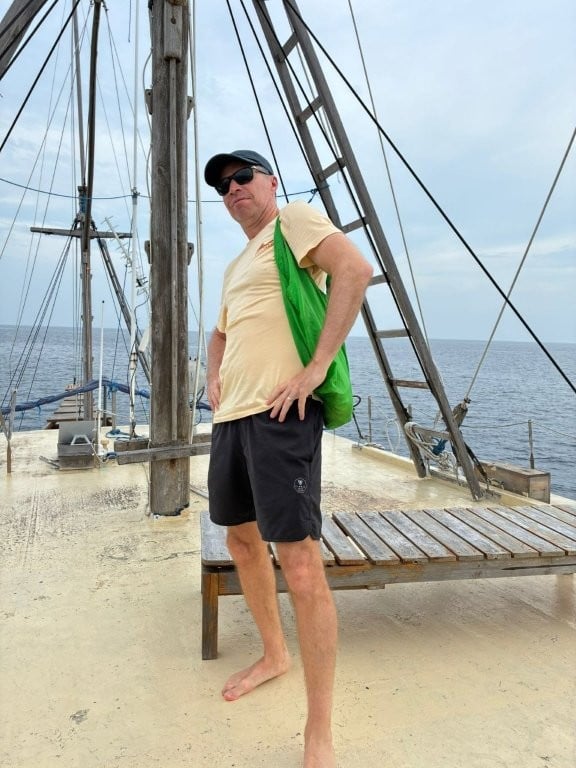
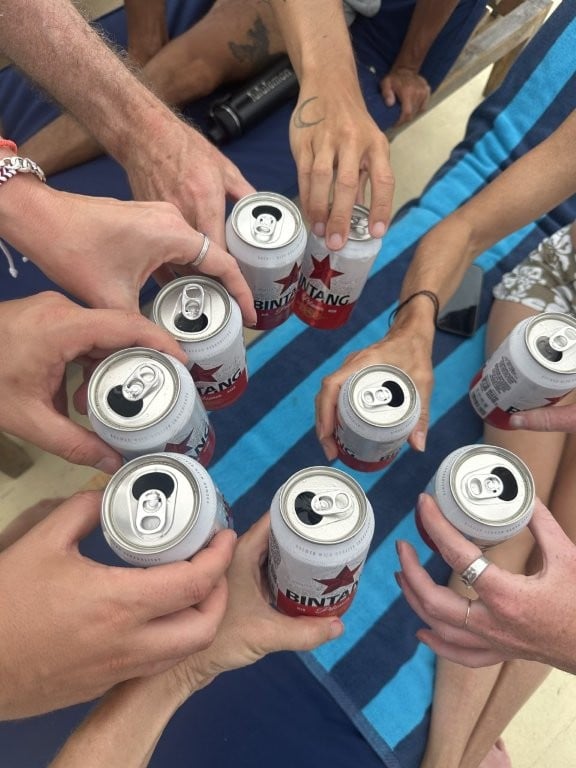
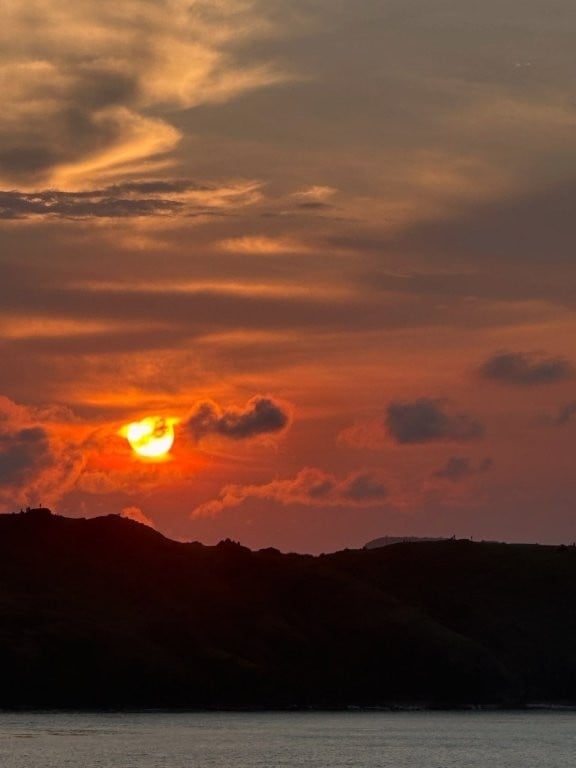
Like I said, the top deck is fully exposed, making it the perfect place to formalize your “holiday tan”, dry clothes in the sun and wind or, most importantly, I think, by far the best place to drink a few cold Bintangs and enjoy the sunset. 8 other divers seemed to agree.
Rather surprisingly, the beer (and some other drinks) were included in the price. I guess it’s safe to expect that people who’ve come so far and spent so much to dive in Raja Ampat aren’t suddenly going to get sidetracked by free alcohol and put in an all-nighter.
Perhaps following on from the relaxed number of dives, the Situju7 has a distinctly relaxed living situation vibe as well. Meals were good and there was always plenty to go around, drinking water was always available, snacks were provided after some dives and again at sunset and the guys were always available if anyone needed something. Other than that, and the dives of course, we were basically left to our own devices. Which we loved, to be honest.
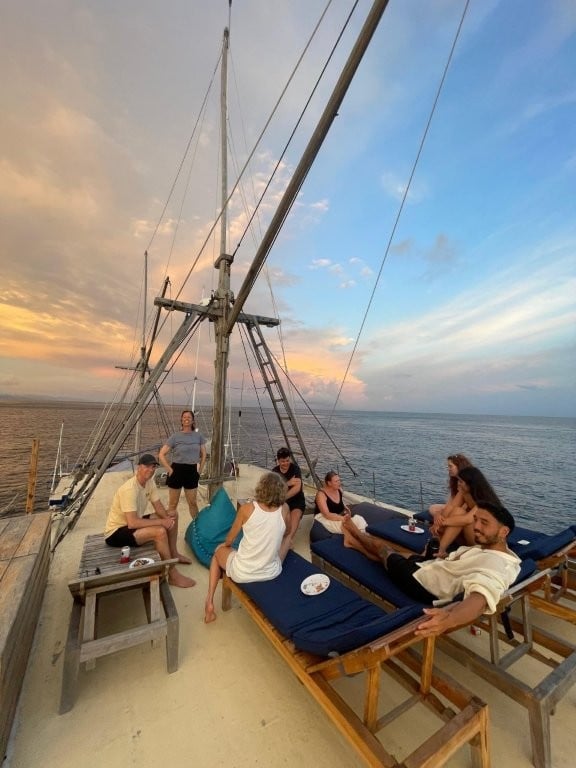
Socializing is one of those things we feel has a time and place – certain times and certain places, never all the time and in all places. And, although I shouldn’t speak for everyone else, I’m obviously going to anyway, and say it felt like the dynamic of our group worked well for all involved. A bit of a crapshoot, that, so we felt very lucky to be joined by the great people we shared our trip with (2 Swiss, 2 Americans, 1 American-French, 1 French-British, 1 Dutch-British, 11 Indonesians).
Cabins / Accommodation
Once again, the setup and facilities will be different on each Raja Ampat liveaboard. However, this is how things were on the Situju7 and it will give you a general idea of what to expect from most.
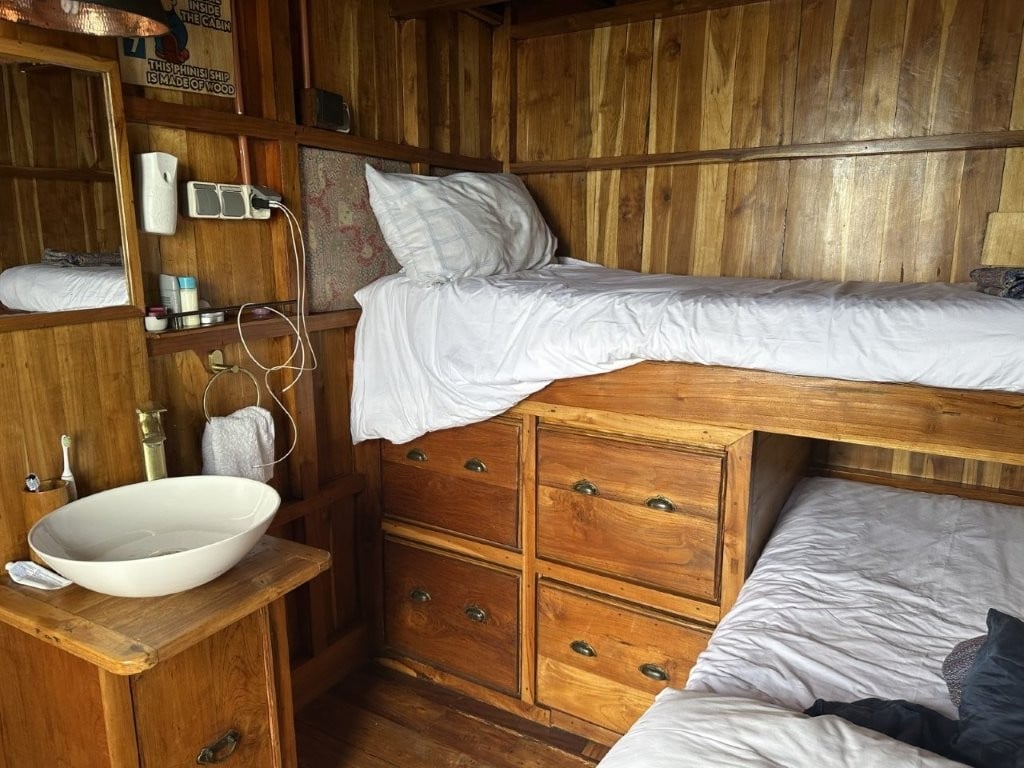
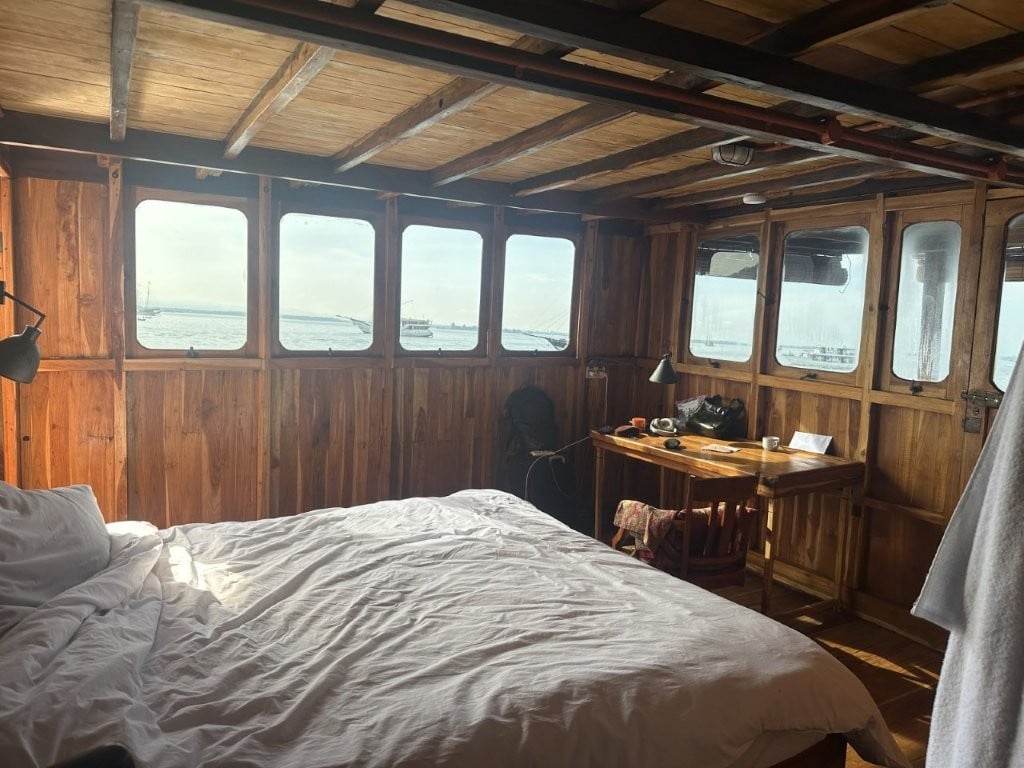
Five different cabins in four different configurations. All had A/C, freshwater shower, outlet, sink and toilet. We were in the Cabinette Lombok, which was small but had overlapping beds and storage drawers that meant we had room for all our stuff as long as we were a bit creative. Both shower towels and diving towels were provided. The A/C was fine, although it never really got cool enough to use a full blanket. We did have a window, though, and although we were next to the kitchen we didn’t hear much from it and never noticed any smells. Not even cabbage.
The Junior Suite Flores, aka “The Froghole”, was a very atmospheric room under the main deck up against the hull that was described as “mostly good” but occasionally “leaky”.
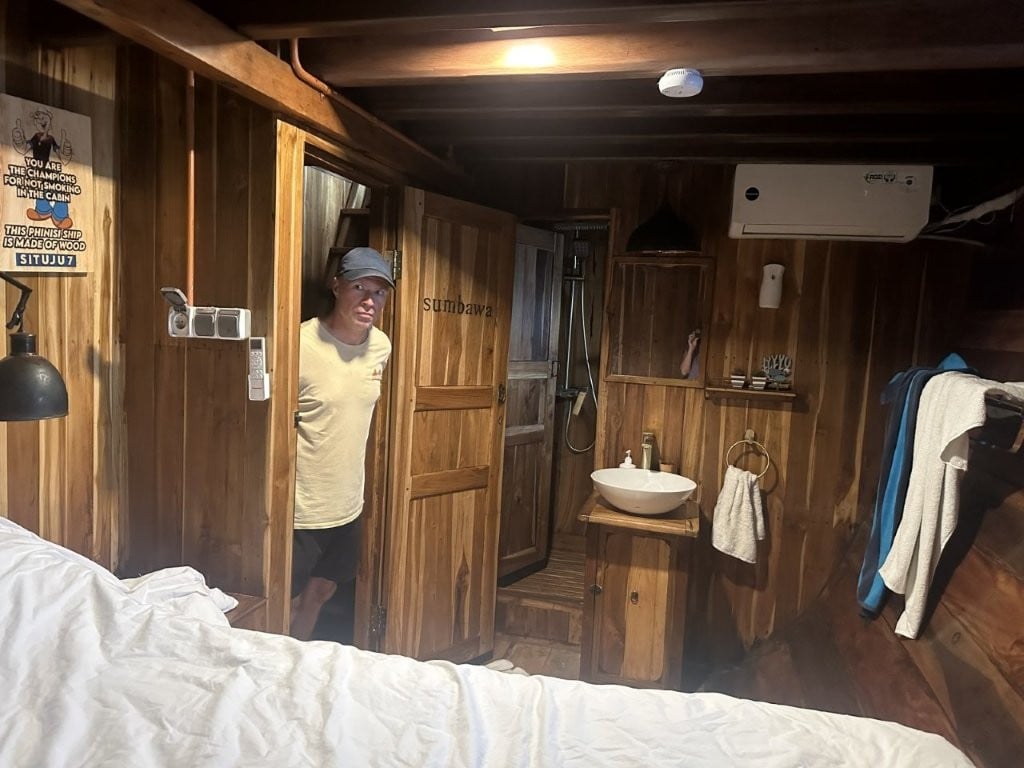
Sumba and Sumbawa Cabins are mirror images below the dining area that were comfortable but apparently suffered from fumes occasionally and with a lack of airflow the bathrooms never fully dried out.
The Bali Junior Suite on the second deck is the nicest room – spacious with a private balcony that featured gorgeous views but also suffered from diesel fumes from the back of the ship.
Food and Drink
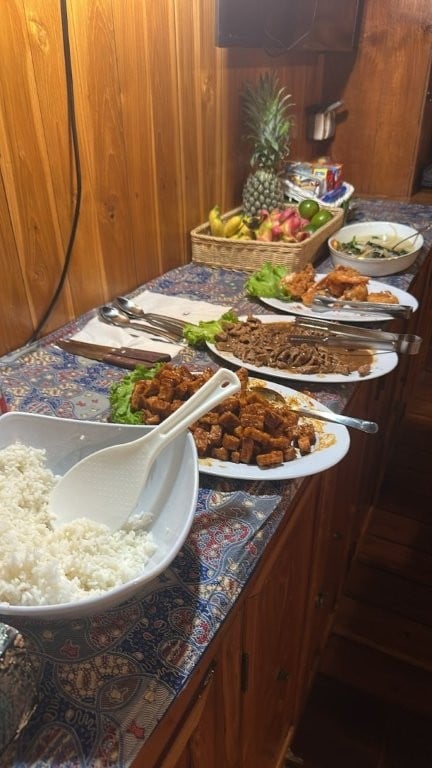
Meals were basic and plentiful and there were always at least three options to choose from. Usually at least 2 types of chicken, fish, tofu or tempe and one or two kinds of rice or noodles, plus some fruit. So, you know, Indonesian food, essentially.
Breakfast was slightly different every day until day 6 when they repeated the day 1 remote Indonesian version of a “Full English” (basically just regular eggs and toast, but with baked beans). Which meant lots of extra beans pushed my way.
They provided snacks after most dives (usually some type of cake) and dusk snacks to help soak up the beer we were generally swigging topside. Or maybe the snacks were always planned and it was just a happy coincidence. The boys in the back even made a cake for a 19th birthday celebration – a nice touch, although the trick candles were a bit surprising.
Not surprisingly, we enjoyed the fact that beer was included, and the only rule they applied was no drinking until after the last dive. An arduous wait, to be sure, but it did make that first cold one all the more special. They also kept the fridge stocked with pop and tonic water, albeit heavily weighted toward Coke Zero, with “Coke normals” a rare and sought-after commodity.
Bottom line: there was always plenty of food and we all thought it was pretty good, maybe even better than that considering the limited facilities available on a boat at sea. We personally brought quite a few snacks, just in case, but that didn’t really end up being necessary. Don’t get me wrong, we definitely ate those Snickers and Oreos, and enjoyed every bite. But did we really NEED them? Kind of, I guess.
Internet
The Situju7 actually had its own wifi system (Starlink, I think), which did work much of the time. It was never fast and sometimes didn’t really work at all (probably when too many of the 20 people aboard were trying to watch baby rhino videos at the same time – or was that just me?). But the wifi was certainly sufficient for checking messages or sending a few pics home to let your family know you hadn’t ended up on the wrong end of a vicious sea snake attack or accidentally buffeted into submission by a giant manta giddy with cleanliness.
But, in case the ship you choose does NOT have wifi, or just because you’d rather not rely on it, most people prefer to have a SIM card with data on their phone. One of the hottest debates on Raja Ampat liveaboard forums is what type of SIM card is best and how often it will accomplish much of anything. The closest thing we could find to a consensus was that Telkomsel is the best company. Although many argued that somehow physical SIMs work better than eSims, which doesn’t make much logical sense, but since I’ve only tried one of those options I guess I’ll never know for sure.
Laynni and I both used the same Nomad eSims (Oceania) that we used all through SE Asia (Vietnam, Thailand, Singapore, Indonesia) quite successfully. They specifically use the Telkomsel network and, overall, worked better than expected throughout most of our time in Raja Ampat.
Basically, we had full 4G near Sorong, Waisai and Arborek and a weak signal near Gam Island and Sawaundarek. The only dead spot was around Piaynemo where we spent a couple days in the middle of the week (both enjoying the views and jockeying for wifi connections).
Raja Ampat Scenery and Islands
For us, the scenery was nearly as much of a draw as the diving. Which sounds a bit foolish, really, because there are much cheaper ways to enjoy great island scenery in Indonesia. But the combination, well, that was the special part (he said, justifying). The point is, Raja Ampat is just as beautiful as you’ve been led to believe, either by things you’ve seen and read elsewhere, or by me, right now.
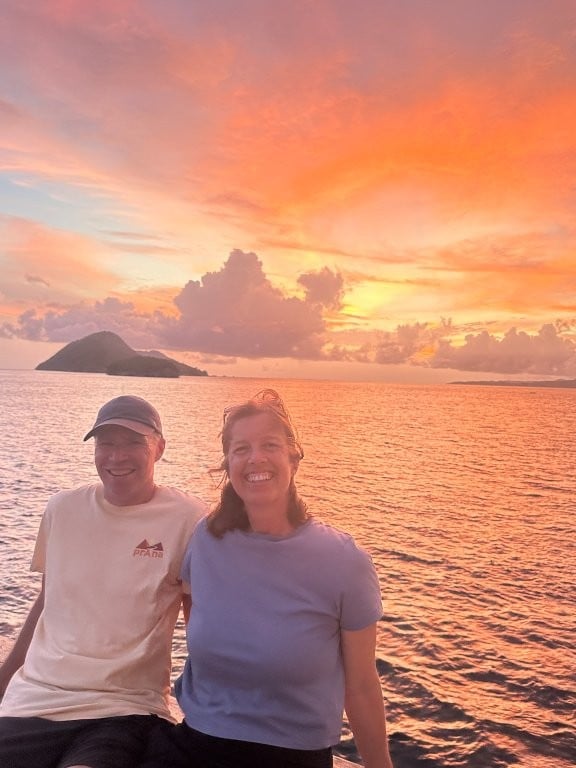
After making the 5-hour crossing from Sorong, we spent most of our week cruising near and around spectacular lush, green, tropical islands with steep hills and white sand beaches. Big ones, small ones, steep ones, flat ones. But definitely green, always green.
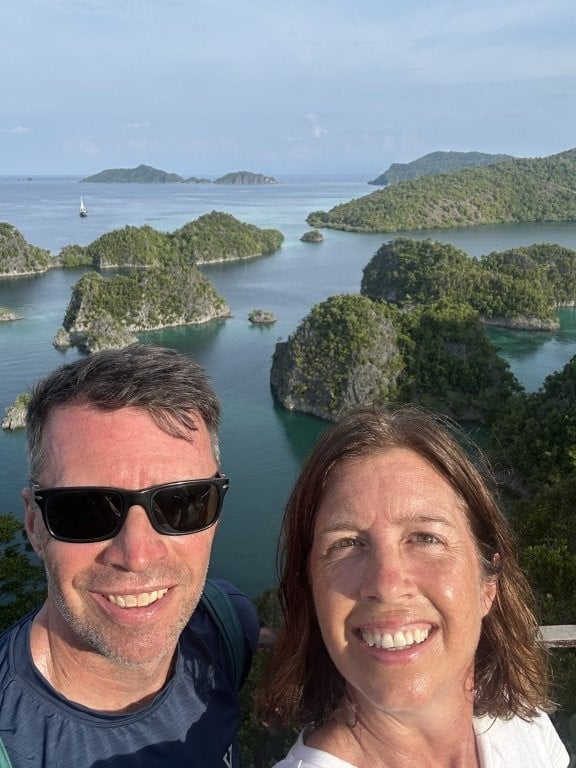
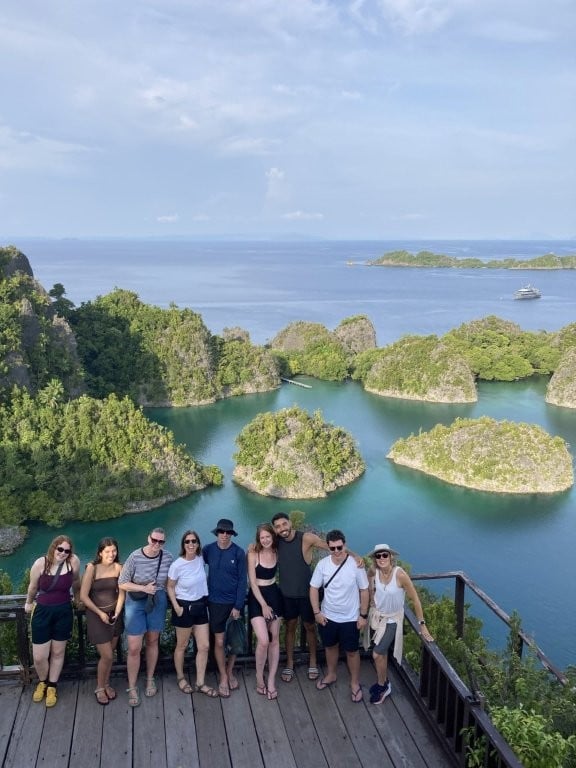
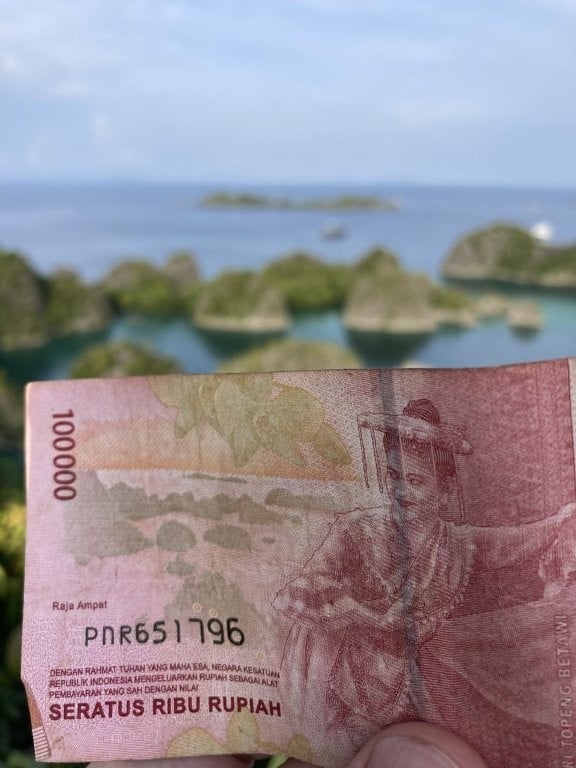
The Piaynemo viewpoint was a big highlight – an easy 10-minute climb up wooden stairs to a set of platforms overlooking a gorgeous collection of islands and bays. Really amazing. Amazing enough that the view actually features on the 100,000 rupiah note (which sounds rare and valuable but isn’t really, since it is only the equivalent of $C8). If you have any say in the matter, try to make sure you get there before the sun gets too low – we visited at about 4:30 pm (in early April) and the light was perfect, but 20 minutes later several of the islands were already in shade.
A similar but supposedly even more spectacular viewpoint can be found at Wayag, an island in the remote northwest corner of the Raja Ampat archipelago. Originally, this Situju7 itinerary was supposed to go there. In fact, that was one of the reasons we chose it. However, a dispute between the government, the national park and a mining company led to Wayag being temporarily closed to tourism. This closure was, however, lifted a few months before our trip but, for whatever reason, we still did not revert to the original schedule.
Nonetheless, we were quite happy with our itinerary since Piaynemo was amazing in its own right. And, apparently, going to Wayag adds quite a bit of cruising time back and forth, so there is definitely a trade-off. However, considering that as of the time of our cruise Wayag was still included in the Situju7 online itinerary it is worth knowing that they don’t seem to be going there any more. At the very least, if it’s important to you, make sure you ask about it before you book.
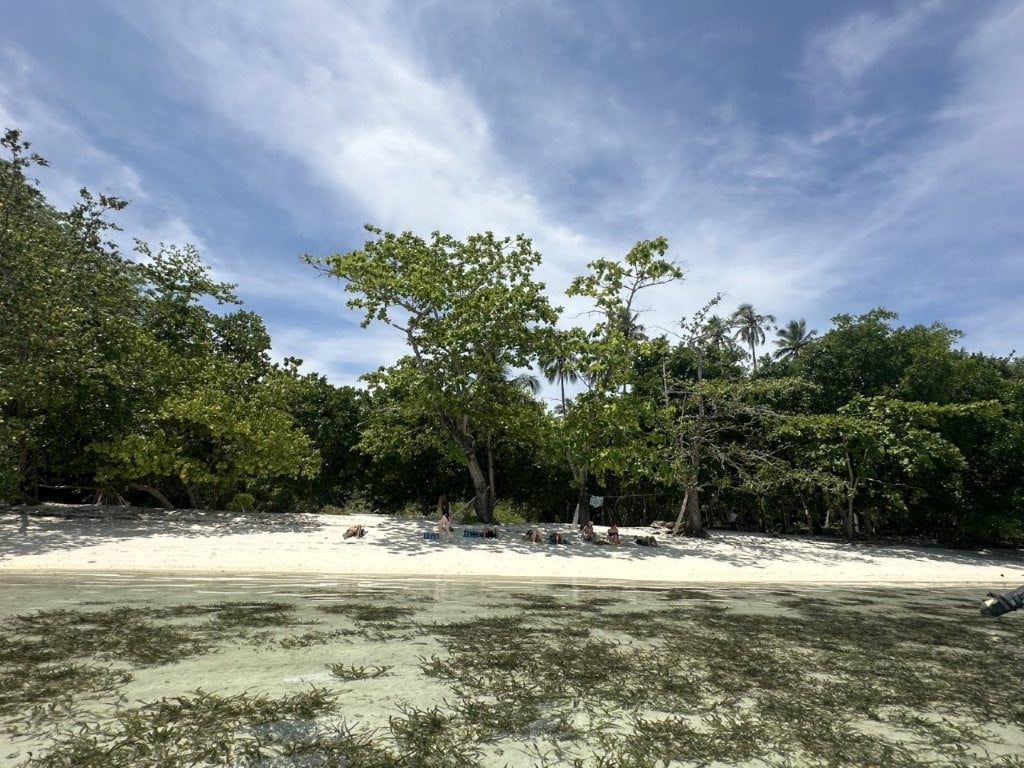
There were other scenic highlights as well, including a short visit to Yanggelo Island where we had to walk through the shallows to a quiet, soft sand beach with good tree shade and exceptionally clear water in front for snorkelling if you want. Water shoes would have been handy. Not to mention, better balance for climbing trees for photo ops.
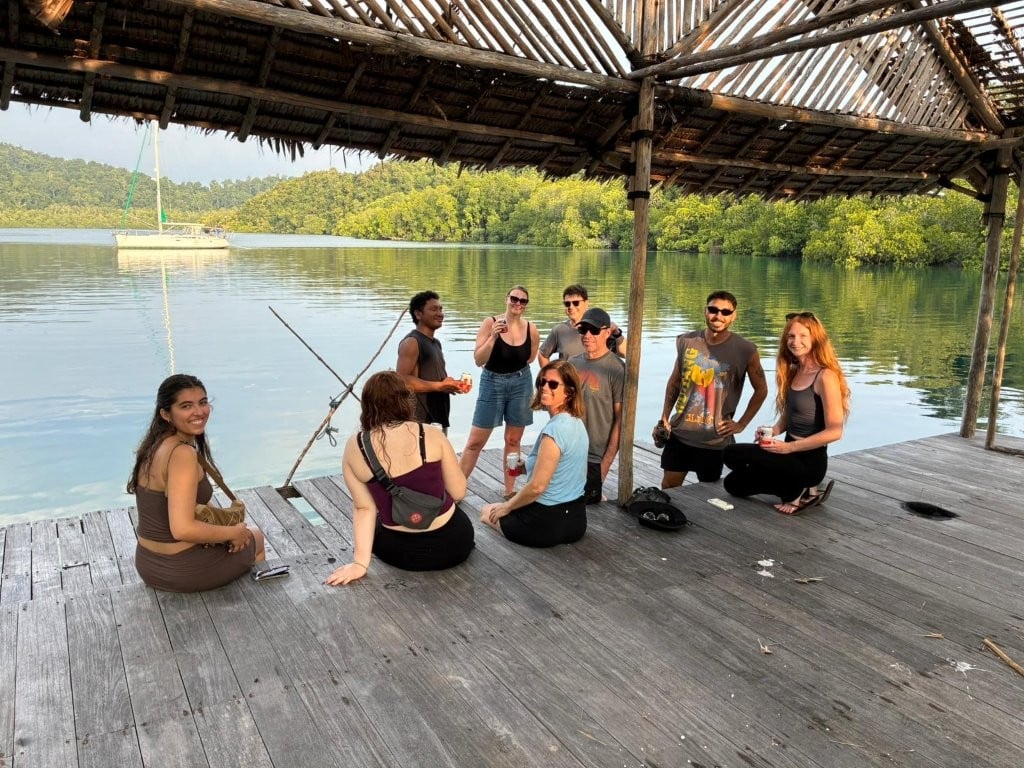
We also visited a peaceful lagoon, where we walked for 5-minutes on an old boardwalk, then hung out on the deck of an abandoned resort having beers and watching the marine life passing by below us (including a stingray and puffer fish).
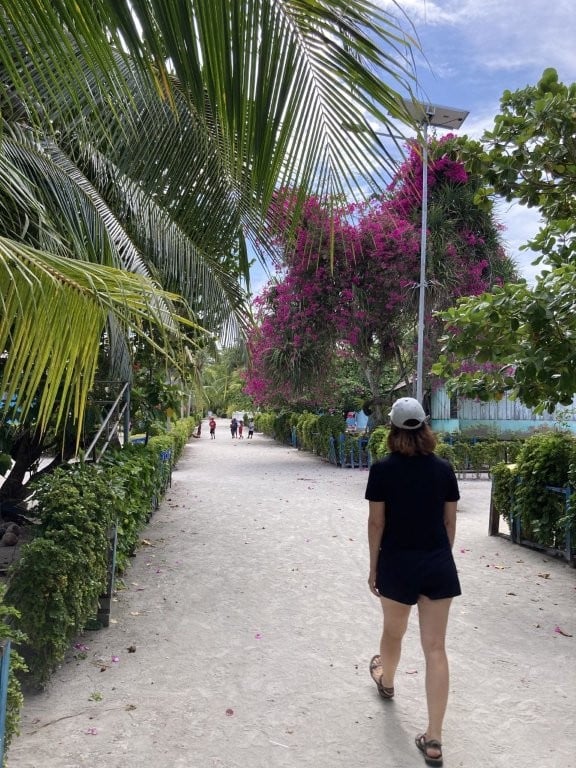
One afternoon, we went ashore for a short walk around Arborek village before snorkelling the reef around the jetty and getting weirdly bullied out of the way by an overweight couple in fluorescent rashguards.
There were a couple paddleboards on the ship for our use, apparently, but a good time never came up and nobody really asked. If you’re into paddleboarding, though, you can check into it.
Raja Ampat Scuba Diving
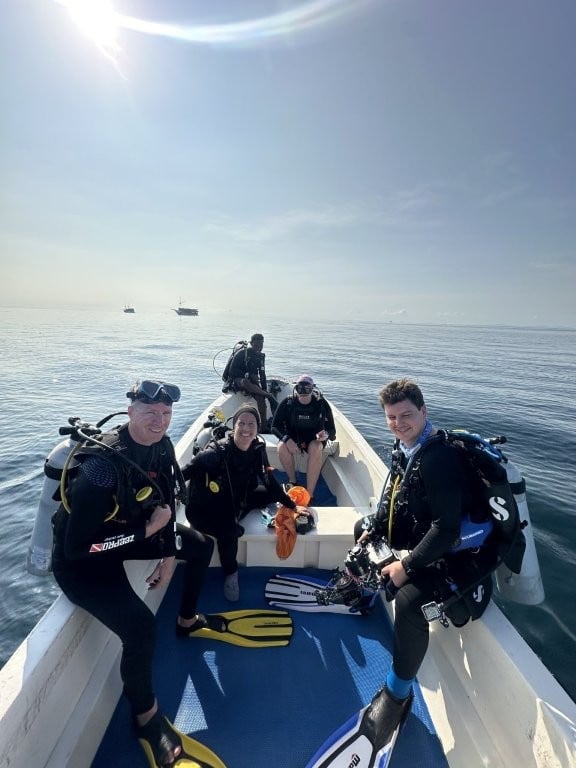
A few people brought their own equipment but the rest – including us – used the rental equipment provided in the liveaboard package. Full wetsuit, fins, mask, BCD and weight belts. That did not include dive computers which, theoretically, didn’t matter, since I have one (along with Laynni’s prescription mask, the only equipment we chose to lug around SE Asia for 4 months). Unfortunately, my computer died about halfway through the first dive, which wasn’t exactly ideal. So, for the rest of the week we just kind of went with the flow, rather literally at times.
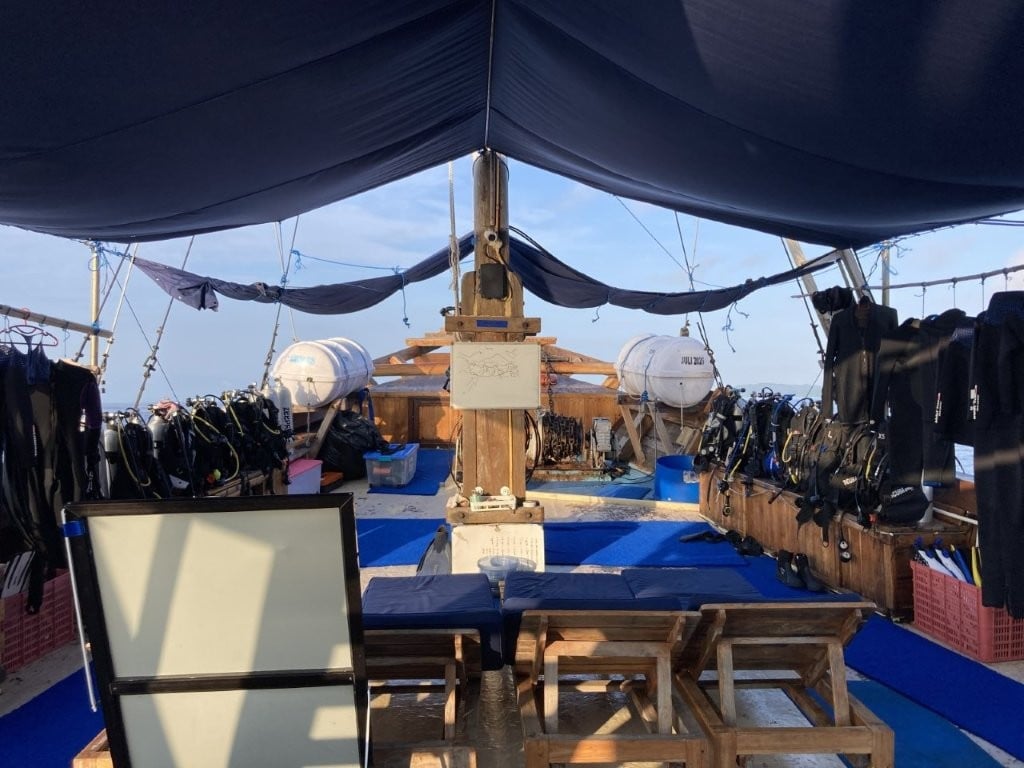
The Situju7 included 12 dives, and we could pay for additional or night dives if we wanted. Most other Raja Ampat liveaboards include more dives, and finding one with the right amount should be one of your main criteria.
We were transported to the dive sites in groups of 4/5 in a dinghy that would be waiting for us when we surfaced. Rather reluctantly, to hear the cranky engine tell it.
Raja Ampat Dive Sites
All our dives took place in the northern Raja Ampat islands, mainly in and around the Dampier Strait. The other main area of Raja Ampat is Misool, in the south, which has a great reputation for being even more remote, less busy and (if possible) more ecologically diverse. We came close to booking a Raja Ampat liveaboard that included both north and south but ultimately decided to save the 2 extra days of crossing time and leave Misool for another visit.
Now, for a very quick and basic description of our experience at all 12 dive sites, sorted into two very subjective categories. And even though I won’t mention them each time, we saw reef sharks on most dives.
Very Good
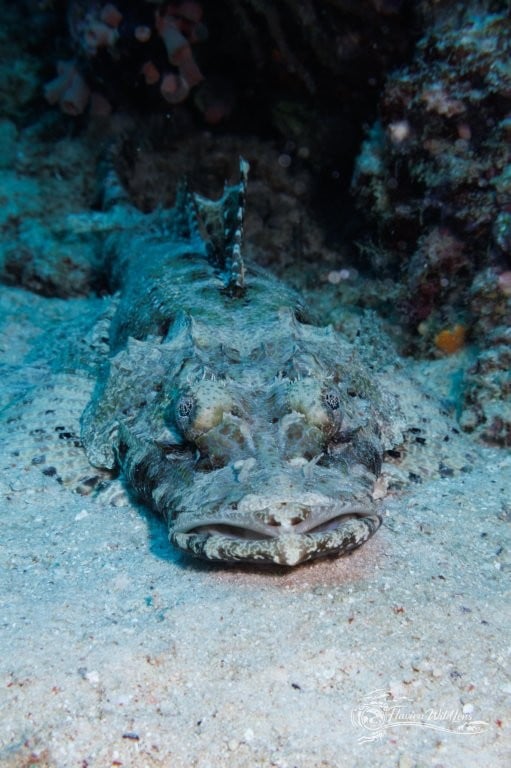
Saunek – sting rays, nudibranchs, octopus and our first crocodile fish.
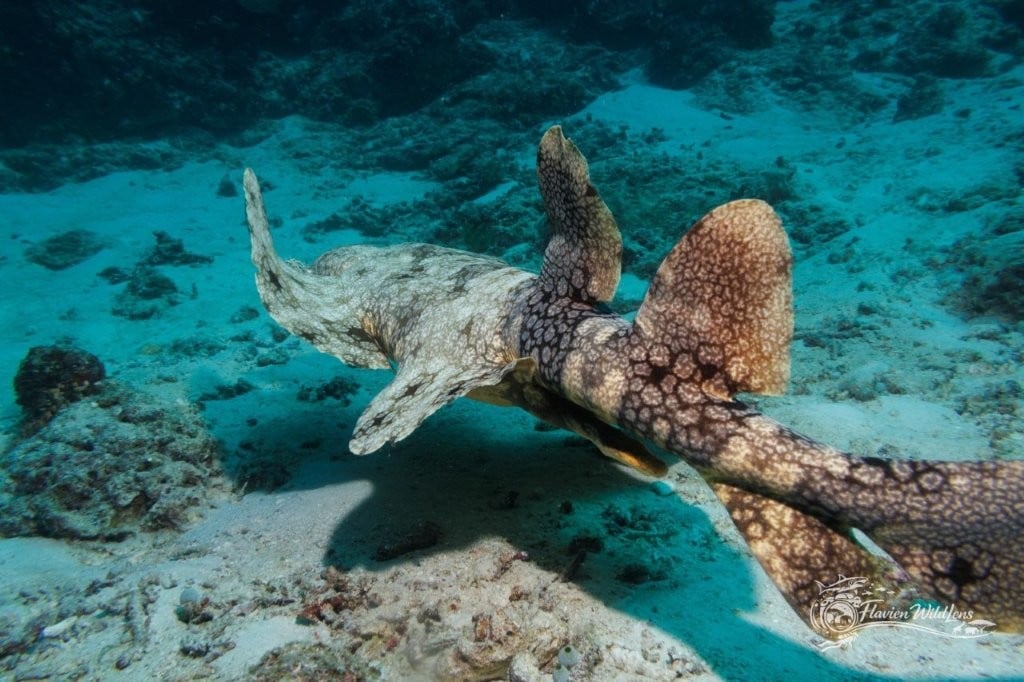
Mioskan – beautiful coral gardens, several bizarre wobbegong sharks (first time!) and napoleon wrasse.
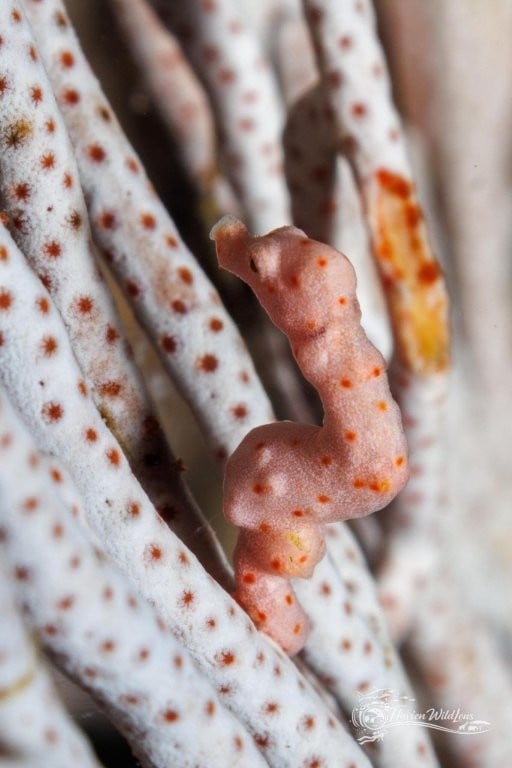
Chicken Reef – barracuda, black and white puffer fish and some pygmy seahorses (adorable and one of Laynni’s longest running bucket list items – check!) We could not get any consensus on the origins of the site name but one story mentioned a lost diver surfacing and making chicken noises to get the attention of rescuers, so we also did that, obviously.
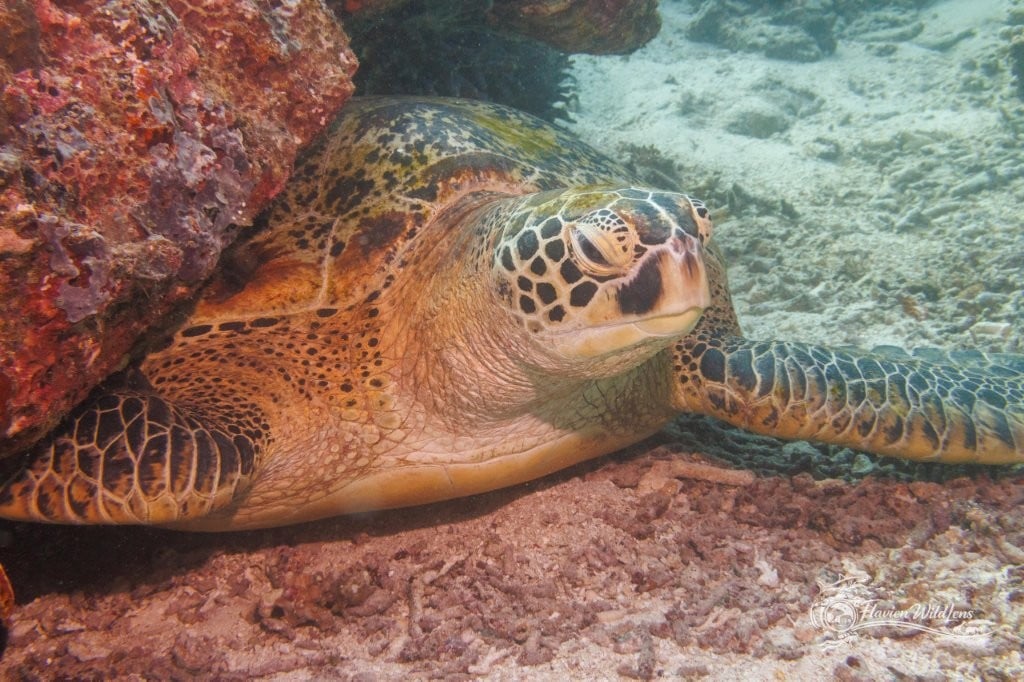
Sawaundarek – several huge sea turtles, several blacktip reef sharks and an octopus out and about, flexing and sauntering like he didn’t have a care in the world, rather than huddling in a little hole looking grumpy, which, of course, is the default octopus pose. Then some guides were feeding fish near the jetty which meant it was crowded, chaotic and kind of fake, which seemed unnecessary considering how many fish were already surrounding us at any given time.
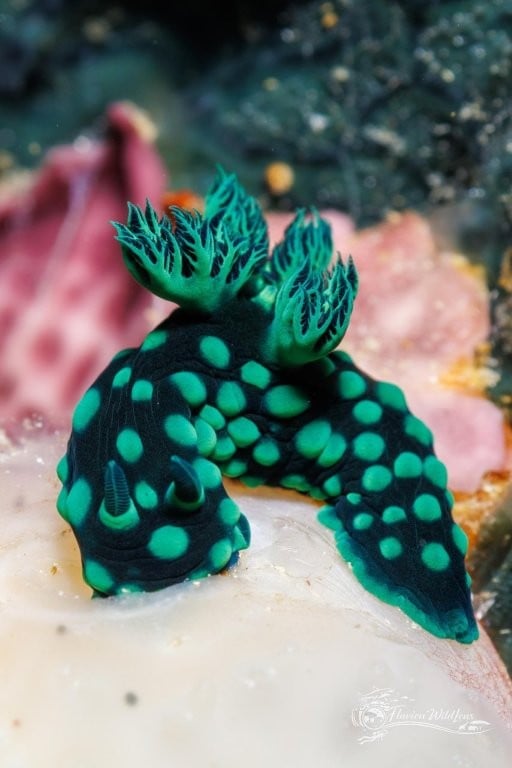
Keruovo Channel – nudibranchs, seahorses, puffer fish.
Batu Rufas – an interesting wall dive where you ride the current and then come back around through a swim-through, although we didn’t make it that far because the current was too strong and Mr. Heavy Breather here ran out of air before we finished the circuit. I breathe deep, and with purpose. It’s just who I am.
Mayhem – lived up to the name, with tons of fish, cool coral, lots of other divers around and me suddenly struggling with my weight for some reason. We also saw several more wobbegong sharks and some big schools of barracuda.
Citrus Ridge – a nice drift dive in the channel between Yanggelo Island and Gam Island, relaxing until it wasn’t, suddenly hitting intense current on the sandy crossing before calming back down on the other side with some impressive formations, a gigantic lobster and more schools of barracuda.
Manta Sandy – right on cue, a manta passed us on the way in, then a couple more showed up at the cleaning station, all business at first before doing a few showy circles and adding a cocky flip at the end.
Sardine Reef – nice, easy final dive along a ridge with gentle current, where the variety was impressive, even in an area where variety had become expected.
The Best
Melissa’s Garden – an incredibly beautiful site with exceptional coral and more fish than we saw anywhere else (possibly on any dive, anywhere). It is apparently one of the most diverse dives in the world, with over 300 different species spotted on a single dive. We also saw more pygmy seahorses but easily the best part of the dive was the kaleidoscopic scenery among the shallow corals near the end.
Manta Ridge – one of the best dives we’ve ever done, and one you may still remember from my long-winded third-person story at the beginning of this post. We followed an easy current down to the cleaning station and then hooked in for the show. The mantas came and went pretty much continuously but we think we saw about 6-7 different ones, a mix of reef and oceanic mantas, before we headed up to the ridge for the last 20 minutes, which was somehow almost better. Like being immersed in fake CGI Avatar coral, with millions of little fish schooling around us as far as the eye could see. Practically spiritual.
Notable Sightings
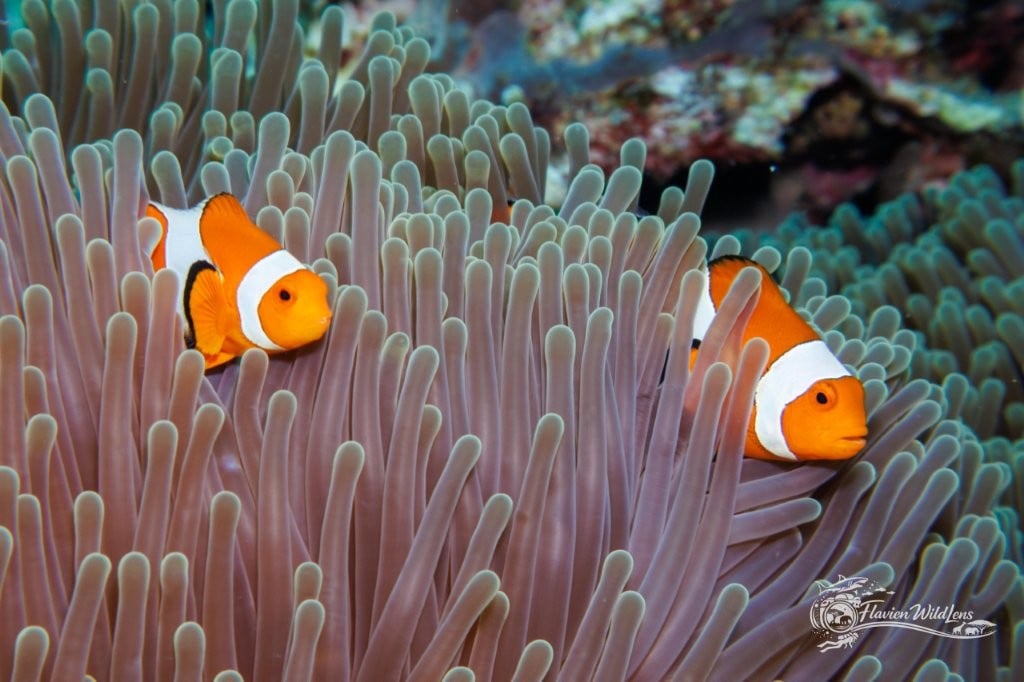
It would take far too much time, marine knowledge and, frankly, patience that I simply don’t possess, to list everything we saw on our Raja Ampat dives. But I’ll at least give it a go with the stuff we found most interesting, understanding, of course, that every diver has their own favourites. Except clownfish. Everybody loves clownfish.
Pygmy sperm whales from the boat only an hour out from Sorong – quite a start
Dolphins, a couple times, but only from the boat or dinghy, never while diving. At least a couple took the time to treat us to a few jumps and flips.
Crocodile fish
Spotted stingrays
Barracuda
Giant puffer fish
Giant lobster
Sea turtles
Blacktip, whitetip and one large grey reef shark
Roughly one million big schools of silver jackfish and yellow fusiliers and whatever those adorable little blue ones are
Many pygmy seahorses, and a couple even smaller Denise’s seahorses (apparently)
Nudibranchs
Wobbegong sharks
Scuttling shrimp
Octopi
Manta rays
Bumphead parrotfish
Napoleon wrasse
Lionfish
Moray eels
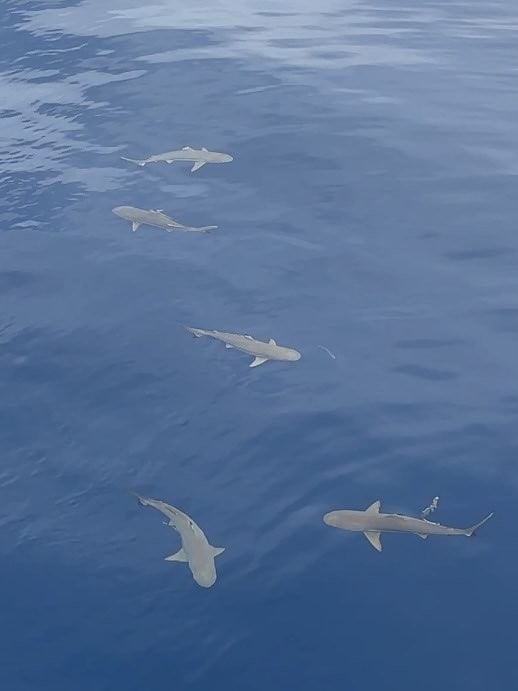
After returning from one of our dives we watched 6 whitetip reef sharks circle our boat for awhile before one suddenly bolted out of the water and did 2 or 3 frantic flips before crashing back into the water, startling both us and, apparently, his buddies, who quickly raced away like they were worried whatever got into him might be contagious.
What’s Included / Not Included
Once again, every Raja Ampat liveaboard will be different but in the particular case of the Situju7:
Transfers between the hotel/airport and the ship
12 dives
Full set of diving equipment and tanks
All meals, snacks and drinks, including water, beer, soft drinks, coffee, tea
Snorkelling gear for excursions
Not included:
Flights
Entrance, port fees and Raja Ampat National Park fees ($US350 total)
Extra/night dives: $US150 each
For the best deals we recommend booking very early, waiting until Black Friday or very late (although most trips filled up or were down to 1 or 2 spots near the end).
Summary
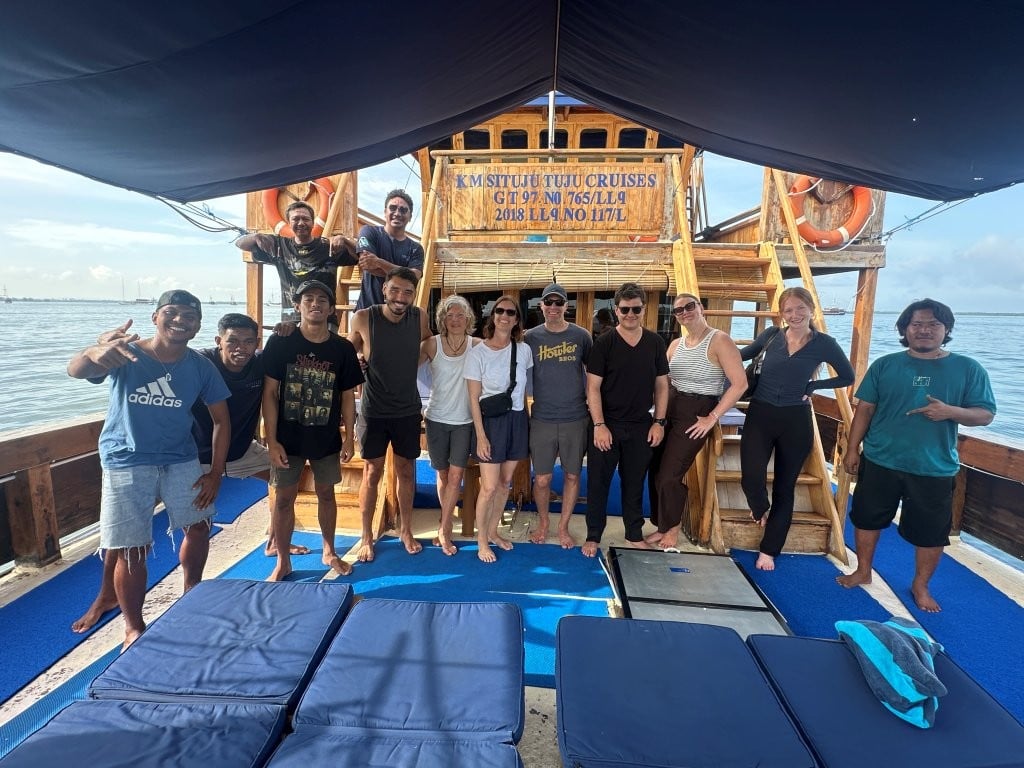
Raja Ampat is truly a tropical diving paradise and our time aboard the Situju7 provided everything we hoped for in a Raja Ampat liveaboard. The tremendous scenery and laid-back boat cruise vibe combined with the spectacular scuba diving made the entire experience feel both relaxing and adventurous at the same time.
There are other places around the world where you can get a more dramatic diving experience (for example, diving with whale sharks or tiger sharks in the Maldives) but we’ve never been anywhere with such consistently exceptional dive sites. Amazing coral and unbelievable marine diversity was a given but, for us, what really elevated it into our top handful of dive experiences were the endless schools of jacks, fusiliers and many, many that shall go unnamed (mainly because I can’t remember their names). Mesmerizing schools have always been one of our favourite parts of diving and, in that respect, Raja Ampat can’t be beat.
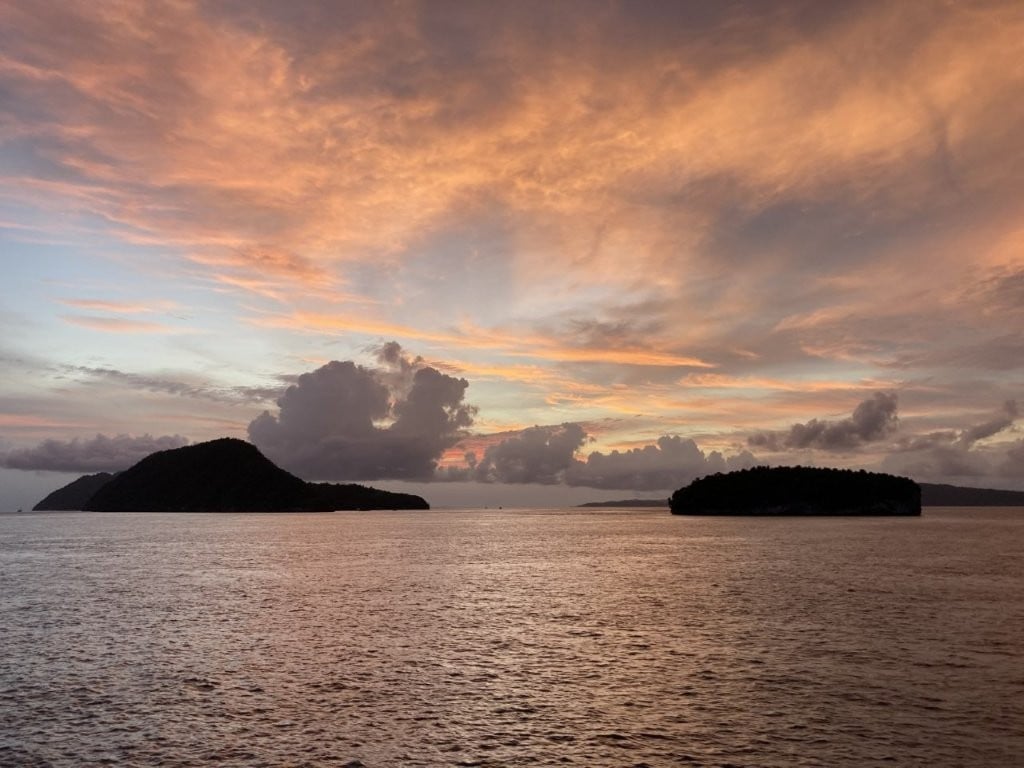
Mix in stereotypically gorgeous islands, perfect weather, a great group and fabulous sunsets and, well, it might be a while before we top this one. The fun is in the trying, though…
Pin it for later!
If you like this post, you might also be interested in:
Ubud: Life on the Sari Organic Walk
The Best Thai Islands: An Overview
The Historic City of Ayutthaya – Buddhas Galore!
Journal of a Thai Sleeper Train
Our Time in the Chiang Mai Markets
About the Author
Dean Johnston

Dean Johnston quit his job as a financial planner in 2008 to travel the world, and has now visited all 7 continents and more than 90 different countries. He wrote his first blog entry in a sweltering internet cafe in Bali in 2000 and has been writing about their travels ever since, including publishing 3 travel books.
As Routinely Nomadic, Dean remains focused on providing informative travel guides, entertaining stories and useful social media content to readers from all over the world.
Looks like an amazing trip ! I’ll have to put it on my bucket list.
It seems like that list is getting pretty long. Better get working on it.